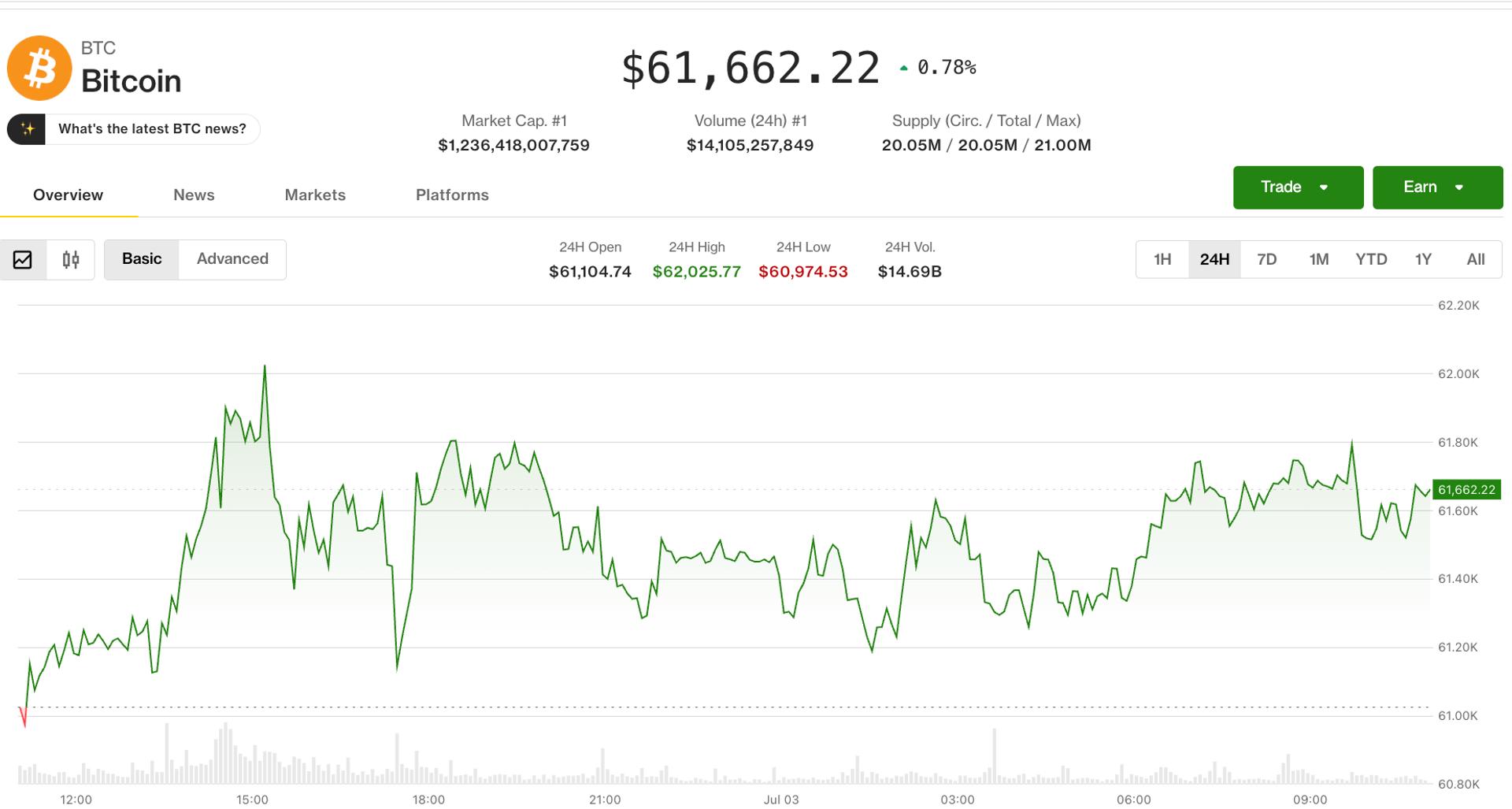
It has been a long week for anyone trying to build in this space without staring at the charts every hour. But as we close out the Friday session, the atmosphere feels different. The typical noise of the bull-bear tug-of-war is being replaced by something more substantial: a realization that the macro environment might finally be cutting us some slack, coupled with product wins that actually move the needle for the end user.
The Macro Pivot
For months, the biggest shadow over crypto hasn't been regulation or bad tech; it has been the Federal Reserve. Every time a founder tries to raise a round or a developer tries to justify high-gas experiments, the specter of another interest rate hike looms. Higher rates mean expensive capital, and expensive capital usually flees from the perceived volatility of digital assets.
However, the latest U.S. labor market data is telling a story that the bulls have been waiting for. The jobs figures came in softer than anticipated. In the legacy finance world, weak jobs data is usually a cause for concern. In the current crypto climate, it acts as a relief valve. When the labor market cools, the pressure on the Fed to keep hiking rates to combat inflation diminishes significantly.
For those of us building products, this is the first real breathing room we have had in a while. We are moving from a world of fear-based selling to one where sidelined capital might actually start looking for a home again. It is not that the economy is suddenly perfect, but the risk of the Fed breaking the system with even higher rates has receded. That gives us a more stable floor to build on.
Infrastructure Meets the Mainstream
While the macro data provides the backdrop, the real story for builders is the integration between Uniswap and Robinhood. This is not just another partnership announcement destined to be forgotten in a week. It represents the narrowing gap between decentralized finance and the average retail investor.
Uniswap has always been the gold standard for on-chain liquidity, but for a long time, it felt like a walled garden accessible only to those who knew how to bridge assets and manage seed phrases. By linking up with Robinhood, they are stripping away a layer of friction that has kept millions of users on the sidelines. This is the kind of boring, functional progress that actually matters.
As a founder, I look at this and see a roadmap for the next two years. The winners won't be the ones launching the most complex protocols; they will be the ones who figure out how to pipe that complexity into interfaces people already use. The liquidity is there. The tech is there. Now, we are finally seeing the distribution catch up.
The Skeptic’s Reality Check
I wouldn't be doing my job if I didn't point out the potential trap here. We have seen "buoyant" markets before that ended in a sharp correction the moment a single inflation print came in higher than expected. The market is currently breathing a sigh of relief, but relief is not the same thing as a guaranteed upward trajectory.
The risk for builders is getting caught up in the hype of a price recovery and losing focus on product-market fit. Lower interest rates might make it easier to get a check, but they don't fix a product that nobody wants to use. We need to be careful not to mistake a macro-driven pump for a validation of our specific project. If your runway depends on the Fed being nice to us, you are still in a dangerous position.
What This Means for Founders
If you are running a team right now, the takeaway is clear: focus on distribution. The Uniswap-Robinhood news is a signal that the "on-ramp problem" is being solved at the institutional level. Your job is to make sure that when those users arrive, your product is actually worth their time.
- Stop worrying about the Fed for a minute: The data suggests the worst of the rate-hike cycle is likely behind us. Focus that mental energy back on your code and your users.
- Watch the gates: Keep an eye on how these major integrations perform. If custodial apps like Robinhood start successfully funneling users to non-custodial tools, that is your cue to prioritize ease-of-use in your own UI.
- Capitalize on the quiet: Use this period of "firmer footing" to shore up your partnerships. It is much easier to negotiate when the market isn't in a total freefall.
The Bottom Line
The market feels more solid because the external pressures are finally matching up with internal progress. We are seeing a rare alignment where the US economy is cooling enough to stop the rate hikes, while the biggest names in crypto are finally making the tech accessible to the masses.
The goal isn't just to see the price go up; it's to see the plumbing of the financial system get replaced by something better. This week, we took a small but measurable step in that direction.
We aren't out of the woods, and I'm still skeptical of any project that claims the bear market is officially dead. But for the first time in a long time, the floor under our feet doesn't feel like it's about to cave in. For a builder, that’s all you can really ask for.
Read the original at CoinDesk →