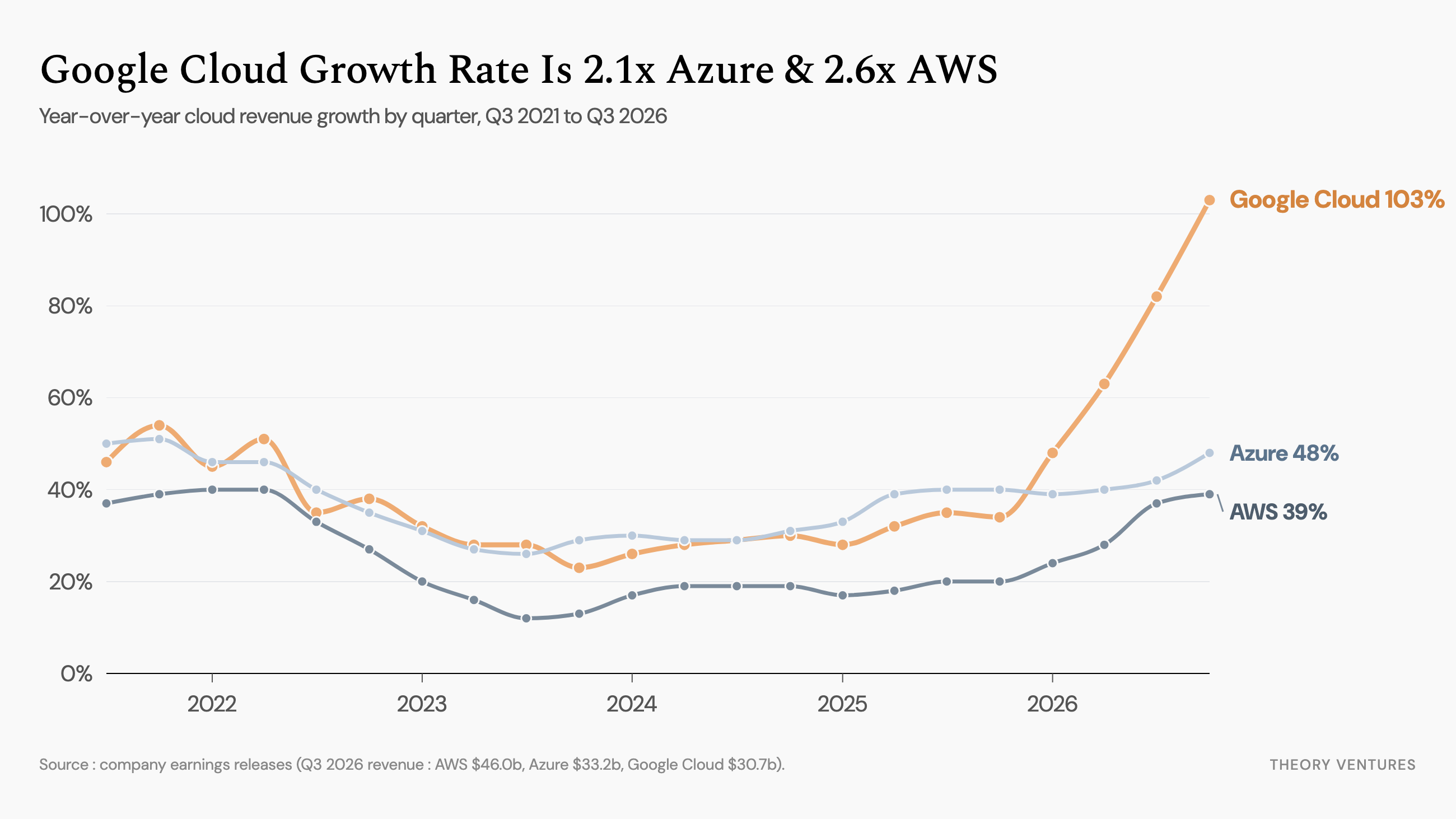
We are witnessing a shift in scale that most founders haven't fully processed yet. For decades, the $100 billion revenue mark was the gold standard for a successful, world-dominating enterprise. Today, that number feels like a rounding error in the context of the cloud giants. We are now looking at a race toward the trillion-dollar annual revenue milestone.
Public market data shows that the major cloud providers are growing at a pace that defies traditional law-of-large-numbers logic. We are seeing quarterly growth spurts in the range of $30 billion to $50 billion. That is not just growth; that is the equivalent of adding a Fortune 500 company to your balance sheet every three months. But there is a massive catch that builders need to understand: the chasm between current dominance and that trillion-dollar target is paved with structural risks.
The Trillion Dollar Revenue Target
Two major tech CEOs have recently signaled that a trillion dollars in annual revenue is the new North Star. It sounds like vanity, but it is a reflection of how deeply integrated software has become in the global economy. If you control the compute and the data, you theoretically control the margin of every other industry.
The current growth curve is fueled by a massive capital expenditure cycle. The hyper-scalers are spending billions on chips and data centers, betting that the demand for AI compute will remain insatiable. In the short term, this looks like a win. Revenue is climbing because everyone is trying to figure out how to use Large Language Models. However, revenue is a lagging indicator of health, and the underlying unit economics of AI are vastly different from the high-margin software-as-a-service models we have lived on for fifteen years.
The Erosion of Legacy Profit Pools
This is where the skepticism kicks in. To get to a trillion dollars, these companies have to cross what I call the AI Chasm. This is the period where a company must transition from selling high-margin legacy products—like traditional cloud storage or seats for productivity software—to selling AI-driven services.
The problem is that AI is inherently deflationary for the customer and expensive for the provider. If an AI agent can do the work of ten people using a specific software suite, the company selling that software eventually loses the ability to charge per seat. They have to switch to consumption-based models or outcome-based models. If they do not perfectly time this transition, their legacy profit pools will dry up before the new AI revenue streams are large enough to support the company's massive valuation.
- Compute Costs: Training and inference are significantly more expensive than hosting a database.
- Model Commoditization: As open-source models get better, the premium people are willing to pay for proprietary access may drop.
- Energy Constraints: You cannot grow to a trillion dollars if the power grid cannot support your data centers.
What This Means for Builders
If you are building in the crypto or AI space right now, do not get blinded by the big numbers of the incumbents. Their race to a trillion is actually an opportunity for founders. These giants are distracted by the need to protect their massive, aging revenue moats while simultaneously spending record amounts on infrastructure.
For a founder, the goal is not to compete on infrastructure. You will lose that battle. The goal is to identify the workflows that the giants are too slow to automate because doing so would hurt their current bottom line. This is the classic innovator's dilemma on a trillion-dollar scale. A startup can afford to build a tool that replaces five human roles for a flat fee. A company like Microsoft or Google has to weigh that against the loss of enterprise licenses for those five humans.
Small, lean teams using AI to disrupt specific vertical workflows are the biggest threat to the trillion-dollar dream.
The Path to the Ten Trillion Dollar Valuation
The first company to reach $10 trillion in market cap will likely be the one that successfully crosses the revenue chasm first. It will be the organization that accepts the death of its legacy margins in exchange for becoming the operating system of the AI economy. It is a high-stakes game of chicken with their own balance sheets.
We are seeing a move toward vertical integration. These companies are building their own chips to lower the cost of inference. They are investing in nuclear power to secure their energy future. They are trying to own the entire stack because they know that being just a software layer is no longer enough to sustain this level of growth.
The Bottom Line
Scale alone is not a moat. We have seen massive companies collapse under their own weight when a technology shift rendered their core business obsolete. The current cloud growth is impressive, but it is being driven by a hardware arms race that cannot last forever.
For those of us on the ground, the takeaway is simple: the incumbents are in a period of extreme transition. They are vulnerable in ways they haven't been in decades. They are forced to grow at all costs to justify their CAPEX, often at the expense of user experience and privacy. That is where the builder's advantage lies.
Takeaway
The race to $1 trillion in revenue is a race against time. The winners won't just be the ones with the most GPUs; they will be the ones who can cannibalize their own legacy profits before a startup does it for them. Focus on the gaps left behind by their transition.
Read the original at Tomasz Tunguz →