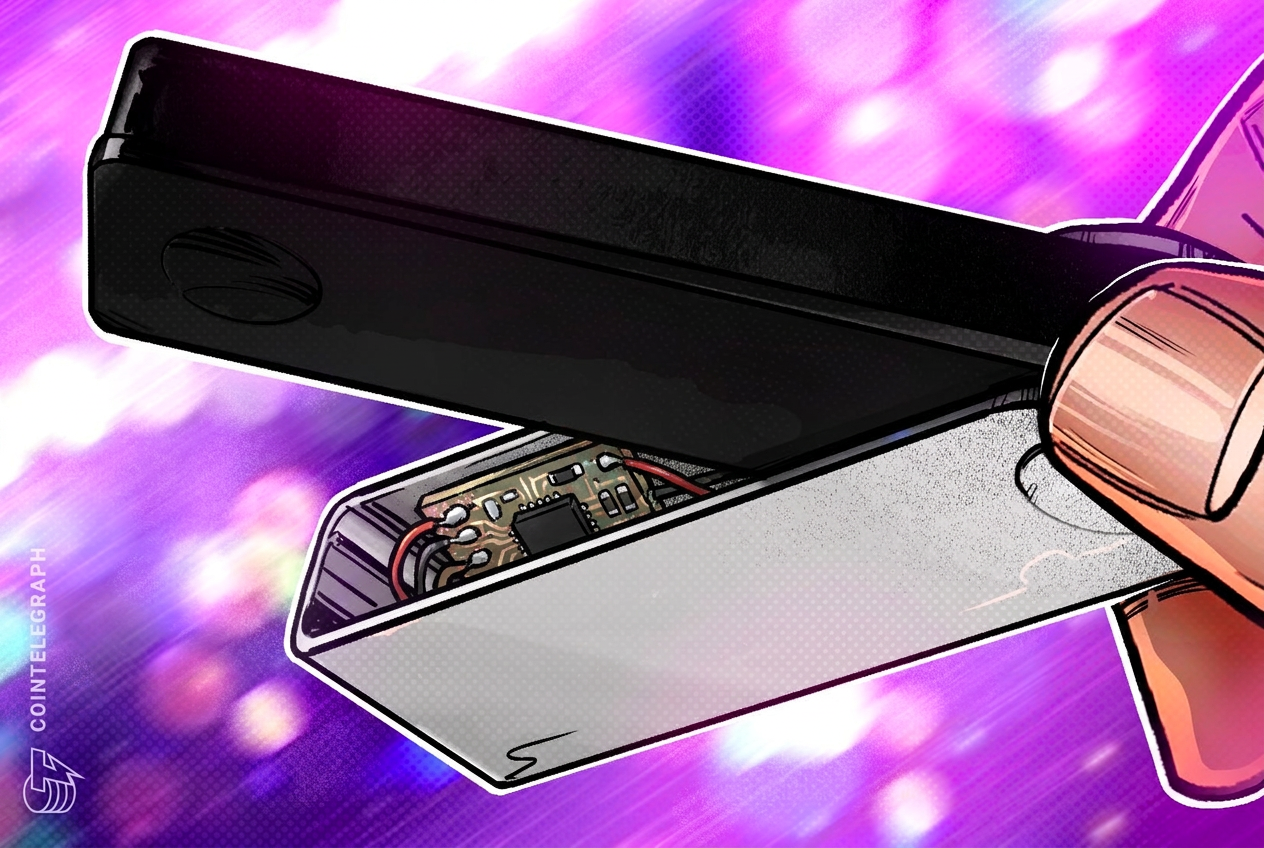
We have a saying in the hardware world: your security is only as strong as your weakest touchpoint. Usually, we are talking about seed phrases or physical tampering. But lately, the weakest link isn't the device itself. It is the social media account managed by the human beings who build the device. Recently, Coldcard, the popular Bitcoin-only hardware wallet manufacturer under the Coinkite umbrella, found itself in the crosshairs of a standard but effective phishing attack on X.
The Incident in Context
The situation unfolded when a malicious link appeared on the official Coldcard X account. For a brand that markets itself on being the choice for the most paranoid, sovereign Bitcoiners, this is a tough pill to swallow. The company quickly moved into damage control, advising users to ignore the link and promising a full investigation into how their digital perimeter was breached. While the investigation is ongoing, the implications for founders and builders in the space are immediate.
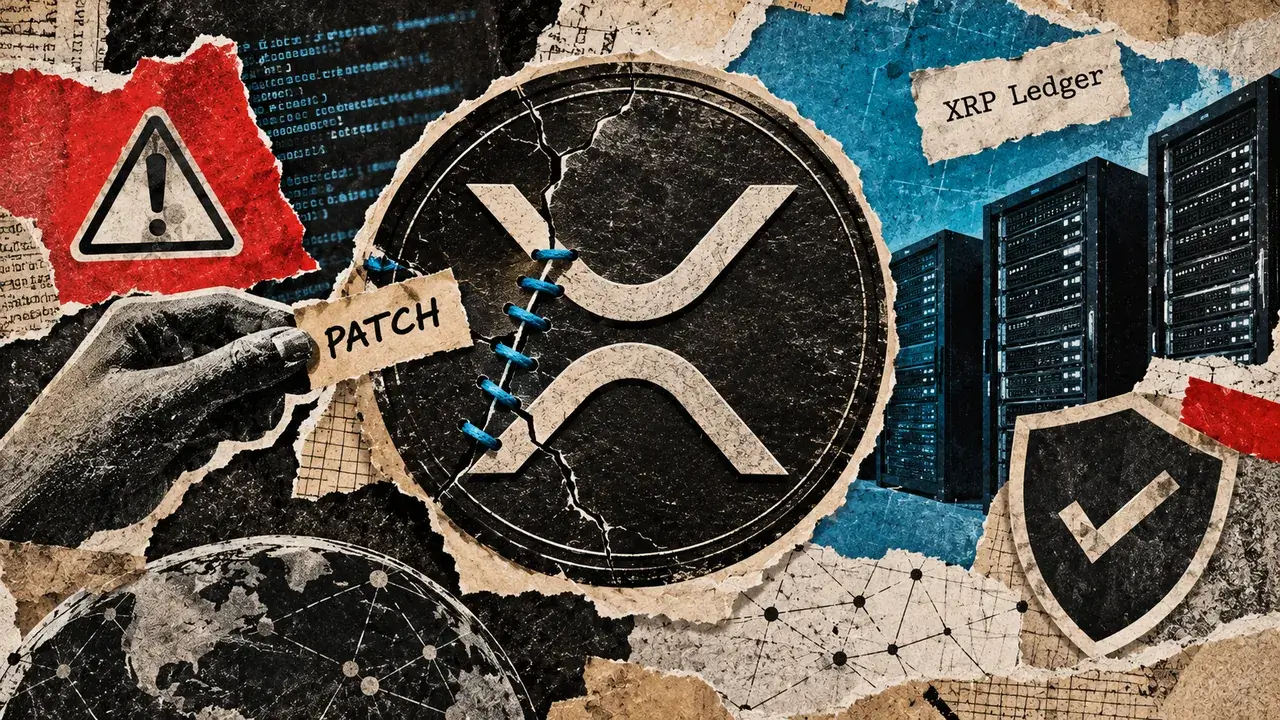
We have seen this script play out before. A high-profile account gets hijacked, a link promising a "firmware update" or a "security patch" is posted, and unsuspecting users click through, eventually exposing their private keys or downloading malware. It is the ultimate irony: the very tools we use to stay safe are being leveraged as bait by the people trying to rob us.
The Myth of Platform Security
For builders, this is a wake-up call about platform dependency. We treat X like a direct line of communication to our customers, but we don't own the infrastructure. When you build your brand's reputation on a third-party site, you are inheriting all of their vulnerabilities. SIM swapping, session hijacking, and social engineering at the employee level of the social media company are all variables you cannot control.
If you are building a product in the crypto or AI space, you need to ask yourself what happens when your primary communication channel turns against your users. If a user loses their life savings because they followed a link on your official page, the "we were hacked" excuse doesn't carry much weight in the court of public opinion. It damages the trust that takes years to build and only seconds to lose.
Why Hardened Security Isn't Enough
Coldcard is known for its "air-gapped" philosophy. They tell you to never plug the device into a computer. They want you to use SD cards to bridge the gap. It is a rigorous, high-friction security model designed to stop remote attacks. Yet, a simple phishing link on a social media feed bypasses all that technical hardening by targeting the user's psychology rather than the device's firmware.
This is the builder's paradox. You can spend thousands of hours auditing your code, but if your marketing lead uses a weak password or falls for a spear-phishing email, your users are still at risk. The security of a hardware product must extend to the entire operational stack of the company. This includes how you distribute information, how you verify updates, and how you educate your users to interact with your brand.
Tactical Takeaways for Founders
So, what do we do? If you are a founder, you need to start moving your critical communication away from single points of failure. Here are a few things to consider:
- Multi-Signature Communication: Just as we use multi-sig for funds, we should be thinking about verified signatures for announcements. Users should be trained to look for PGP-signed messages for any critical updates or links.
- Redundancy: Never post a link on one platform without a corresponding post on a self-hosted blog or a secondary verified channel like a Nostr relay or a signed newsletter.
- Zero-Trust Social Media: Treat your own social media accounts as compromised by default. Remind your users constantly that you will never ask for their seeds or provide unexpected links to software downloads via social DMs or posts.
- Hardware Keys for Everything: If your team isn't using physical YubiKeys for every single login, including X, you are leaving the door unlocked.
The Skeptical Founder's View
I like Coldcard. I like the team at Coinkite. They are builders who actually care about the ethos of Bitcoin. But we have to be honest: this is a failure. It is a failure of operational security that puts the most vulnerable users at risk. The "hardened" brand image takes a hit when the basic hygiene of account management falls through.
As builders, we often get caught up in the technical elegance of our products. We obsess over the AI model's efficiency or the blockchain's throughput. We forget that our users are humans who are being bombarded with scams every single day. If we make it easy for them to be tricked, we are part of the problem. Honesty means admitting that social media is a dumpster fire for security, and we need to stop treating it like a secure portal for technical support.
Looking Ahead
We are waiting for the final report from Coldcard. Was it a SIM swap? A malicious browser extension? An internal compromise? Whatever the answer, the lesson remains the same for the rest of us. If you are building in this space, your security perimeter doesn't end at your GitHub repo. It extends to every tweet, every email, and every Telegram message your company sends.
Trust is the only currency that matters in this industry. Once it's gone, no amount of air-gapping or encryption can bring it back. Build for the worst-case scenario, and assume that every platform you use is trying to betray you.
"
Read the original at Cointelegraph →