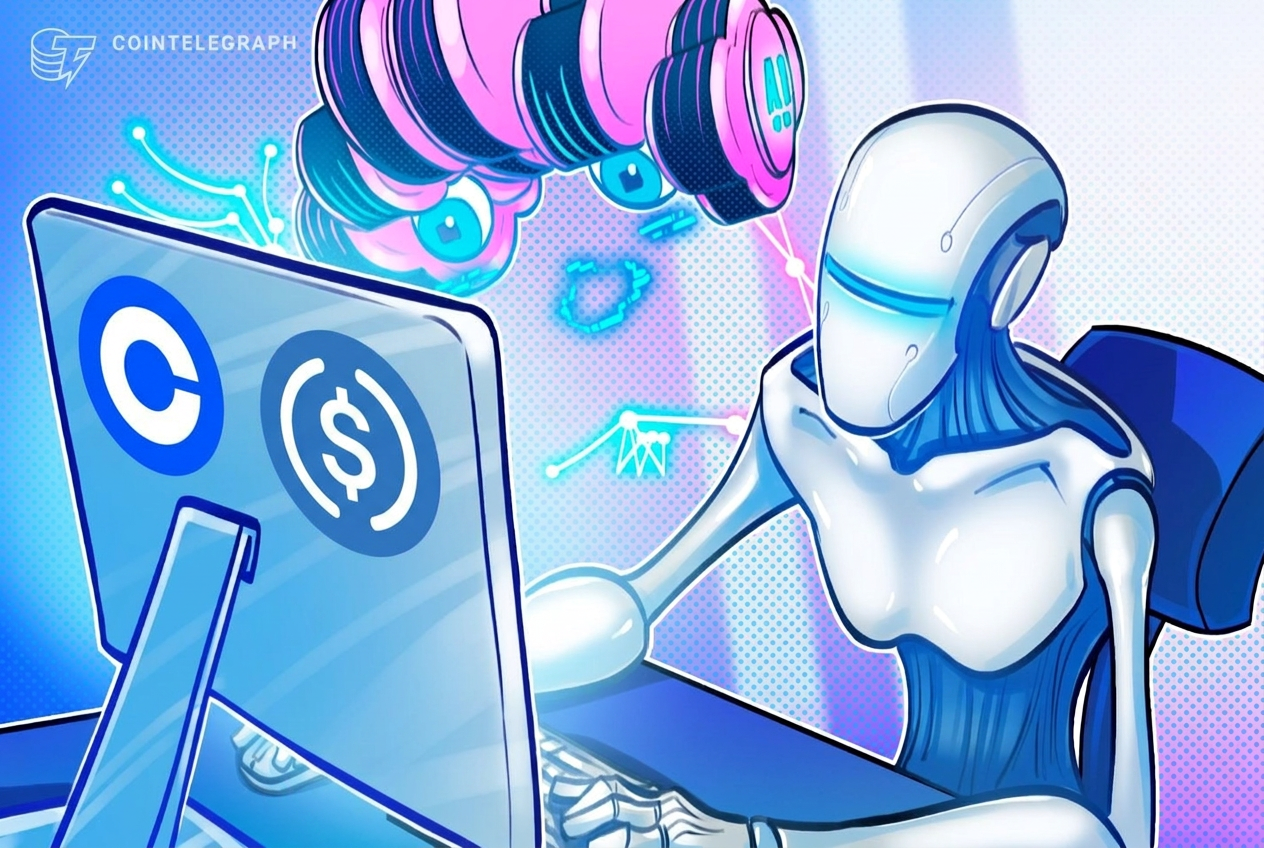
We have reached a weird inflection point in the development of the internet. For decades, we built tools for humans to use. Now, we are building tools for tools to use. Coinbase recently announced that businesses can now accept USDC payments directly from AI agents, alongside a suite of developer kits designed to give autonomous software a bank account. At first glance, this looks like another corporate press release. If you look deeper, it is an admission that the current financial system is too slow for the future we are building.
The Bottleneck of Human Approval
As a founder, I spend a lot of time thinking about friction. In a traditional business, every transaction requires a human thumbprint, a face scan, or a physical signature. If you want to scale a service, you usually have to scale the number of people managed. This is the old way of thinking. In the new model, we have autonomous agents capable of performing tasks, analyzing data, and now, settling debts without asking for permission every five minutes.
The problem has always been that banks hate robots. If an AI tries to open a Chase account, it gets flagged. If it tries to use a credit card, the fraud department freezes the line. By integrating USDC payments for AI agents, Coinbase is essentially creating a parallel financial track where software can operate at its own speed. This is not about letting a chatbot buy a pizza; it is about programmatic commerce.
What Building for Agents Actually Looks Like
The update includes an AI developer kit that focuses on the infrastructure of autonomy. For builders, this means we are moving away from simple API calls and toward value-exchange protocols. If you are building an AI-driven research tool, that tool can now pay for its own compute power, buy its own datasets, and charge its users in real-time without a mid-office human sitting in a dashboard and clicking 'approve' on every invoice.
We are seeing the emergence of what some call the 'Agentic Web.' In this environment, the AI is not just an assistant; it is a participant. It has a balance sheet. It has a wallet. It has the ability to negotiate prices and settle them instantly in a stablecoin that doesn't fluctuate like a meme coin during a market crash. Using USDC makes sense here because machines do not have an appetite for volatility. They need predictable units of account to calculate their own margins.
The Infrastructure Play
Coinbase is also rolling out AI trading tools. While 'AI trading' is a buzzword that usually makes me want to close my laptop, the technical implication here is broader. It suggests that the exchange wants to be the backend for every autonomous fund and automated treasury. If a DAO or a startup wants to let an algorithm manage its runway, Coinbase is providing the sandbox to do it.
For those of us in the trenches building these companies, this simplifies the stack significantly. Instead of stitching together a legacy banking partner, a payment processor like Stripe, and a crypto on-ramp, you can basically treat the agent's wallet as its primary account. This reduces the number of points where a transaction can fail or get stuck in a 'pending' state for three business days.
The Skeptic's Corner: Not All Smooth Sailing
I have to be honest: there are risks here that no one is talking about in the hype cycles. When you give software the ability to spend money autonomously, you are opening a door to automated bankruptcy. A bug in a smart contract or a loop in an AI's logic could drain a wallet faster than any human could stop it. We are trading human oversight for technical efficiency. For founders, this means the 'guardrails' part of the code becomes more important than the 'features' part.
There is also the question of identity. How do we know which agent is authorized to spend? How do we prevent a swarm of bots from sybil-attacking a payment gateway? Coinbase's framework attempts to solve this with better developer tools, but the truth is we are all beta testing this in real-time. This is uncharted territory for compliance and risk management.
Why Builders Should Care
If you are building in the AI space, you need to stop thinking of crypto as an investment vehicle and start thinking of it as a software library. USDC is becoming a primitive for the internet. It is becoming the way that code talks to other code about value. If your project doesn't have a way to handle automated payments, you are essentially building a car that can only be driven by a human in a world that is moving toward self-driving fleets.
The takeaway for founders is clear: start experimenting with agent-to-agent transactions now. You don't need a massive treasury to test this. You just need to understand how to program a wallet into your agent's workflow. The friction of the old world is an opportunity for those willing to build in the new one.
The Reality Check
At the end of the day, Coinbase is a business. They want the fees, and they want to be the default layer for the next version of the internet. But their motivation doesn't change the utility of the tool. Providing a way for AI to participate in the economy is a massive unlock for productivity. It moves us away from the 'subscription' model—where we pay $20 a month for things we might not use—and toward a 'micro-payment' model, where agents pay for exactly what they consume, down to the byte.
The road ahead is going to be messy. There will be hacks, there will be lost funds, and there will be regulatory hurdles. But the move toward autonomous financial agents is inevitable. The human-centric banking system is a 20th-century solution for a 21st-century problem. We are finally starting to build the 21st-century version.
- USDC serves as the stable, programmable currency for AI.
- Developer kits are lowering the barrier to entry for agentic commerce.
- Risk management and logic guardrails are now the most critical parts of the stack.
- The objective is to eliminate the 'human-in-the-middle' friction for digital services.
We are no longer just building apps; we are building an ecosystem of autonomous entities. It is time to make sure those entities can pay their own way.
Read the original at Cointelegraph →