Stablecoins have always being the quietest money maker in crypto. While everyone else was chasing leverage or NFT house flippings, the issuers were doing something much simpler: taking your cash, buying Treasury bills, and keeping the interest. It is one of the cleanest business models ever invented. You provide the liquidity, they provide the wrapper, and they keep the yield.
The End of the Issuer Monopolies
For years, the power dynamic in this space was lopsided. On one side, you had issuers like Circle and Tether. On the other side, you had the exchanges and the fintech apps that actually got the tokens into the hands of users. The distributors did all the heavy lifting of customer acquisition, compliance, and UI design, while the issuers soaked up the interest income from the underlying reserves. It was an arrangement that worked as long as interest rates were effectively zero.
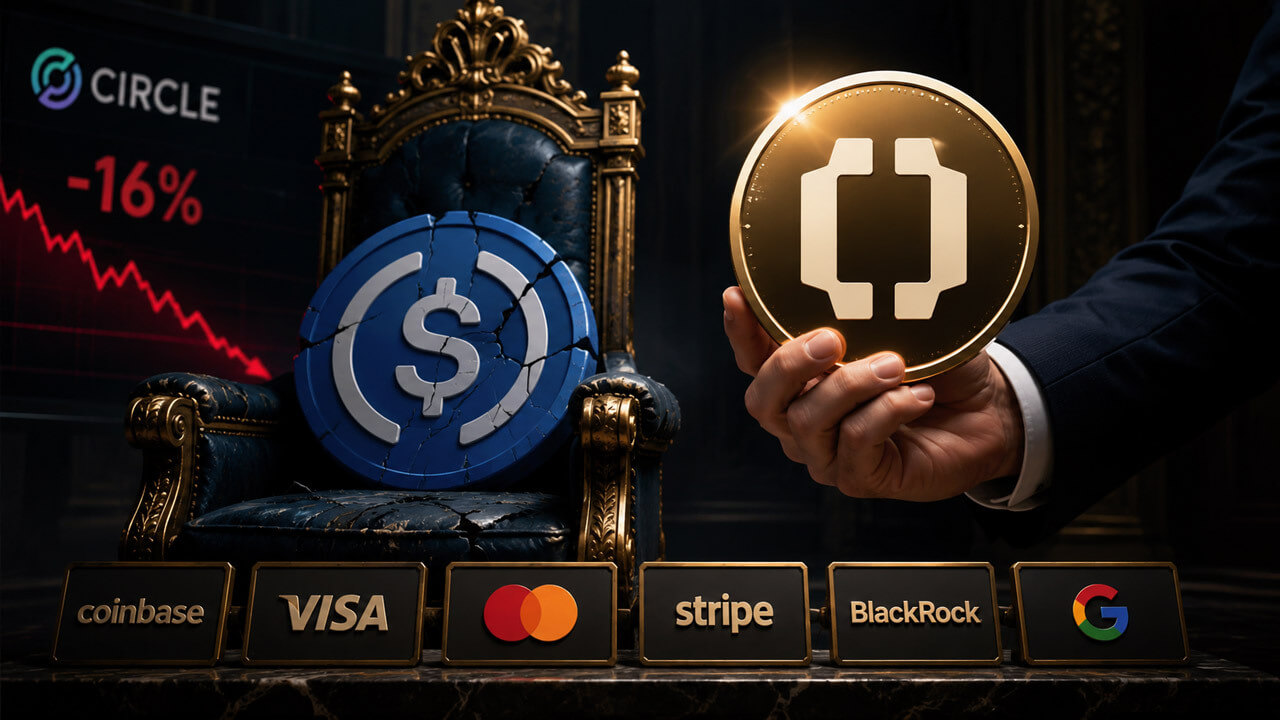
When rates climbed to 5%, that relationship broke. Suddenly, the interest on those reserves represented billions of dollars in annual revenue. The distributors started asking why they were doing all the work for free. This is the friction that birthed the Open USD project, and it is why Coinbase—the very company that helped turn USDC into a household name—is now backing its potential successor.
What Open USD Changes
Open USD, or OUSD, isn't just another digital dollar. The core thesis here is economic redistribution. Historically, stablecoin profit has been a closely guarded secret or a centralized windfall. Open USD is built on the idea that the entities providing the most utility to the token should share in the rewards generated by the reserves. It is a builder-first approach to liquidity.
By backing this, Coinbase is signaling that the old model of the singular, centralized issuer keeping 100% of the yield is dead. They are essentially disrupting their own product. If you are a founder or a developer, this matters because it changes the incentive structure for integrating a stablecoin into your app. Why would you push a token that pays a third party, when you could support a protocol that recognizes your contribution to the network's growth?
The Distribution Power Play
A stablecoin is only as good as the places you can spend it. Liquidity is the ultimate moat. For a long time, Circle had the distribution advantage because of its close relationship with Coinbase. But as the market matures, distribution is becoming more fragmented. DeFi protocols, cross-border payment apps, and neobanks now hold the keys to the kingdom.
Open USD is a coalition. It is an attempt to create a standard where the distributors are the owners. This is a classic platform play. If you can get enough major exchanges and wallets to agree on a single standard where they all get a piece of the pie, you can unseat even the most entrenched incumbents. It is the same logic behind why merchants hate credit card fees; eventually, they will build their own rail to keep those margins for themselves.
Risk and the Reserve Reality
We need to be honest about the risks here. The reason USDC became a titan was its perceived safety and its boring, transparent reserve of cash and short-term Treasuries. When you start introducing yield-sharing and complex distribution incentives, you have to be careful that you aren't sacrificing security for the sake of partner payouts. Any builder looking at OUSD needs to look past the marketing and scrutinize the collateral management.
The technical architecture of OUSD suggests a movement toward more diversified, yield-bearing assets. This sounds great on a balance sheet, but it adds layers of smart contract risk and liquidity risk that the industry is still learning to navigate. As founders, we have seen what happens when stablecoins try to get too clever with their backing. However, the backing behind OUSD isn't just some algorithmic experiment; it is backed by some of the most capitalized players in the sector.
Why Builders Should Care
If you are building an app today, you usually have to choose between the safety of USDC/USDT or the yield potential of smaller, riskier stables. Open USD represents a middle path. It tries to offer the scale of a major institutional token with the economic alignment of a decentralized protocol.
This shift tells us that the "fat protocol" thesis is evolving. It is no longer just about the base layer. The value is migrating to the applications that can command user attention. If Coinbase and its partners can prove that a collaborative stablecoin works, we will see a massive wave of migration away from legacy, closed-loop issuers.
The Long Game
The irony isn't lost on me that Coinbase is effectively competing with itself. But that is exactly what a smart founder does. They would rather own 20% of the future than 100% of a dying model. The era of the silent, rent-seeking stablecoin issuer is ending. We are moving toward a period where every participant in the stack expects to be paid for the liquidity they provide.
Expect to see more of these consortia popping up. The battle for the stablecoin market isn't about who has the best tech—it is about who has the most friends. Coinbase is making a lot of new friends with Open USD, and that should make every other issuer in the space very nervous.
The Takeaway
The takeaway for the builder community is simple: loyalty to a specific stablecoin asset is a liability. The market is shifting from centralized gatekeepers to incentive-aligned networks. When choosing which assets to support in your ecosystem, look for the ones that treat you like a partner in their growth, rather than just a source of free deposits.
Coinbase is showing us that even the giants know the status quo is unsustainable. Follow the money—or in this case, follow the yield.
Read the original at CryptoSlate →