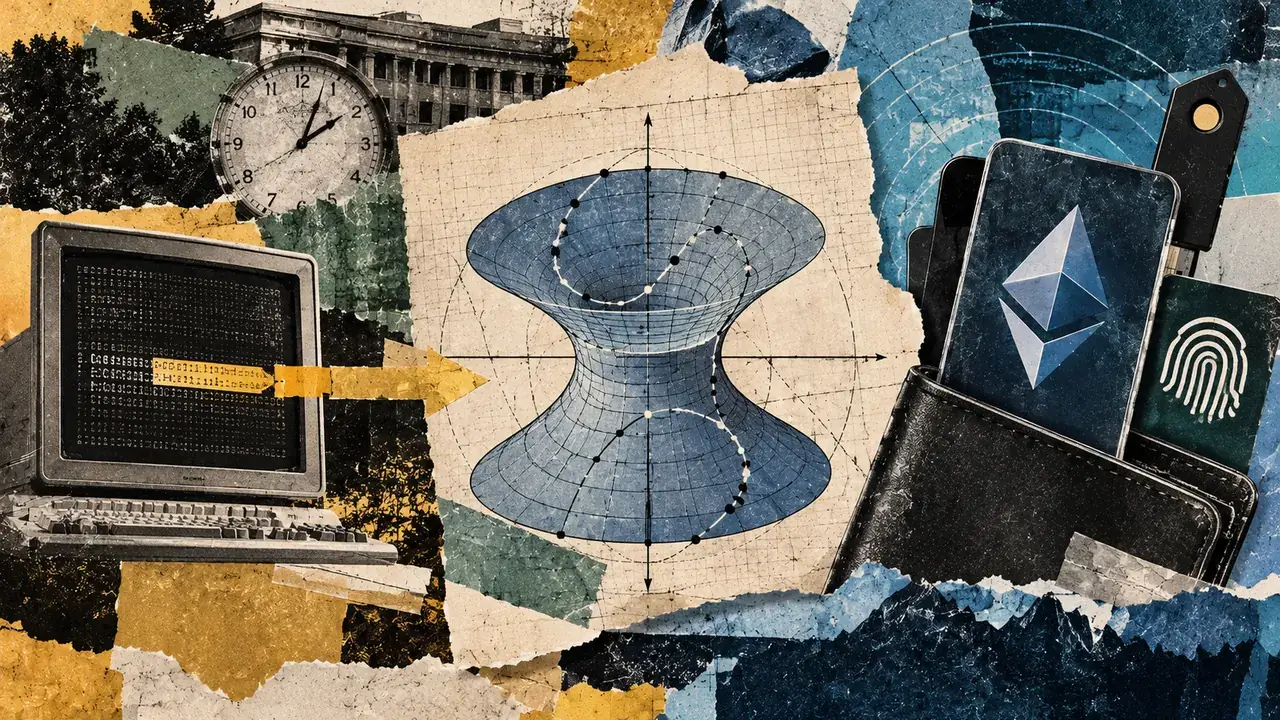
In the crypto world, we talk a lot about trustless systems. The irony is that the very foundation of how we secure digital assets often relies on a curve designed by the National Security Agency. For years, the P-256 elliptic curve has been a point of contention. It is the standard for passkeys, hardware enclaves, and mobile security. It is also a black box. If you are a builder looking to bridge the gap between user-friendly passkeys and Ethereum wallets, you are building on a foundation that has a giant question mark over it.
Recently, a developer used Anthropic’s Claude model to dig into the provenance of this curve. The goal was to see if the AI could reconstruct the seeds used to generate the parameters of P-256. For the uninitiated, these seeds are supposed to prove that the numbers weren't cherry-picked to create a backdoor. The AI actually managed to reconstruct the public seed by using a timestamp-based recipe. This is a big step for transparency, but it doesn't solve the fundamental problem: we still don't know why those specific numbers were chosen in the first place.
The Shadow of the NSA
The P-256 curve, also known as secp256r1, was introduced by the NIST in the late 90s. From day one, skeptics have been vocal. Unlike Bitcoin’s secp256k1 curve, which uses a very simple and transparent set of parameters, P-256 uses a set of seemingly random numbers. The NSA claimed these numbers were generated by hashing a random seed. But in the world of cryptography, “trust us” is a dirty phrase.
The fear has always been that these numbers were carefully selected to contain a hidden mathematical weakness that only the NSA can exploit. If you can break the curve, you can steal the private keys. When Edward Snowden leaked documents a decade ago, he confirmed the NSA was actively trying to weaken encryption standards. This made the P-256 mystery go from a fringe conspiracy theory to a legitimate architectural risk for developers.
What the AI Actually Found
What Claude did wasn't magic, but it was efficient forensic work. By applying specific timestamp logic, the AI was able to recreate the seed that the NIST pointed to as the origin of the curve’s constants. This adds a layer of provenance. It shows that the seed wasn't just pulled out of thin air; it had a chronological context. It effectively proves the “when” of the seed's creation.
However, as a founder, you have to look at the gaps. While we now have a better idea of how the seed was formatted, we still don't have the “why.” We don't know the selection criteria for the base point. In cryptography, if you can’t explain the origin of your base points, you haven't really proven the system is secure. You've just shown that the mystery is buried one layer deeper.
The Ethereum Passkey Trade-off
This isn't just an academic exercise. If you are building an Ethereum wallet that uses EIP-7212 or any form of passkey-based account abstraction, you are choosing P-256. You are choosing it because every iPhone and Android device has a dedicated chip (the Secure Enclave) designed to handle this specific curve. It makes the user experience seamless. Users can sign transactions with FaceID or a fingerprint. It feels like magic.
But the trade-off is that you are moving away from the “transparent math” of Bitcoin and early Ethereum toward the “standardized math” of the legacy government world. For builders, this is a classic tension between mass adoption and absolute sovereignty. If you use P-256, you get millions of users who don't have to write down 12 words on a piece of paper. But you also inherit the risk that the foundation might have a trapdoor.
Why Builders Should Care
If you’re a founder, you need to understand that security is a spectrum. The fact that an AI can now help us audit these legacy standards is great, but it’s not a clean bill of health. Here is how I see the landscape for builders right now:
- Auditability is becoming automated: The fact that Claude could reconstruct these seeds means we are entering an era where AI can audit the history of our codebases and cryptographic standards. This is a win for transparency.
- User Experience vs. Paranoia: Most of your users don't care about NSA backdoors. They care about losing their keys. Passkeys solve the biggest hurdle in crypto, which is key management. For 99% of applications, the P-256 risk is acceptable compared to the risk of a user losing their seed phrase.
- The Future is Multi-Curve: Smart contract accounts (ERC-4337) allow us to support multiple curves. The best approach for builders is to not get locked into one standard. Build systems that can migrate if a specific curve is ever proven to be compromised.
The Founder Perspective
I’ve seen plenty of “perfect” tech fail because it was too hard to use, and plenty of “flawed” tech win because it solved a real problem. P-256 is flawed from a pure cypherpunk perspective. It lacks the total transparency we want in a decentralized world. But it is also the most practical way to get crypto into the hands of a billion people.
The Claude discovery is a reminder that we are still cleaning up the mess of the early internet era. We are building the future on top of legacy government standards because that’s where the hardware lives. As a builder, your job is to stay skeptical. Don’t assume a standard is safe just because it has a NIST stamp on it. Use the tools available—whether it’s AI forensics or multi-sig architectures—to hedge your bets.
The goal isn't to find a perfect, unassailable truth. The goal is to build systems that are robust enough to survive when the foundations we inherited eventually show their cracks.
We are getting closer to understanding where P-256 came from, but we aren't there yet. Until we can explain the base-point origins, there will always be a shadow over passkey security. For now, we build with what we have, keep our eyes open, and keep pushing for standards that don't require an AI detective to explain their existence.
Read the original at CryptoSlate →