When you have been in the building game as long as I have, you start to develop a healthy skepticism toward the word burn. In the crypto world, burning tokens is often used as a cheap marketing tactic to manufacture scarcity when the underlying product lacks actual utility. It is usually a distraction. However, when a protocol starts using actual net operating profits to reduce its supply, the conversation changes from marketing to economics.
The Mechanics of the Fifth Burn
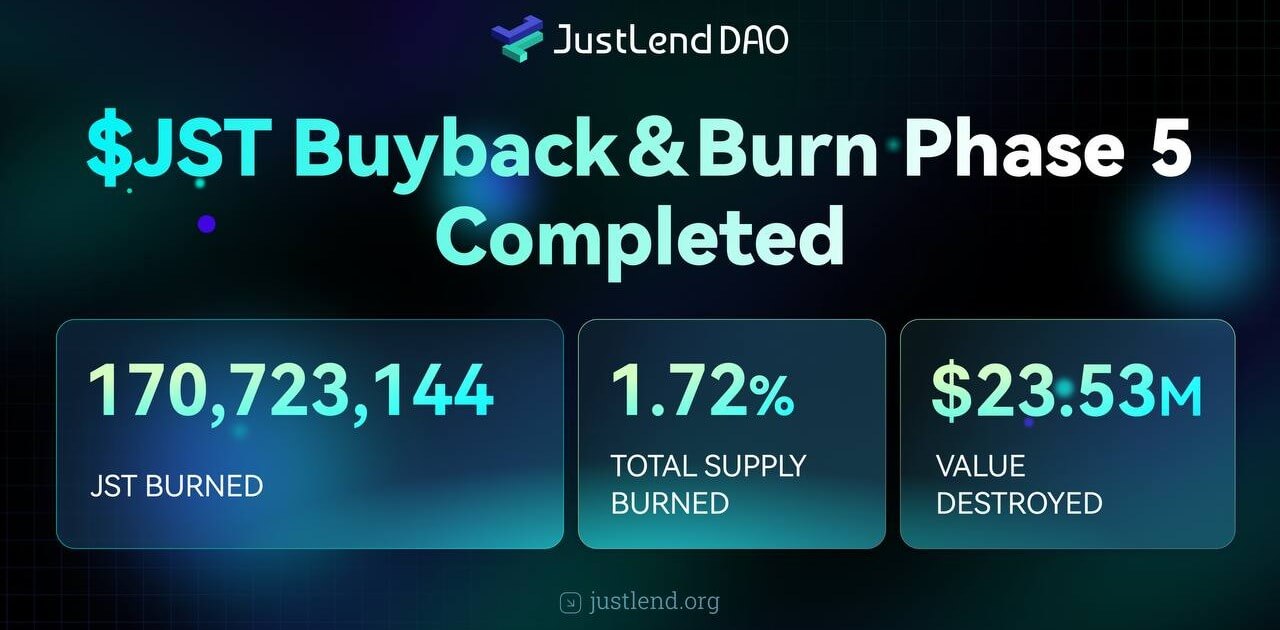
JUST, which effectively acts as the backbone for the TRON DeFi ecosystem, recently wrapped up its fifth scheduled JST buyback and burn. This wasn't a small adjustment. They took roughly 170 million JST tokens out of circulation, representing about 1.72% of the total supply. At current market rates, that is about $23.53 million in capital deployed to shrink the pool.
What matters more than the dollar amount is where the money came from. This was not sourced from a venture capital treasury or a marketing fund designed to pump a chart. The capital was pulled directly from the net operating income of JustLend DAO. For builders, this is the gold standard of protocol health: the product is generating enough revenue to pay for its own deflationary pressure.
Why Builders Should Care About Buybacks
If you are building a dApp or a DAO, the temptation is always to keep every cent of revenue in the treasury for future development or, worse, to pay out massive yields to attract mercenary capital. The problem with those yields is that they are rarely sustainable. They attract people who leave the second a better rate appears elsewhere.
A buyback and burn funded by revenue suggests a shift toward a more mature fiscal policy. It signals to long-term holders and other builders in the ecosystem that the protocol is past the subsidization phase and into the sustainability phase. When a platform like JustLend DAO can vaporize $23 million worth of its own supply without flinching, it proves the engine is actually running.
The TRON Ecosystem Context
We need to talk about TRON. It is easy for developers in the Ethereum or Solana ecosystems to dismiss what is happening on TRON because it doesn't always have the same cultural footprint in Western developer circles. But the numbers don't lie. The TVL (Total Value Locked) in JUST and its associated lending protocols remains a massive pillar of the industry.
JUST provides the infrastructure for everything from stablecoin collateralization to decentralized lending. In a market where everyone is hunting for the next shiny layer-2, JUST has quietly focused on being the utility provider for a massive user base that values speed and low costs. This latest burn is just one part of a larger plan to move the JST token toward a more aggressive deflationary model.
The Deflationary Upgrade
This fifth burn is a precursor to a larger technical upgrade aimed at making the ecosystem more efficient. The goal here is simple: reduce the circulating supply faster than new tokens enter the market. In traditional finance, we call this a share buyback. In crypto, it is a way to align the interests of the protocol's growth with the value of the token itself.
The upcoming upgrade is rumored to further automate these processes, making the burn mechanism a permanent, algorithmic fixture of the protocol rather than a periodic event. This takes the human element out of the treasury management, which is something every DAO founder should be studying.
The Founder Perspective: Sustainability vs. Hype
I talk to a lot of founders who are obsessed with tokenomics. They spend months tweaking emission schedules and vesting cliffs. But the truth is, no amount of clever tokenomics can save a product that doesn't make money. JUST is proving that the best tokenomics is simply a profitable business model.
If you are a builder looking at this news, don't just see a headline about $23 million being burned. See it as a case study in vertical integration. JUST didn't just build a token; they built a lending DAO that generates revenue, which then supports the token. The token is the byproduct of the utility, not the other way around.
Is This Sustainable?
The skeptic in me always asks: can they keep this up? A 1.72% reduction in supply is significant, but it only works if the revenue continues to flow. If the usage of JustLend drops, the buybacks stop, and the deflationary pressure evaporates. However, given TRON's dominance in the stablecoin settlement space, the demand for lending and liquidity isn't going away anytime soon.
We are moving into an era of crypto where the 'vibe' of a project matters less than the 'yield-to-revenue' ratio. Investors and builders are getting smarter. They are looking for protocols that can survive a bear market without needing to sell tokens to pay for the lights. This burn is a signal that JUST is positioning itself to be one of those survivors.
Final Takeaway for the Ecosystem
The move to burn 170 million tokens is a power move. It’s a message to the rest of the DeFi world that the TRON ecosystem isn't just surviving; it’s thriving enough to start shrinking its own cap table. For founders, the lesson is clear: build utility that generates real revenue, and your tokenomics will eventually take care of themselves.
Keep an eye on the upcoming deflationary upgrade. If they successfully automate this revenue-to-burn pipeline, they set a new benchmark for how DeFi protocols should manage their treasuries in a post-hype market.
Read the original at CryptoSlate →