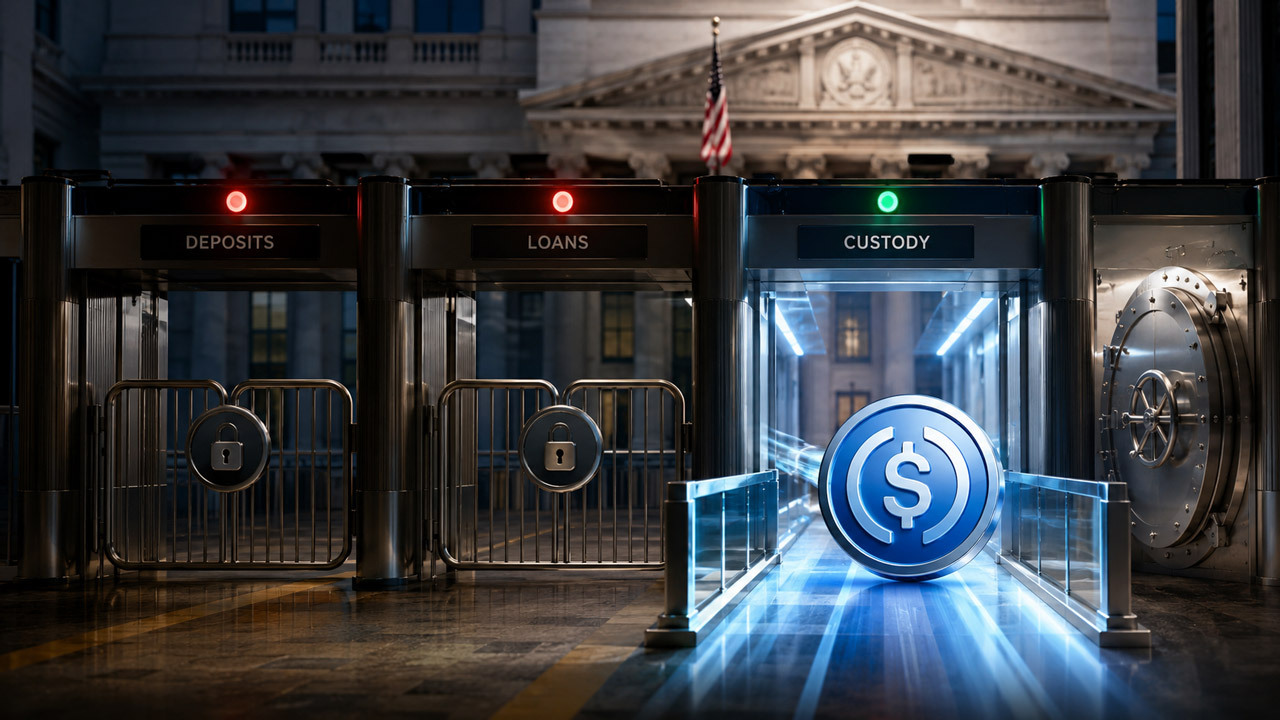
Circle, the entity behind USDC, just got the green light to operate as a national trust bank in the United States. If you are a builder in the stablecoin space, you probably saw the headline and thought they finally cracked the code to becoming a real bank. Not exactly. This is a very specific, very restricted version of banking that tells us more about the regulatory climate in Washington than it does about Circle’s expansion plans into retail finance.
The Bank That Is Not a Bank
The charter is for the Circle National Trust. On paper, it sounds massive. In reality, it is a highly specialized vehicle. This new entity is explicitly prohibited from doing the two things that make a bank a bank in the eyes of the public: taking ordinary deposits and making loans. You can’t go to Circle to open a checking account, and they aren’t going to give you a mortgage.
Instead, this is a trust bank. It is designed for custody and asset management. For now, the scope is even narrower than that. According to the early details, its primary function is to provide custody services for Circle itself and its internal affiliates. Think of it as Circle building a high-tech, regulated vault inside its own house so it doesn't have to rely entirely on third-party landlords.
Why This Matters for Infrastructure
For builders, the signal here is about the hardening of stablecoin infrastructure. One of the biggest risks for USDC has always been its reliance on the traditional banking system. We saw this play out during the Silicon Valley Bank collapse. When your reserves are sitting in someone else's bank, you are at the mercy of their balance sheet and their risk management failures.
By establishing a national trust, Circle is moving toward a future where it can manage its own USDC reserves. While that isn't the immediate day-one mission, it is clearly the endgame. If Circle can eventually move its reserve management under its own regulated roof, it reduces the counterparty risk that has haunted the stablecoin market since inception. It is about building a closed loop where the assets backing the coin are managed by the same standards as the coin itself.
The Institutional Play
While the trust is starting with internal service, the roadmap clearly points toward outside institutional custody. This is where the competition gets interesting. Companies like Anchorage and Paxos have been playing in this lane for a while. Circle entering the fray with a national charter means they are coming for the big money players who are still too nervous to hold crypto on a standard exchange.
If you are building an institutional DeFi platform or a cross-border payment app, having a partner with a US national trust charter is a massive compliance checkbox. It provides a level of legal certainty that a standard offshore crypto custodian simply cannot match. It’s boring, and it’s bureaucratic, but it is the prerequisite for the next wave of capital entry.
The Skeptic’s View: The Regulatory Tightrope
We should be honest about why the charter is so limited. The OCC and other federal regulators are still incredibly wary of letting crypto companies anywhere near the fractional reserve banking system. By stripping away deposit-taking and lending powers, regulators are essentially saying, You can hold the money, but you can’t play with it.
This creates a ceiling for how much a company like Circle can actually grow within this specific structure. Without the ability to lend, they are stuck with a fee-based model or a thin margin on Treasury yields. For a founder, this is a reminder that the US government is not ready to hand over the keys to the kingdom. They are willing to grant specialized licenses that allow for oversight without systemic risk, but the path to a fully global, digital-native bank remains blocked.
What Builders Should Watch
If you are working in the ecosystem, don't expect USDC to change overnight. The real shift will happen in the plumbing. Keep an eye on how Circle handles its reserve transparency reports over the next year. If we start seeing the Circle National Trust appearing as the primary custodian for those billions of dollars in Treasuries, the stability of USDC becomes a whole different conversation.
We also need to watch for the inevitable ripple effect. When one major player gets a nod from federal regulators, others follow. This might be the start of a trend where crypto firms stop trying to be everything to everyone and instead build a suite of specialized, regulated entities that handle different parts of the stack. One entity for the token, one for the trust, one for the exchange.
The Long Game
Building in crypto is often a game of regulatory arbitrage, but Circle is playing a different game: regulatory exhaustion. They have spent years and millions of dollars to get a seat at the table. This trust bank is a small seat, but it is a seat nonetheless. It proves that there is a path forward for large-scale crypto firms to operate under federal supervision without having to pivot into becoming a traditional fintech app.
For the average user, this means almost nothing. For the founder building the next generation of financial rails, it means the ground beneath our feet just got a little more solid. We are moving away from the era of pure startups and into the era of institutional infrastructure. It’s less exciting, maybe less decentralized than some would like, but it’s the only way the industry survives the next decade of scrutiny.
The takeaway for founders is clear: Stop looking for shortcuts. Regulatory compliance is not a hurdle to be jumped once; it is a permanent feature of the landscape. Circle is building the vault before they try to build the bank.
Read the original at CryptoSlate →