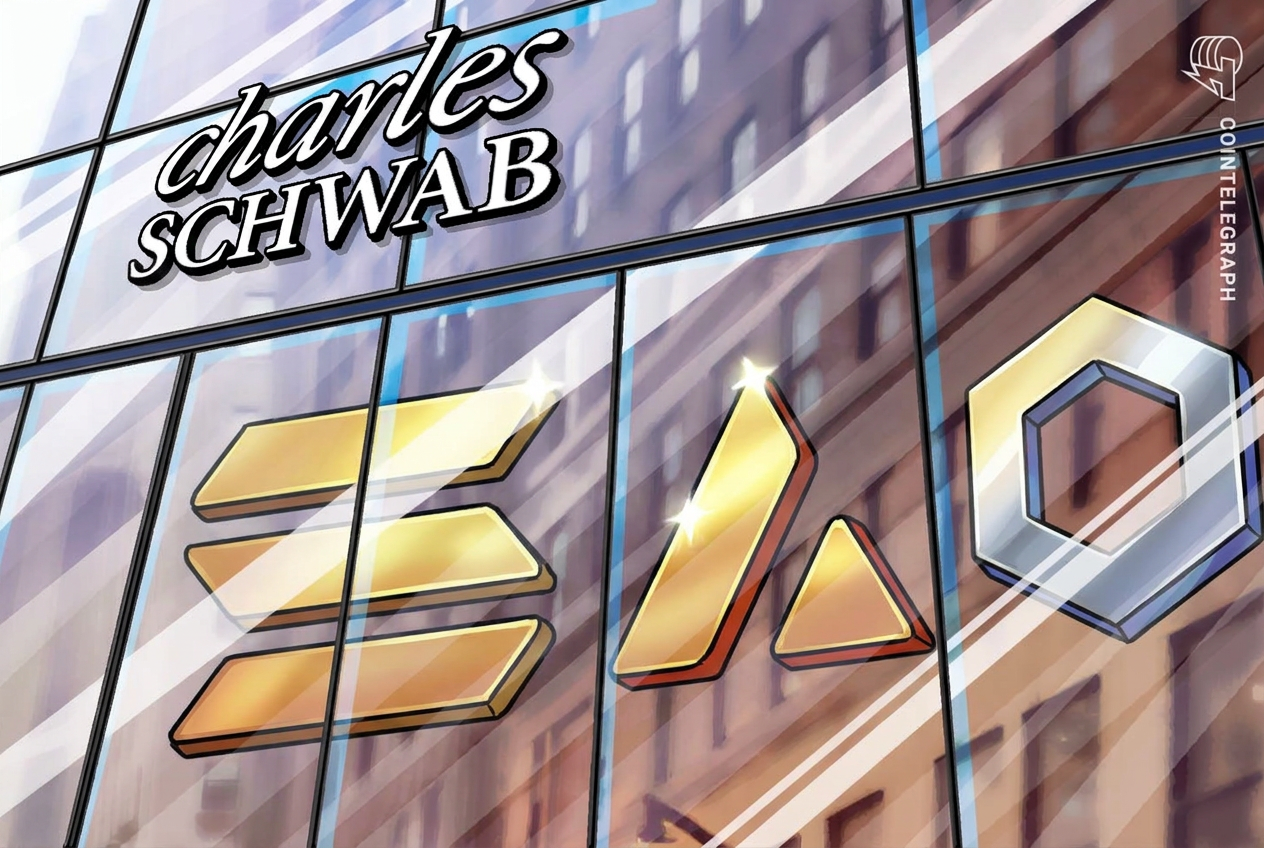
TradFi is finally moving past the orange pill. For a long time, the institutional narrative was simple: Bitcoin is digital gold, Ethereum is a global computer, and everything else is a risky science project. But Charles Schwab just signaled that the fence-sitting era for altcoins is coming to an end for retail brokerage giants.
By adding support for Solana, Avalanche, and Chainlink, Schwab isn't just expanding a menu. They are validating the infrastructure layer of the next internet. For those of us building in this space, this is a massive signal. It means the gatekeepers of trillions of dollars in retirement accounts are starting to get comfortable with the idea that the future isn't just one chain or one use case.
Beyond the Big Two
When Schwab first rolled out direct crypto trading for retail clients, it was the safe, predictable play. They stuck to Bitcoin and Ether. It was the institutional equivalent of dipping a toe in the water to make sure the temperature was right. But just a few months later, they are diving into the mid-cap and infrastructure plays. This tells me the demand from their client base isn't just coming from speculators looking for the next moonshot, but from investors who are starting to understand how these networks actually function.
Solana represents the high-throughput, low-latency bet. Avalanche represents the sub-net, modular scaling thesis. Chainlink represents the vital oracle bridge that connects real-world data to the blockchain. These aren't just tickers; they are distinct technical architectures. The fact that Schwab is listing them suggests their research teams have done the due diligence and decided these networks have enough staying power to be presented to grandma's brokerage account.
What This Means for the Builders
If you are a founder or a developer, you shouldn't just look at this as a liquidity event. You should look at it as a distribution milestone. When an asset moves from a specialized crypto exchange to a platform like Schwab, the user profile changes completely. You are no longer just building for the DeFi native who knows how to manage a seed phrase and navigate a bridge.
You are now building for a world where your underlying infrastructure might be abstracted away by a legacy financial institution. If your dApp runs on Solana, and a Schwab user can now easily gain exposure to that ecosystem, the pressure on user experience (UX) becomes even more intense. These users expect the polish of a banking app, not the friction of a Web3 wallet. This is a call to action to simplify your onboarding and focus on utility over technical jargon.
The Institutional Stamp of Approval
We often talk about institutional adoption as some far-off event, but it happens in increments. Every time a firm with Schwab's reputation adds a token, it lowers the perceived risk for the next firm. This creates a waterfall effect. If Schwab is doing it, Fidelity has to keep pace, and Vanguard—eventually—will be forced to reconsider its stance.
For the Avalanche and Solana communities, this is a validation of their technical roadmap. Both chains have spent the last two years fighting the narrative that they couldn't compete with Ethereum's decentralization or security. Being listed alongside the giants in a regulated environment is a sign that the industry is moving toward a multi-chain reality where different networks serve different purposes.
The Chainlink Factor
I find the inclusion of Chainlink particularly interesting. While Solana and Avalanche are Layer 1 platforms, Chainlink is an abstraction layer. It is the plumbing. Schwab adding LINK suggests they recognize that the value of the blockchain ecosystem isn't just in the ledgers themselves, but in the data integrity that allows them to interact with the outside world.
For builders, this reinforces the importance of interoperability. We are moving away from the era of isolated islands. If the big banks are looking at Link, they are looking at how to bring their own real-world assets (RWA) onto the chain. This is where the real growth is going to happen in the next three to five years. Tokenized real estate, private equity, and debt markets will need the very infrastructure Schwab is now letting its retail users bet on.
The Skeptic's Corner
Now, let's keep it real. Schwab isn't doing this out of the goodness of their heart or a deep philosophical belief in decentralization. They are doing it because there are fees to be earned and assets to be managed. If they don't provide these options, their younger clients will move their capital to Robinhood or Coinbase.
We should also be wary of the "institutional embrace." When these giants enter the room, they bring regulation and centralization pressure with them. They want clean, compliant ecosystems. This could lead to a bifurcation of the industry: the regulated, KYC-heavy version of these networks that live inside brokerage apps, and the permissionless, wild-west version that we started with. As a founder, you need to decide which side of that line you are building for, or if you can bridge both.
A Shift in Perspective
The takeaway here is that the "crypto winter" narrative is officially dead in the eyes of Wall Street. You don't build out infrastructure for altcoins during a dead market. You do it when you see a long-term shift in how wealth is being managed. The retail investor is being given the keys to the broader ecosystem, and that means more eyes on your projects and more scrutiny on your code.
For years, we’ve been told that crypto is a bubble. But bubbles don't usually get integrated into the core product suites of 50-year-old financial institutions. This is a sign of permanence. It’s a sign that the experiments we’ve been running in the sandbox are ready for the main stage.
Final Takeaway for Founders
Stop worrying about the price of the tokens and start worrying about the robustness of the networks. Schwab is betting that Solana, Avalanche, and Chainlink will be around for the long haul. If you are building on these platforms, your job is to prove them right by creating tools that provide genuine value to the millions of new users who are about to have easy access to these ecosystems. The friction is melting away; don't let your product be the thing that holds them back.
The walls between traditional finance and decentralized protocols aren't just being breached; they are being dismantled by the very institutions that built them.
Read the original at Cointelegraph →