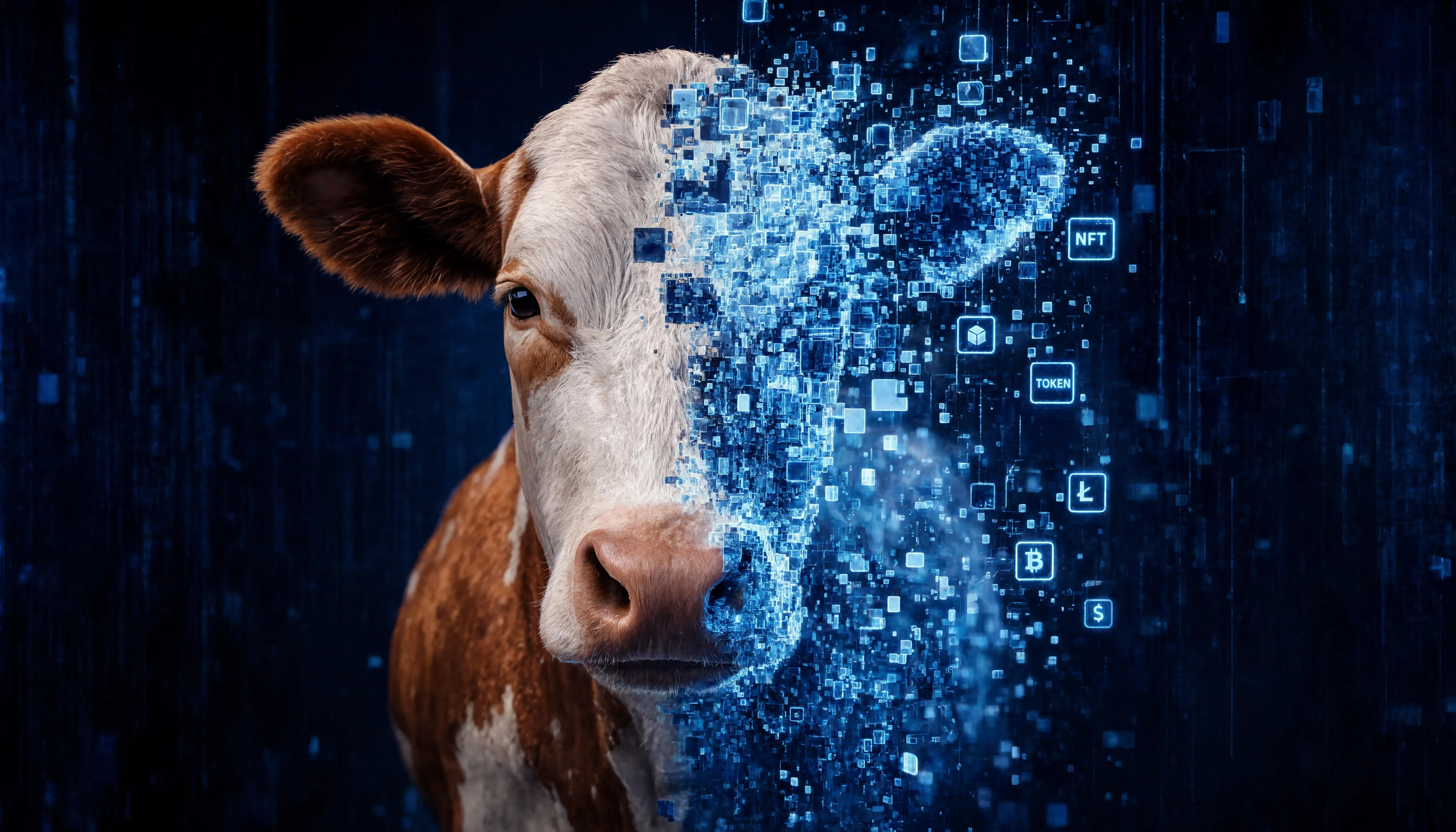
We talk a lot about Real World Assets (RWA) in the abstract. People like to get excited about tokenizing luxury real estate or gold bars, but the real utility usually shows up where the friction is highest. Right now, that friction is in the Brazilian dairy industry, and the solution isn't a new bank loan—it is a cow on a blockchain.
Brazil's agricultural sector is currently hitting a wall. The dairy industry specifically is facing a massive credit squeeze. Traditional lenders are pulling back, interest rates are punishing, and the people who actually produce the food are finding themselves disconnected from the capital they need to keep the lights on. This is where the first tokenized livestock deal on the Brazilian stock exchange (B3) comes in.
The Practicality of Proof of Cow
It sounds like a crypto meme, but the mechanics here are incredibly grounded. Farmers need working capital. Investors want yields that aren't tied to the volatility of a shitcoin. By tokenizing the cattle, these farmers are essentially creating a new form of collateral that is transparent, trackable, and liquid enough to satisfy the requirements of a regulated stock exchange.
This isn't about hype or high-frequency trading. It is about inventory management. In the traditional world, a bank might look at a sprawling farm and see a messy, risky operation. By putting these animals on-chain, each cow becomes a verifiable data point. You know its history, its health, and its value. This transparency lowers the risk profile for domestic investors, allowing money to flow into the farm without the gatekeeping of a traditional commercial bank.
Why This Matters for Builders
If you are building in the RWA space, stop looking at Manhattan penthouses. The Brazilian cow experiment is the blueprint. It solves a specific, painful problem for a massive industry. It is a reminder that the most successful blockchain applications aren't the ones that try to disrupt everything at once, but the ones that act as a bridge where the current financial infrastructure is crumbling.
For developers and founders, there are a few tactical takeaways from this development:
- Vertical focus wins: Instead of building a generic tokenization platform, focusing on a specific asset class—like livestock or grains—allows you to build the specific compliance and tracking tools that the industry actually needs.
- Regulation is a feature, not a bug: The fact that this deal happened on the B3 stock exchange is the headline. Building in the shadows of the law might feel faster, but getting institutional buy-in requires working within the regulatory frameworks that investors trust.
- Data is the collateral: The blockchain part is just the ledger. The real value is the IoT and tracking data that proves the asset exists and is being managed properly.
The Credit Crisis Catalyst
Crisis is usually the biggest driver of adoption. When the pipe is working, nobody looks for new plumbing. But in Brazil, the pipe is broken. Dairy farmers are being squeezed by rising costs and shrinking margins. When the traditional lending market dried up, the urgency to find an alternative outweighed the skepticism of new technology.
As a founder, I look at this and see a massive opportunity for "Crisis-as-a-Service." Whenever a traditional industry hits a credit wall, there is an opening for a decentralized solution to step in. It’s not just about cows. It’s about any asset that is currently undervalued or under-utilized because a bank doesn't know how to price it.
Separating the Signal from the Noise
I’ve been skeptical of many RWA projects because they often feel like solutions looking for a problem. They add layers of complexity to things that work just fine. But agricultural lending has been broken for a long time. It is slow, paperwork-heavy, and often exclusionary toward smaller producers. Tokenization removes those specific bottlenecks.
It is important to remember that tokenizing a cow doesn't make it worth more. It just makes the value of that cow more accessible to the market. We shouldn't expect this to result in a 100x moonshot. We should expect it to result in a 8% or 10% steady yield for an investor and a stable business for a farmer. That is what real utility looks like.
The most successful blockchain applications aren't the ones that try to disrupt everything at once, but the ones that act as a bridge where the current financial infrastructure is crumbling.
The Road Ahead
This is just the first deal. The success of this pilot on the B3 exchange will likely lead to a flood of similar offerings across South America. We are going to see tokenized soy, tokenized poultry, and tokenized timber. The infrastructure being built today in the mud of a dairy farm is going to be the standard way we handle trade finance in a few years.
For those of us in the crypto and AI space, the challenge is to stop building toys and start building tools. The Brazilian farmers don't care about the philosophy of decentralization. They care about keeping their farms. If your tech helps them do that, they will use it. If it doesn't, you're just making noise.
The Bottom Line
Tokenized livestock in Brazil is the best current example of RWA having a real-world impact. It bypasses a stagnant banking sector, provides transparent collateral for investors, and keeps a vital industry afloat. For builders, the lesson is clear: go where the credit is tight and the assets are tangible. That is where the next decade of growth is going to happen.
Read the original at Decrypt →