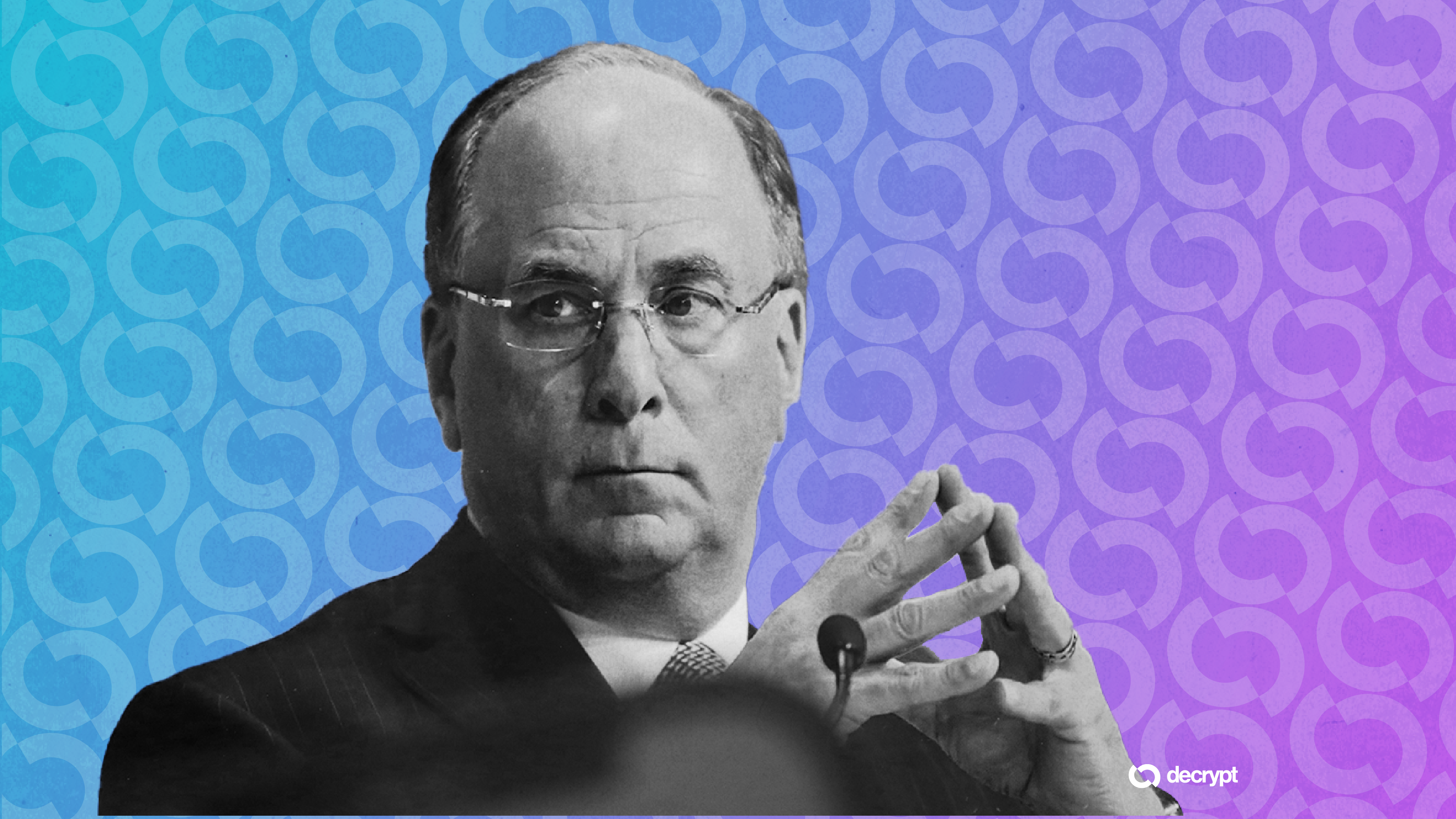
When the head of the world’s largest asset manager starts talking about data centers like they are the new backbone of the American economy, you need to listen. Larry Fink isn’t known for hype; he’s known for following the money. And right now, the money is demanding more power, more silicon, and more concrete.
Following BlackRock’s third-quarter earnings, Fink made a point that shouldn’t be overlooked by anyone building in the crypto or AI space. He argued that AI infrastructure spending has become so vital to the United States’ economic health that stopping it wouldn’t just slow down innovation—it could actually tip the country into a recession. That is a heavy statement. It moves AI from the category of "cool tech experiment" to "national economic security."
The Infrastructure Dependency
For a long time, we viewed data centers as invisible utilities. They were the windowless buildings in the suburbs that hosted our emails and cat videos. But the generative AI boom changed the math. The compute power required to train and run these models is orders of magnitude higher than anything we’ve dealt with before. This has triggered a construction gold rush.
Fink’s perspective is that this capital expenditure is currently holding up a significant portion of the GDP. If you stop the cranes and the cable-laying, you aren't just delaying the next version of a chatbot. You are removing a massive pillar of industrial investment. For builders, this means that the physical world is finally catching up to the digital one. You can have the best code in the world, but if the grid can’t support the hardware, your software is a brick.
The Backlash and the "Misinformation"
As these data centers grow, so does the local resistance. People are worried about water usage, noise, and, most importantly, the strain on the electrical grid. Fink dismissed much of this pushback as "misinformation," which is a strong word coming from a CEO who usually plays it safe with public sentiment. He sees a midterm political flashpoint forming where data centers are being painted as villains.
From a founder’s perspective, this is the skeptical part. Is it really misinformation, or is it a legitimate concern about a crumbling power grid that wasn’t designed for this? We are trying to build the future on top of a 1950s electrical foundation. Fink is essentially saying we have no choice but to push through and build. He views the alternative—economic stagnation—as a far greater risk than the growing pains of infrastructure expansion.
Why Builders Should Care
If you are building an AI startup or a decentralized physical infrastructure (DePIN) project, this is your green light. The institutional world has decided that this infrastructure is "too big to fail." When BlackRock aligns itself with the build-at-all-costs mindset, it means capital will continue to flow into energy solutions and hardware, even if the broader market gets shaky.
- Capital Certainty: Institutional backing for data centers means that the hardware layer of AI is becoming a permanent asset class.
- Energy is the Bottleneck: The real opportunity isn't just in the AI models; it's in how we power them. Anyone solving the energy-efficiency problem has a customer in every data center on earth.
- Regulatory Risk: Fink’s warning about a recession suggests that the government will likely grease the wheels for infrastructure projects to avoid an economic downturn.
The Founder’s Skepticism
We should be careful when someone like Fink says that questioning data centers is misinformation. There are real costs to this growth. However, he is right about the momentum. The US economy has become addicted to the growth projections of Big Tech. If those projections falter because we can't build the buildings to house the chips, the stock market reaction will be violent. That is what he is actually afraid of.
For those of us in the trenches, the takeaway is clear: the physical layer is where the battle is being fought. We spent years thinking the cloud was this ethereal thing. Now we are realizing it’s a hungry beast made of steel and copper. The founders who succeed in the next five years will be the ones who understand how to navigate the intersection of high-level AI and the gritty reality of physical infrastructure.
The Takeaway
AI infrastructure is no longer an optional tech trend; it is now a macroeconomic stabilizer. If we stop building data centers, we risk an economic stall. For founders, the focus should shift toward making this growth sustainable and efficient, because the demand for compute isn't going anywhere, but the patience of the public and the grid has limits.
Read the original at Decrypt →