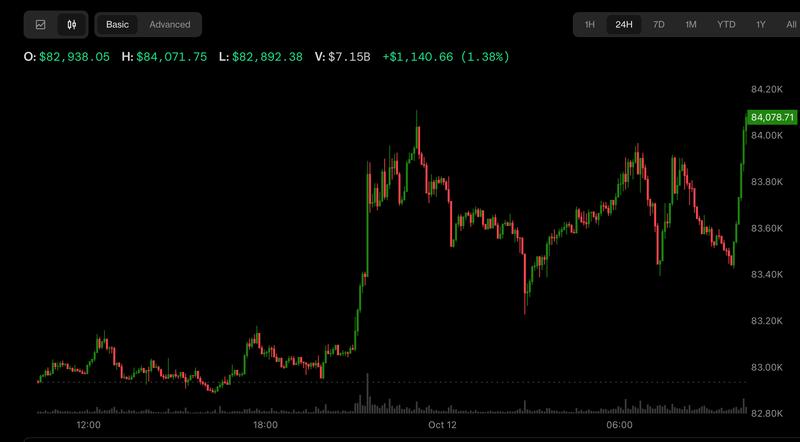
We have spent the last year hearing that the only thing keeping Bitcoin afloat was the flood of institutional money coming through the new exchange-traded funds. The narrative was simple: if the Wall Street pipes get clogged or the money starts flowing backward, the price will crater. Last week, that theory was put to a real-world test. We saw over $600 million leave Bitcoin ETFs, yet the price didn't just hold steady—it pushed past $84,000.
The ETF decoupling
For founders and builders, this is a signal that the market is maturing beyond the "BlackRock effect." When massive outflows happen and the price goes up anyway, it tells us that the organic demand, the spot buying, and the long-term conviction of holders are currently stronger than the tactical shifts of institutional desk traders. It is a reminder that Bitcoin is not just a tech stock in a different wrapper.
We are seeing a decoupling. While the ETFs provide a convenient entry point for retirement accounts and corporate treasuries, they are not the heartbeat of the network. The heartbeat is global, 24/7, and increasingly reactive to macroeconomic shifts that have nothing to do with whether a fund manager is rebalancing a portfolio on a Friday afternoon.
Macro tailwinds and the oil factor
Part of what is driving this strength is the cooling of the energy markets. Oil prices have been sliding, which generally eases inflationary pressure and gives central banks a little more room to breathe. When energy costs drop, it is effectively a tax cut for the entire world. That extra liquidity has to go somewhere, and right now, it is flowing into assets that offer a hedge against the inevitable debasement of fiat currency.
As a builder, I look at the oil correlation not as a trading signal, but as a sentiment gauge. Lower energy costs mean lower operational costs for miners and better margins for startups. It creates a temporary window of stability where people feel more comfortable taking risks on long-term digital infrastructure rather than just huddling in cash.
What this means for the build cycle
If you are building in the crypto space, the lesson here is to stop obsessing over the weekly ETF flow charts. Those numbers are noisy. They represent the fickle nature of traditional finance—money that comes in when it's easy and leaves the second there is a hint of volatility elsewhere. The fact that Bitcoin can shrug off a half-billion-dollar exit and still trade at all-time highs suggests that the floor is much higher than the skeptics thought.
We are entering a phase where the utility and the scarcity of the asset are starting to outweigh the speculative fervor of the middlemen. For those of us focused on the technology, this is the best possible environment. It means we have enough price support to keep the lights on and attract talent, but enough independence from Wall Street's daily whims to actually focus on shipping product.
The danger of complacency
However, we shouldn't get cocky. Resilience is good, but the gap between the "paper Bitcoin" in ETFs and the actual on-chain economy is still wide. The real work for founders is making sure that the value we are creating justifies these price levels. If we are just building more ways to trade the same coins, we are wasting a golden opportunity.
We need to be building the layers that make Bitcoin useful for something other than just sitting in a digital vault. Whether that is decentralized finance on top of Bitcoin, better privacy tools, or integrations with the burgeoning AI economy, the goal is to make the price irrelevant to the utility. When the network is indispensable, it doesn't matter what the ETF outflows look like.
Focus on the signal
The signal right now is clear: Bitcoin is becoming an independent actor in the global macro landscape. It is no longer just a high-beta play on the Nasdaq. It is absorbing selling pressure from some of the largest financial institutions in the world and continuing to climb. This is the kind of market strength that usually precedes a major shift in how the public perceives digital assets.
For the founders in the trenches, my advice is to keep your head down and ignore the price tickers, even when they are green. Use this period of relative strength to harden your infrastructure. Hire the people who were too expensive six months ago. Refine your roadmap. The market is giving us a vote of confidence, but it is up to the builders to ensure that confidence is well-placed.
The bottom line
Bitcoin is trading above $84,000 because the world is starting to realize that it is one of the few assets that cannot be printed, manipulated, or turned off by a central authority. The $600 million that left the ETFs last week represents people who were looking for a quick trade. The people who are still here, and the people who are buying on the way up, are the ones who understand the long-game.
As we watch the energy markets fluctuate and the traditional funds reshuffle their decks, remember that the underlying technology hasn't changed. The block time is still ten minutes. The supply is still capped. Everything else is just noise. Build for the world where this is the standard, not the exception.
Read the original at CoinDesk →