The ETF Honeymoon is Officially Over
For months, the narrative in the crypto space was simple: the Bitcoin ETFs are coming, and they will fix everything. We were told that institutional money would create a permanent floor, a sort of gravity that would prevent the wild swings we founders have become accustomed to. But the latest data shows a different picture. With a $90 million net outflow hitting US spot Bitcoin ETFs, we are seeing the exit of the 'tourist' capital. This isn't a catastrophe, but it is a necessary reality check for anyone building in this space.
Bitcoin is currently trading roughly 32% below the highs we saw in late 2024. While the headlines focus on the price drop, the real story is the reversal of the inflow trend. After two days of decent buying, the tide turned. When the price dipped below the $86,000 mark, the institutional hands got shaky. This tells me that the current crop of ETF buyers are not the 'diamond hand' HODLers we were promised; they are tactical traders who are just as susceptible to FUD as the retail crowd.
The Gap Between Price and Utility
As a founder, I look at these numbers and see a massive disconnect. We are building infrastructure, scaling protocols, and integrating AI, yet the primary metric for the world is still the ETF flow. This $90 million outflow represents a lack of conviction in the short-term macro environment. It suggests that the 'smart money' is still viewing Bitcoin as a risk-on asset rather than a foundational piece of the new financial internet.
When Bitcoin sits 32% below its record, it creates a psychological barrier for new projects. Raising capital becomes harder because VCs look at the liquid market as a barometer for sentiment. But here is the skeptical take: this is actually a good thing for builders. When the ETFs are pumping and the price is at an all-time high, the noise is deafening. You get 'tourist founders' who are only here for the exit. When the outflows start, the noise dies down, and the people left in the room are the ones actually writing code.
Volatility is the Feature, Not the Bug
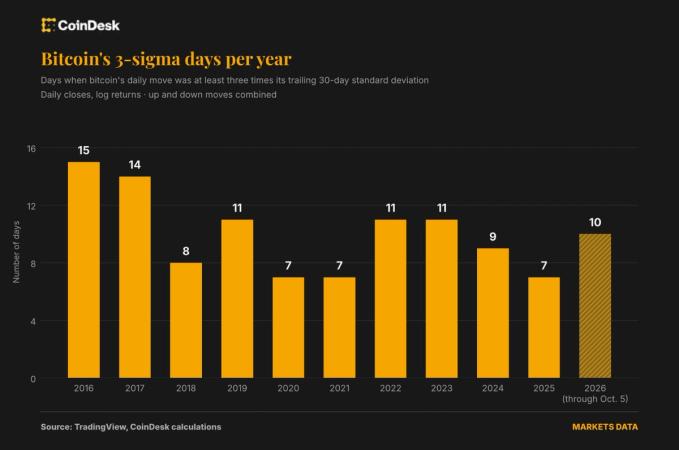
The marketing around ETFs suggested they would dampen volatility. That was always a lie. If anything, the concentration of capital in a few regulated vehicles makes the market more reactive to traditional financial cycles. A $90 million swing might seem like a drop in the bucket compared to Bitcoin's total market cap, but it represents the marginal seller—the person who actually sets the price.
We are currently in a phase where the market is trying to figure out what Bitcoin is actually for, beyond just being a line on a chart that goes up. Is it a hedge? Is it a settlement layer? Is it the treasury asset for AI agents? The current price action suggests that the market hasn't decided yet. The uncertainty in the ETF flows mirrors the uncertainty in the broader tech sector.
What This Means for the Build Cycle
If you are running a startup or developing a protocol, do not let the $90 million outflow distract you, but do let it inform you. It tells us that the liquidity isn't as 'sticky' as the analysts on X would have you believe. You cannot rely on a constant stream of institutional buying to keep your token price or your valuation afloat. You have to build products that have utility regardless of whether the ETF is seeing inflows or outflows.
I’ve seen these cycles before. The moment the price dips 30%, people start talking about the 'death of crypto.' Then, as soon as we see $100 million in inflows, they start talking about 'to the moon.' Both perspectives are wrong. The truth is in the middle: we are in a period of consolidation where the weak hands are being shaken out, and the ETFs are simply providing a faster way for them to leave.
The Institutional Learning Curve
We have to remember that for many of these ETF investors, this is their first real cycle. They don't have the scar tissue that those of us who survived 2018 or 2022 possess. They see a 32% drop from the high and they panic. They don't see a discount; they see a failing investment. This gap in perspective is an opportunity for builders to provide education and better tools for risk management.
The current $86,000 level is a pivot point. If we stay below it, expect more outflows as momentum-based strategies flip to sell. If we bounce, the narrative will shift back to 'institutional accumulation.' But regardless of which way the wind blows, the underlying technology hasn't changed. The blocks are still being produced every ten minutes. The code still works.
Final Takeaway for Founders
The ETF outflows are a reminder that Bitcoin is still a frontier asset. It is not yet a stable utility like the US Dollar or even gold. For builders, this means your runway needs to be calculated with the assumption that the market can—and will—drop another 30% at any moment. Don't build for the bull market; build for the reality of the volatility.
- Institutional money is just as flighty as retail money when the price action turns sour.
- Bitcoin being 32% off its highs is a healthy reset for a market that was becoming over-leveraged.
- Focus on building products that generate real revenue, so you aren't dependent on the 'ETF pump' for survival.
The $90 million that left the market today didn't disappear; it just moved to the sidelines. It will come back when the narrative changes. Your job is to make sure that when it does come back, there is something worth buying besides just the coin itself. Stop watching the ticker and get back to the terminal.
Read the original at Cointelegraph Solana →