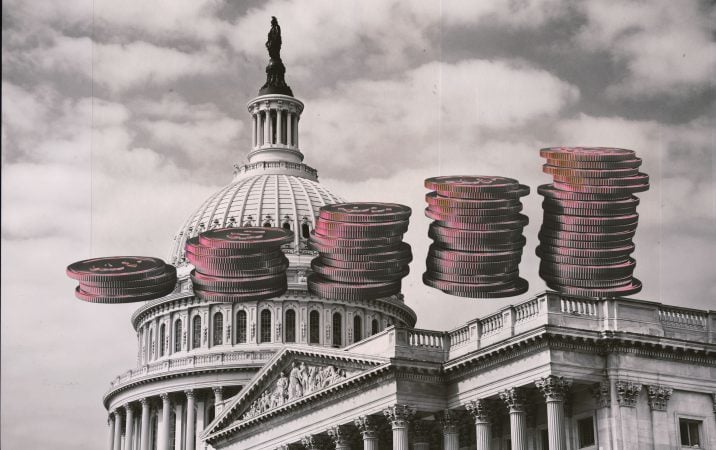
We have spent the last few years watching the crypto industry play a high-stakes game of chicken with Washington. The strategy from the regulators has been simple: don't write rules, just sue people until they quit. But according to a recent analysis from Bernstein, we are approaching a fork in the road. If the legislative path—specifically the Clarity Act—stalls out this year, we are likely to see an aggressive pivot toward direct agency rulemaking under the umbrella of Project Crypto.
The Legislative Bottleneck
For founders, the Clarity Act was supposed to be the clean break. It was designed to provide the one thing we actually need to build without fear: a clear definition of what is a security and what is a commodity. Currently, we operate in a gray zone where every line of code could be interpreted as an unregistered offering depending on which side of the bed a regulator wakes up on.
The reality is that Congress is slow. If the Clarity Act fails to cross the finish line by the end of 2024, the momentum won't just vanish; it will shift. Bernstein suggests that this failure will act as a catalyst for the SEC and the CFTC to stop waiting for permission and start drafting their own frameworks. For a builder, this is a double-edged sword.
Project Crypto and the Rulemaking Pivot
The term Project Crypto refers to a coordinated effort to modernize how digital assets are handled within existing financial structures. If the legislative route hits a dead end, the SEC and CFTC will likely be forced to accelerate their internal rulemaking processes. This is a massive shift from the status quo.
For years, Gary Gensler’s SEC has relied on enforcement-led regulation. They don't tell you the rules; they just wait for you to launch a product and then hit you with a Wells notice. If the agencies move toward formal rulemaking, they actually have to put their requirements on paper, allow for public comment, and defend those rules in court. While more regulation usually sounds like a headache, for a founder, a bad rule you can read is often better than a vague threat you can't quantify.
Why This Matters for Founders
If you are building in DeFi or infrastructure right now, you are essentially gambling on the future of US jurisdiction. The shift toward agency-led rulemaking under Project Crypto changes your risk profile in three specific ways:
- Predictability over Permission: Rulemaking requires a public process. We might actually get to see the criteria for what makes a token decentralized enough to escape security status, rather than guessing based on old legal precedents from the 1940s.
- Jurisdictional Clarity: The tug-of-war between the SEC and CFTC has left many projects in limbo. Accelerated rulemaking would force these two agencies to draw a line in the sand, helping founders decide which regulatory regime they need to comply with.
- Cost of Compliance: Make no mistake, formal rules will be expensive. However, they are significantly cheaper than a $20 million legal defense fund against an aggressive federal agency.
The Skeptic's View
I’ve been around long enough to know that "clarity" is often a euphemism for "compliance costs that kill startups." We shouldn't assume that just because the SEC and CFTC start writing rules, those rules will be friendly to builders. In fact, if the Clarity Act fails, the agencies might feel emboldened to double down on restrictive frameworks that favor incumbents over innovators.
There is also the risk of regulatory capture. When agencies write the rules, the biggest players with the deepest pockets and the most lobbyists tend to get the most favorable terms. A small team of developers building a new primitive might find themselves shut out by rules that were essentially written by and for the largest exchanges and traditional finance institutions.
Navigating the Transition
What should you do if you are running a project today? First, stop waiting for a miracle from Congress. The political climate is volatile, and counting on a single piece of legislation to save your business model is a recipe for failure. You need to be watching the administrative registers, not just the headlines about bills.
Second, start thinking about your protocol's architecture in terms of these two potential futures. If the SEC moves toward a more rigid registration framework, does your project have a path to compliance? If the CFTC takes the lead on commodities, is your governance truly decentralized enough to meet their standards? Building with flexibility is the only way to survive a regulatory environment that is about to undergo a total overhaul.
The era of 'regulation by enforcement' is reaching its natural limit. Whether through law or through agency rules, the fence is being built. Your job is to make sure you're standing on the right side of it before the gate closes.
The Takeaway for Builders
The failure of the Clarity Act wouldn't be the end of crypto regulation; it would simply be the end of the beginning. It marks the moment where the agencies stop playing defense and start defining the sandbox. As a founder, you have to move past the hype of 'crypto-friendly' rhetoric and look at the structural reality: the rules are coming, and they will likely be dictated by the SEC and CFTC rather than a divided Congress.
Focus on building robust, decentralized systems that can withstand scrutiny regardless of which agency wins the turf war. The noise in Washington is a distraction; the real work is preparing for a world where crypto is no longer an outlier, but a highly regulated component of the global financial stack. If you can survive the transition from the Wild West to a regulated market, you'll be among the few left standing when the institutional capital finally feels safe enough to enter the room.
Read the original at The Block →