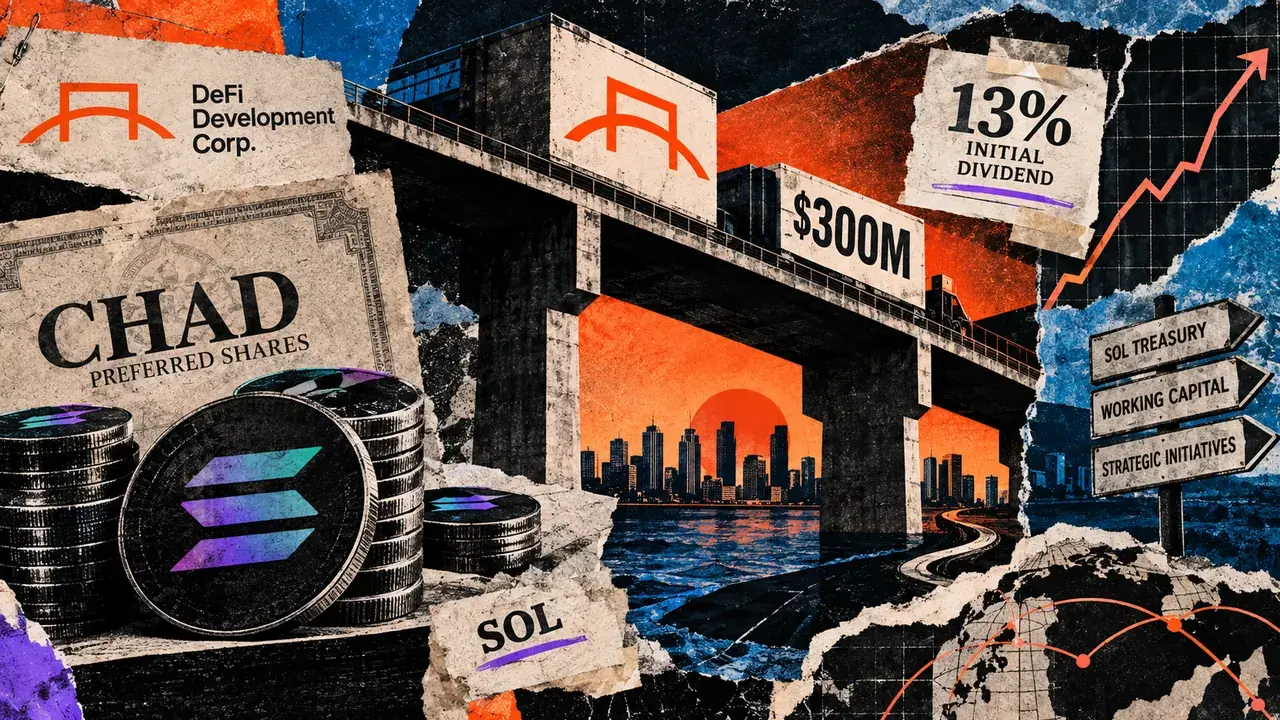
When you see a ticker symbol like CHAD, you naturally expect a certain level of bravado. In the case of DeFi Development, that bravado is backed by a $300 million filing and a commitment to the Solana ecosystem that is either brilliantly timed or incredibly risky. This isn't just another meme coin launch; it is a structured attempt to bridge the gap between traditional equity and the volatility of the SOL treasury.
The Mechanics of the Offering
The core of this move is an offering of 30 million shares. At a maximum price of $10 per share, the company is looking to pull in significant capital. But the interesting part isn't the number of shares—it is what they plan to do with the cash. DeFi Development is positioning itself as a proxy for the Solana ecosystem, intending to use the proceeds to bolster its treasury with SOL tokens and related assets.
For builders, this represents a shift in how crypto companies are capitalized. We are moving away from the pure ICO or venture-backed model and into a world where public equity is used as a vehicle to stack protocol-specific tokens. It is a bold play that assumes Solana will remain the dominant high-throughput chain for the foreseeable future.
The 13 Percent Catch
You cannot talk about this offering without addressing the dividend. The company has floated a 13 percent dividend yield, which is massive by any traditional market standard. In the world of crypto, we are used to triple-digit APYs in liquidity pools, but those usually come with the risk of permanent loss or rug pulls. Seeing a double-digit yield attached to a regulated share offering is different.
Here is the reality: that 13 percent has to come from somewhere. For the dividend to be sustainable, the underlying assets—primarily SOL—must perform well, or the company must generate significant revenue from its DeFi activities. If the market turns sideways, maintaining that payout becomes a massive burden on the balance sheet. It is a aggressive incentive designed to attract yield-hungry investors, but it places a lot of pressure on the company's treasury management team.
Why Builders Should Care
If you are building in the Solana ecosystem, you need to watch how these institutional vehicles behave. When a single entity controls a massive treasury of SOL through a public offering, their movements affect everyone. If they succeed, it creates a new layer of liquidity and stability for the ecosystem. If they fail or are forced to liquidate to cover dividends, it creates sell pressure that can affect every dApp and protocol on the chain.
We are seeing the emergence of what I call "Treasury-as-a-Service." Companies are essentially saying, "Give us your fiat, and we will manage the risk of the crypto ecosystem for you." For a founder, this might mean new opportunities for grants, partnerships, or acquisition if DeFi Development starts looking for ways to put that $300 million to work beyond just holding the token.
The Transparency Gap
Despite the high numbers, there is a lack of clarity on the exact allocation of the SOL. The filing allows for the sale of up to 30 million shares, but the actual proceeds and the specific percentage of that money going into SOL remain undetermined. This is typical for these types of offerings, but it should give any observer pause.
In crypto, we talk a lot about "don't trust, verify." In the public markets, you have to trust the filing and the auditors. There is a tension there. As a founder, I always look at the incentives. If the incentive is to raise the $300 million first and figure out the deployment later, that suggests the company is more focused on capital acquisition than immediate ecosystem utility.
The Risks of Concentration
One of the biggest hurdles for Solana has always been the perception of centralization. Whether it is the distribution of tokens or the reliance on a few key validators, the chain is constantly fighting the "VC chain" label. Large treasury-managed offerings like this one don't necessarily help that perception. If a few giant entities own a massive chunk of the circulating supply, the decentralization narrative gets harder to sell to the broader public.
What Happens Next
The success of the CHAD offering will be a litmus test for investor appetite in a post-FTX Solana world. We have moved past the era of pure speculation and into an era where investors want structured products. They want the upside of crypto with the legal protections of a share certificate.
If DeFi Development hits their $300 million goal, expect to see a wave of imitators. We will see the "GIGA" or "BULL" tickers hitting the market soon after. For the builders on the ground, this means more capital is flowing into the ecosystem, which is generally a good thing. But it also means the ecosystem is becoming more financialized and more tethered to the whims of the equity markets.
The 13 percent dividend is a double-edged sword. It is a magnet for capital, but it creates a debt-like obligation in a market known for its lack of stability.
The Takeaway
This is a sophisticated play to turn Solana's volatility into a yield-generating product for the masses. For builders, it is a sign that the ecosystem is maturing into a proper financial asset class. However, the high dividend yield and the uncertainty around the SOL allocation suggest that this is a high-wire act. Keep an eye on the treasury movements; that is where the real story will be told.
Read the original at CryptoSlate →