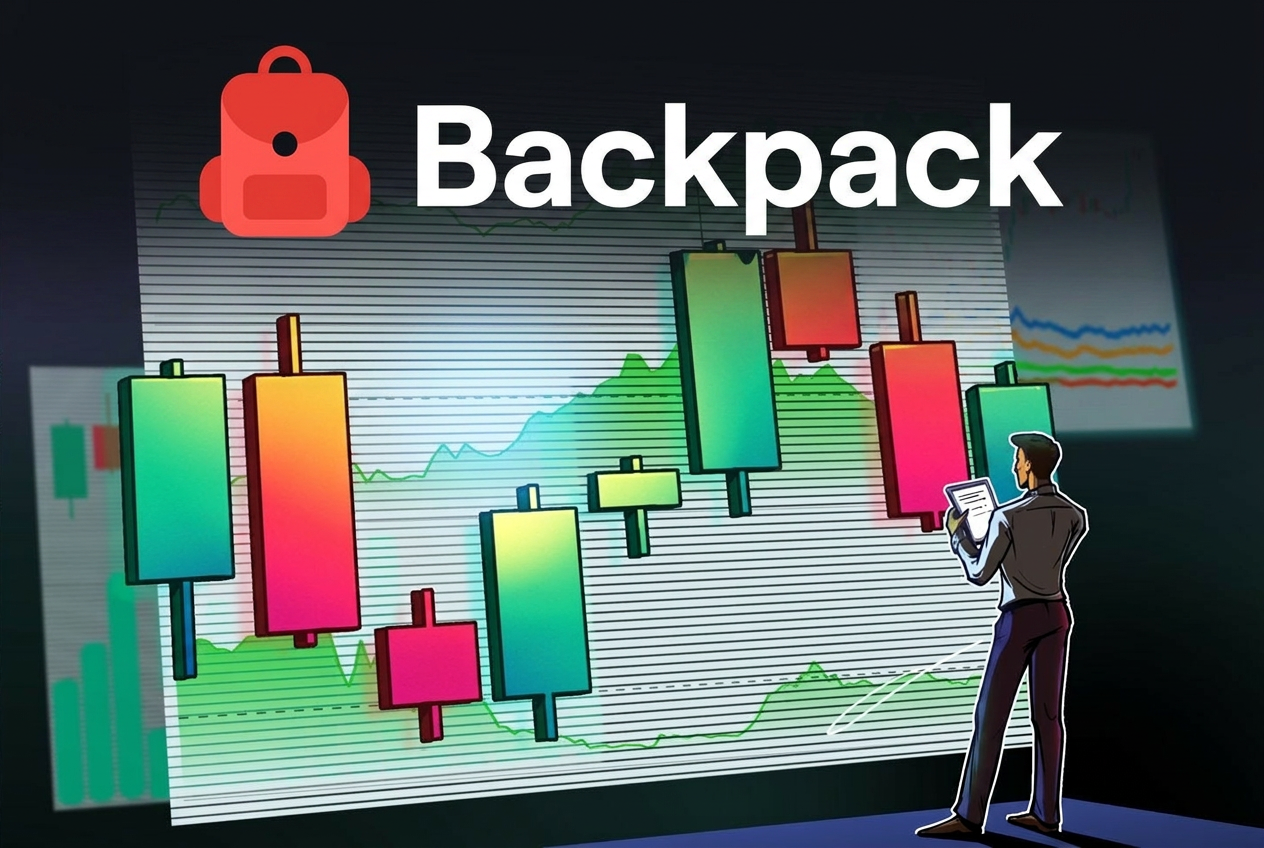
The traditional stock market closes at 4:30 PM Eastern Time. If you are a founder or a trader in any part of the world outside that timezone, you are essentially locked out of the liquidity and the price action of the most significant companies on earth for most of your waking hours. This is an artifact of a pre-internet banking system that we have collectively accepted for decades. But the walls are starting to come down, and the latest hammer is being swung by Backpack.
Liquidity That Never Sleeps
Backpack recently announced it is launching 24/7 trading for tokenized US equities. This isn't just a feature update for a niche exchange; it is a direct challenge to the plumbing of Wall Street. By bringing stocks like Apple, Nvidia, or Tesla into a tokenized format, they are allowing these assets to move at the speed of crypto. For anyone who has managed a cap table or built a decentralized protocol, the value proposition here isn't just the convenience of trading at 2 AM on a Sunday. It is about the fundamental composability of these assets.
The race for tokenized real-world assets is getting crowded. BlackRock is doing it with BUIDL, and Franklin Templeton has been pushing into the space for a while. However, most of the institutional efforts are focused on boring stuff like treasury bills. Backpack is aiming at the retail and founder market by focusing on the equities people actually want to trade. They are essentially saying that if you can trade SOL or BTC at any hour, there is no technical reason you shouldn't be able to do the same with a share of a major tech company.
Why Builders Should Care
When we talk about the democratization of finance, it often sounds like a marketing slogan. But for builders, tokenized equities represent a new layer of the stack. Imagine a world where your project’s treasury isn't just sitting in stablecoins or volatile native tokens, but is diversified into blue-chip stocks that can be used as collateral in DeFi protocols instantly. No wire transfers, no three-day settlement periods, and no dealing with a bank that doesn't understand your business model.
We are moving toward a reality where the distinction between a crypto asset and a traditional asset is just a matter of the wrapper. If the wrapper is a token, it can be programmed. It can be put into a smart contract. It can be fractionalized to a degree that traditional brokerage firms simply can't match without massive overhead. This is the infrastructure that will eventually support the next generation of global startups.
The Risks of the Wrapper
As much as I like the vision of 24/7 markets, we have to stay grounded. Tokenization adds a layer of counterparty risk. When you buy a tokenized stock, you aren't always holding the underlying share in a direct brokerage account; you are holding a claim on an entity that holds that share. This requires a high degree of trust in the exchange and the custodians they use. If the bridge between the digital token and the physical asset breaks, the trader is the one left holding the bag.
There is also the matter of regulatory arbitrage. US regulators have been famously slow to provide a framework for these types of assets, which is why we often see these innovations launching in jurisdictions with more clarity. For a founder, this means you need to be extremely careful about where your liquidity is coming from and who is providing the legal backbone for these tokens. It is easy to get caught up in the tech and forget that the underlying asset is still governed by century-old securities laws.
The End of the Trading Session
The concept of a market open and a market close is becoming obsolete. The crypto market proved that 24/7 uptime is not only possible but preferred by a globalized workforce. If Backpack and its competitors succeed, they will force the traditional exchanges to either adapt or lose their grip on the retail flow. We have seen this play out in other industries: the incumbents ignore the new tech until it starts eating their lunch.
- Total accessibility: Geographic barriers are removed for international investors.
- Settlement speed: Moving from T+2 settlement to near-instant on-chain finality.
- Capital efficiency: The ability to move between crypto and equities without exiting to fiat.
For most of us, the legacy banking system feels like a dial-up modem in a fiber-optic world. It works, but it’s slow, expensive, and frustratingly limited. Bringing equities on-chain is the logical next step in upgrading the global financial operating system. It makes the world smaller, the markets more efficient, and the opportunities for founders more diverse.
The goal is not to create a casino that never closes, but to build a financial infrastructure that reflects the way the world actually works in the 21st century.
We aren't quite there yet. There will be growing pains, SEC headaches, and likely some high-profile failures as the industry figures out the best way to bridge these two worlds. But the momentum is clearly shifting. When you see established crypto players and massive asset managers moving in the same direction, you should pay attention.
The Takeaway
Backpack’s move into tokenized equities is a signal that the infrastructure for a unified, 24/7 global market is finally being built. For builders, this means higher liquidity and more options for treasury management. For the rest of us, it means the weekend is no longer a dead zone for finance. Keep an eye on the custody models and the regulatory compliance of these platforms; that is where the real battle will be won or lost.
Read the original at Cointelegraph →