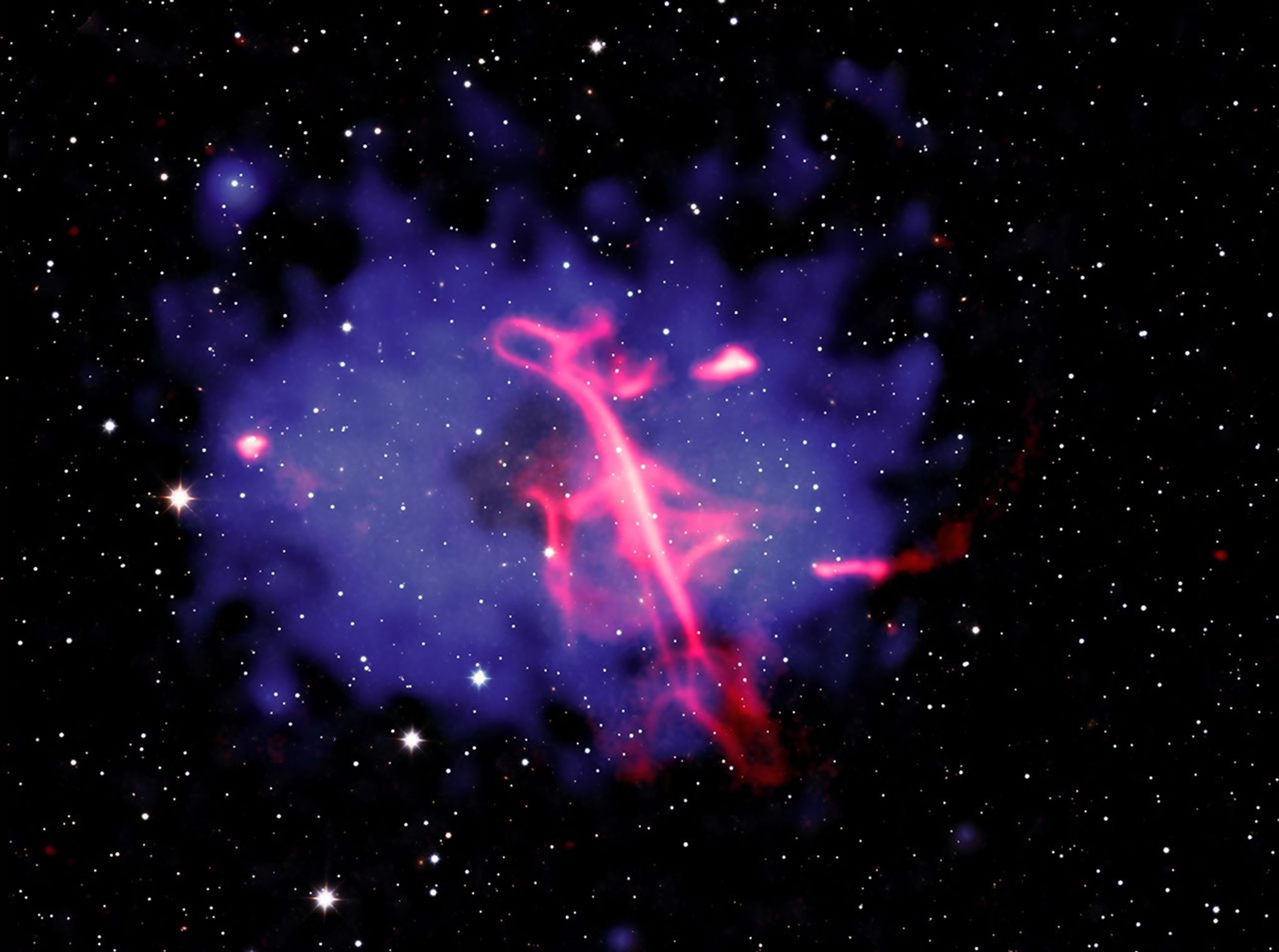
We spend a lot of time looking at screens, but NASA spends a lot of time looking at the noise behind them. Recently, the Astronomy Picture of the Day featured something they are calling the Treble Clef. It is an unusual radio source with an X-ray signature that looks exactly like a musical notation floating in the void. For most people, it is a cool desktop wallpaper. For those of us building systems to parse massive amounts of data, it is a reminder that the universe is remarkably good at generating edge cases.
As an editor focusing on the intersection of crypto, AI, and hardware, I look at these discoveries through a specific lens: the infrastructure of observation. This musical anomaly in the sky isn't just a curiosity. It is a massive dataset that challenges our current models of pattern recognition. When we see a treble clef in deep space, our human brains immediately jump to symbolism. But for an AI training on cosmic surveys, it represents a classification nightmare.
The Problem with Pattern Matching
In the world of AI development, we talk a lot about signal-to-noise ratios. The Treble Clef radio source is a perfect example of what happens when the signal looks like something familiar but behaves like something entirely different. Astronomers are trying to figure out if this is a single structure or a chance alignment of multiple distant objects. This is the same problem we face in predictive analytics and blockchain forensic tools.
When you see a specific pattern in trading volume or a specific shape in a galaxy survey, the instinct is to label it based on previous templates. But the universe, much like a chaotic market, does not care about our templates. The Treble Clef is a high-energy radio source that emits X-rays, suggesting some very violent physics is happening at the core. Builders need to understand that as our sensors get better, we aren't going to find more clarity; we are going to find more complexity that breaks our current algorithms.
Founder Perspective: Scaling the Unknown
If you are building a startup in the spatial computing or AI space, you should be paying attention to how NASA handles these anomalies. They don't just call it a glitch and move on. They catalog the metadata, the frequency, and the thermal output. They build a profile around the mystery. Most founders try to clean their data too early. They want everything to fit into a neat CSV file so the model trains faster.
But the real breakthroughs—the stuff that actually changes how we understand a system—usually live in the 'unusual' bucket. If you filter out the Treble Clefs of your industry, you are just building a mirror of what already exists. Honest engineering requires embracing the fact that some data points will look like music notes and act like radiation bombs. You have to build systems that are resilient enough to handle these outliers without crashing the entire logic gate.
Crypto and Cosmic Data
There is a growing movement in the decentralized science (DeSci) space to host this kind of astronomical data on-chain. Why? Because we need a permanent, immutable record of these anomalies that isn't subject to the shifting budgets of government agencies. The Treble Clef is a data point that needs to be accessible to independent researchers who might have a different take than the official narrative.
Think about the compute power required to render and analyze these X-ray sources. We are reaching a point where centralized servers can't keep up with the sheer volume of high-resolution telemetry coming from our satellites. This is where decentralized GPU networks come in. If we can distribute the task of identifying these 'unusual radio sources' across a global network, we move from being passive observers to active mappers of the unknown.
What This Means for the Next Cycle
We are entering an era where the 'unusual' is the new baseline. Whether it is an X-ray source that looks like music or a synthetic intelligence that develops an unforeseen capability, the builders who win will be the ones who don't flinch at the weirdness. We need to stop looking for the 'average' and start building for the 'extraordinary.'
The Treble Clef reminds us that there is a lot of energy in the universe that we don't have a name for yet. In the same way, there is a lot of utility in crypto and AI that hasn't been named or properly categorized. We are still in the early stages of the observation phase. Don't be fooled by the familiar shapes. Just because it looks like a treble clef doesn't mean it's playing a song you've heard before.
The goal is not to make the universe make sense; the goal is to build tools that can survive the fact that it often doesn't.
For those of you writing code tonight, take a look at your edge cases. Are you deleting them because they are inconvenient, or are you looking at them as the next potential Treble Clef? The value is usually hidden in the noise that everyone else is trying to filter out. Stay skeptical of the easy answers, and keep building for the anomalies.
Read the original at NASA Breaking News →