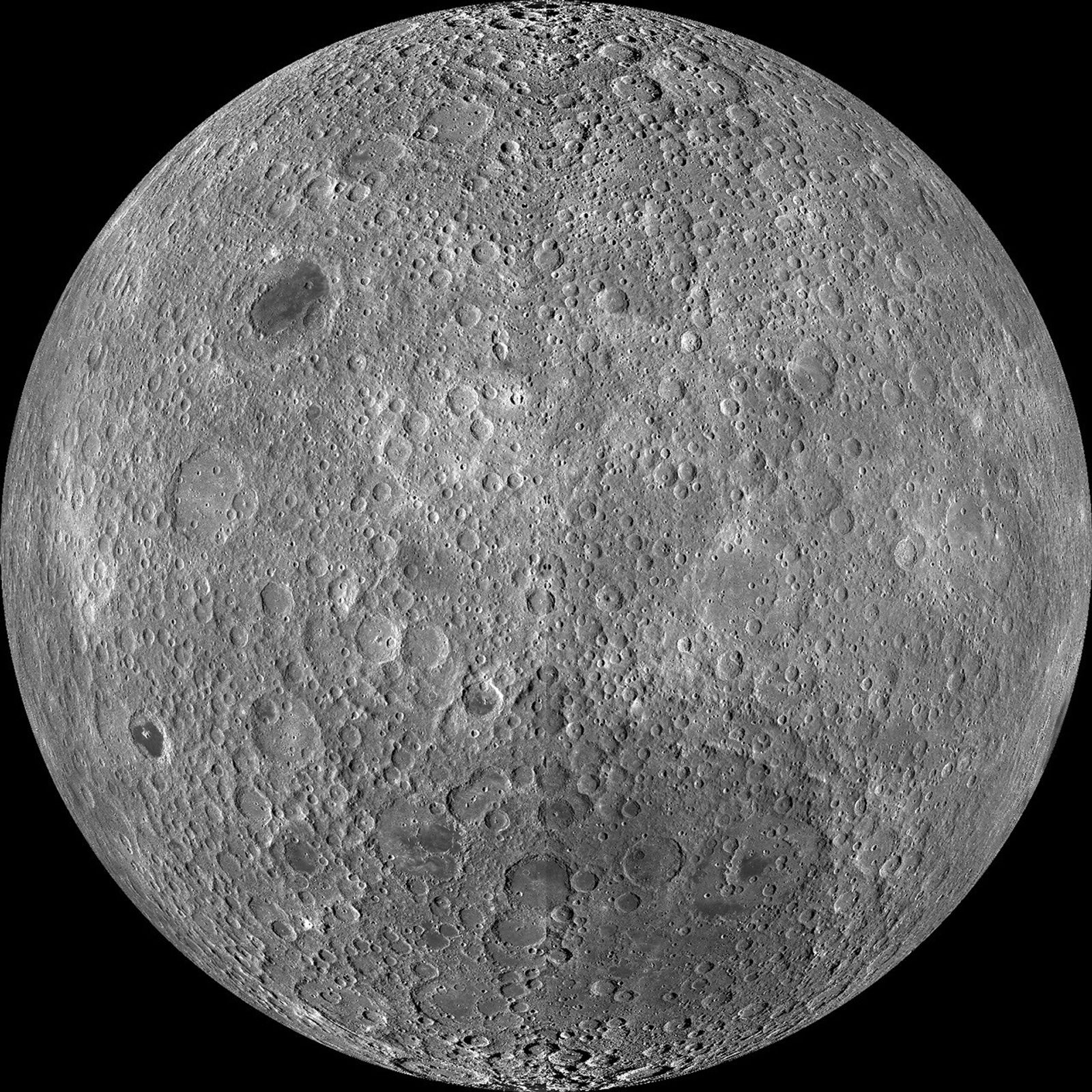
We have a tendency to treat space as a finished product. We look at the moon, see the same face we have seen for thousands of years, and assume the infrastructure of the cosmos is static. But the recent imagery of the lunar farside released by NASA serves as a reminder that the most interesting things usually happen where the signal doesn't reach.
The infrastructure of the unseen
Building on the farside of the moon is the ultimate test of edge computing. When we talk about decentralization in the crypto or AI space, we are usually talking about moving power away from a central server. In the context of the lunar farside, decentralization isn't a choice; it is a physical requirement. Because the moon is tidally locked to Earth, the farside never faces us. You cannot simply point an antenna at the ground and expect a heartbeat. You need a relay system, or better yet, you need the hardware on the ground to be smart enough to act without permission.
For founders in the AI space, this is a clear lesson in local sovereignty. We are currently obsessed with massive cloud clusters and giant LLMs that require constant connectivity. But the future of resilient technology looks more like the probes we send to the lunar farside. It has to be rugged, it has to be autonomous, and it has to function when the link to the mother ship is severed.
Why the farside matters for builders
The lunar farside is physically different from the side we see. It is covered in craters and lacks the large, dark volcanic plains—the maria—that define the near side. It is a harsher, more rugged landscape. In tech terms, the near side is the polished user interface we show to investors. The farside is the backend. It is messy, it is complex, and it is where the real work of survival happens.
If you are building a protocol or a decentralized application, you should be looking at the lunar farside as a case study in environment-specific design. You cannot port a solution built for a high-bandwidth, high-trust environment into a low-bandwidth, zero-trust environment and expect it to work. NASA’s focus on this region highlights a shift toward understanding the unknown rather than just optimizing the familiar.
The radio quiet zone
One of the most valuable aspects of the lunar farside isn't what is there, but what isn't. It is shielded from the radio noise of Earth. For astronomers, this is the ultimate dark room. For those of us building in AI and cryptography, there is a parallel here. We are currently drowning in noise—market hype, social media feedback loops, and the constant pressure to ship features that don't actually solve problems.
The most important work happens in the quiet. True innovation requires a "radio quiet zone" where you can test theories and build systems without the interference of the broader market's fluctuations. NASA’s persistence in studying this silent region tells us that the data we get when we block out the noise is often the most accurate data we have.
Resilience is the only metric that lasts
The equipment sent to these regions has to last for years, often in total isolation. In our world, we celebrate the "move fast and break things" mentality. But when you are building for the lunar farside, breaking things means the end of the mission. There is no repair crew. There is no remote patch that can fix a hardware failure once the signal is lost.
I see too many founders building "disposable" tech—apps that rely on third-party APIs that could vanish tomorrow, or protocols that collapse if a single centralized sequencer goes offline. We need to start building with the lunar farside mindset. If your project was cut off from the global internet for a week, would it still function? If the answer is no, you haven't built a resilient system; you've built a tethered one.
The takeaway for the next decade
As we move toward 2026 and beyond, the focus will shift from global connectivity to localized intelligence. Whether it's a drone on a lunar crater or a private AI model running on a local node, the goal is the same: independence. NASA’s exploration of the lunar farside isn't just a science project; it is a blueprint for the next generation of builders who realize that the most important frontiers are the ones that are hardest to reach.
Stop building for the audience in the front row and start building for the environment where no one is watching. That is where the real breakthroughs are hidden.
We need to stop fearing the dark side of the moon and start learning from it. The absence of a signal isn't a failure; it's an opportunity to build something that doesn't need one.
Read the original at NASA Breaking News →