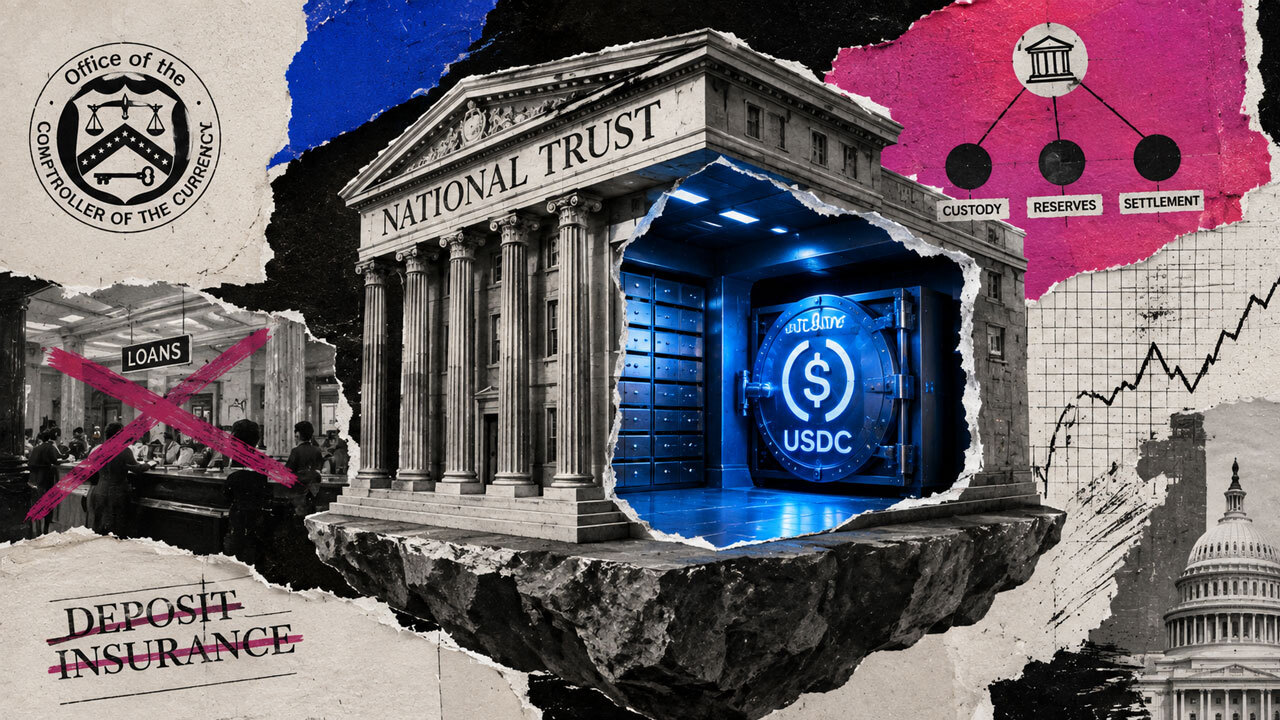
If you have been paying attention to the recent moves from the Office of the Comptroller of the Currency, you might have noticed something strange. Circle now has a federal bank charter. So does Paxos. Even traditional giants like Morgan Stanley are leaning into new structures. But if you walk into their headquarters asking for a car loan or a toaster for opening a savings account, you are going to be disappointed.
We are witnessing the birth of a new class of financial institutions in the United States. They have the paperwork of a bank, the regulatory oversight of a bank, but they do not actually do what we historically call banking. These are the trust-based infrastructure providers, and for those of us building in crypto and AI, they represent a massive shift in how money moves behind the scenes.
The Illusion of the Retail Bank
When most people hear the word bank, they think of the FDIC logo, checking accounts, and the ability to withdraw cash from an ATM. They think of fractional reserve lending—the process where the bank takes your dollar and lends out ninety cents of it to someone else. This new cohort of crypto-adjacent entities, including Circle National Trust, isn't doing any of that. They are not interested in your checking account.
Instead, these entities are obtaining charters that focus on custody, fiduciary administration, and stablecoin reserve management. They are essentially high-tech vaults with a federal stamp of approval. They exist to hold assets, not to gamble with them. For a founder, this is a distinction that matters. We are moving away from the era where we had to trick traditional banks into letting us open an account, and into an era where the rails themselves are legally recognized as part of the federal system.
Why the Charter Matters for Builders
For years, the biggest hurdle for any crypto startup was banking risk. You could build the most innovative DeFi protocol or AI-driven payment agent in the world, but if your bank decided to de-bank you on a Tuesday morning, your business was dead. By securing these federal charters, companies like Circle and BitGo are insulating themselves—and by extension, their users—from the whims of regional bank managers.
This creates a more stable foundation for the next decade of development. If you are building an application that relies on USDC, knowing that the issuer operates under a federal trust charter provides a layer of legal certainty that wasn't there three years ago. It means the reserves aren't just sitting in a random brokerage account; they are managed under the strict fiduciary standards of a chartered national trust.
The Convergence of Traditional and Digital
It is not just the native crypto players getting in on this. We are seeing a massive convergence. Fidelity Digital Assets, Morgan Stanley, and even newer ventures like World Liberty Financial are all angling for a piece of this regulated settlement layer. They realized that the old way of moving money—T+2 settlement, manual wire transfers, and aging SWIFT corridors—is obsolete.
The goal here is a unified settlement layer where digital assets and traditional fiat can coexist without the friction of legacy middle-men. For builders, this means the API you use to move value is becoming just as regulated and reliable as the one you use to process credit cards, but with the speed and programmability of blockchain.
The Skeptic's View: Is This Actually Good?
I am always wary when the government starts handing out shiny new badges to crypto companies. While these charters provide legitimacy, they also come with strings. A federal trust charter means the OCC has a permanent seat at the table. It means more surveillance, more reporting requirements, and less of the permissionless ethos that started this industry.
We have to ask ourselves: are we building a better financial system, or just a more efficient version of the old one? If these crypto banks are just vaults for the wealthy and institutional players, they don't do much for the average developer trying to disrupt the status quo. However, the technical reality is that these chartered entities provide the exit and entry ramps we need. Without them, we are stuck in a sandbox. With them, we can actually interact with the global economy.
The Infrastructure Play
If you look at the list of companies pursuing this—Ripple, Paxos, Coinbase, Crypto.com—you see a pattern. They are all infrastructure plays. They aren't trying to be your friend; they are trying to be the pipes. In the world of AI, where agents will soon be transacting on behalf of humans, these pipes need to be robust. An AI agent doesn't care about FDIC insurance on a personal savings account, but it does care about instant settlement and 24/7 liquidity.
These new banks are essentially building the operating system for the future of programmable money. They provide the legal wrapper that allows code to move value. If you are a founder, stop looking at these entities as places to store your startup's cash and start looking at them as the partners who will facilitate your product's global reach.
What This Means for the Next Cycle
The next cycle won't be driven by retail hype or flashy NFTs. It will be driven by the plumbing. As the U.S. formalizes this new class of financial institutions, the barrier between crypto and the real world is evaporating. We are seeing the institutionalization of the reserve layer. It’s not sexy, and it won't make for a great Super Bowl commercial, but it is the most important development in the space since the invention of the smart contract.
The U.S. is effectively admitting that crypto isn't going away. Instead of fighting it, they are reclassifying it. They are creating a controlled environment where digital assets can move with the blessing of the federal government, provided the entities doing the moving follow the rules of a trust. It’s a compromise, but in the world of business, a compromise that leads to stability is usually a win.
The Takeaway
Stop waiting for the big banks to embrace crypto. They are being replaced by a new breed of institutions that look like banks on paper but act like tech companies in practice. For builders, the message is clear: the infrastructure is hardening. The legal uncertainty of the past decade is being replaced by a structured, albeit heavily monitored, regulatory framework. Build your apps on these rails, but keep your eyes open—the price of this new legitimacy is a total loss of anonymity at the settlement layer.
Read the original at CryptoSlate →