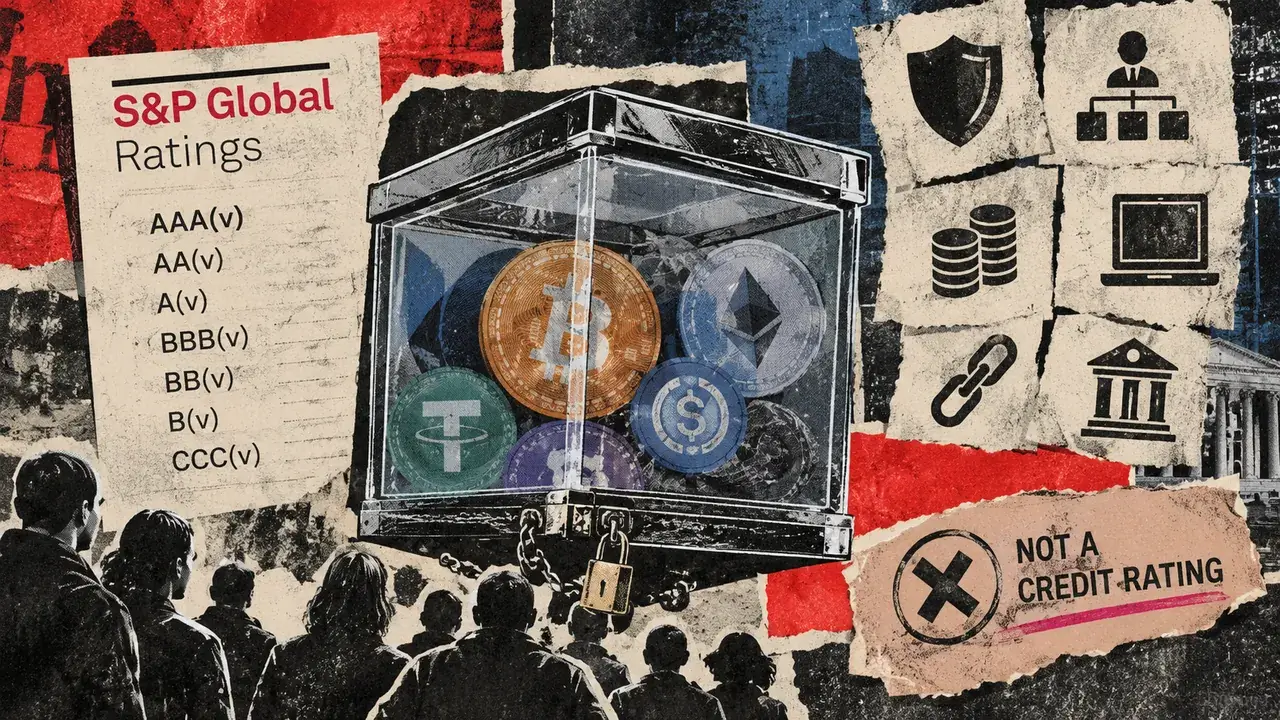
Standard & Poor’s just turned its gaze toward crypto vaults. For those of us building in the space, this isn’t just another corporate press release. It is a signal that the era of moving fast and breaking things in DeFi is hitting a wall of institutional accountability. S&P Global Ratings is rolling out a new framework to assess the risk of impairment in crypto vaults, a market that has quietly ballooned to over $10 billion despite being riddled with complexity and hidden traps.
The Illusion of Passive Safety
In the early days of DeFi, vaults were sold as the ultimate “set it and forget it” tool for capital efficiency. The promise was simple: deposit your assets, and a smart contract would rotate them through various protocols to maximize yield. But as any founder who has spent time in the trenches knows, automated complexity is often just a mask for systemic risk.
The timing of S&P’s move isn’t accidental. We recently saw a $6 million incident on the Base network that served as a loud reminder of what happens when vault logic fails. When code is law, any loophole in the law is an open door for drainage. S&P isn’t promising to tell you how much money you’ll make; they are trying to quantify how likely you are to lose your shirt. For builders, this is the first step toward a standardized risk language that might actually make these products palatable for serious money.
What S&P is Actually Looking At
S&P’s framework isn’t about picking winners. It is about measuring “impairment risk.” They aren’t guaranteeing capital protection or promising future returns. Instead, they are looking at the plumbing. They want to know how the smart contracts are structured, who has control over the keys, and how the underlying protocols behave when liquidity dries up.
For a founder, this shifts the goalposts. It means that having a “high APY” is no longer the primary metric of success if your risk rating is the equivalent of junk status. We are seeing a shift from yield-chasing to risk-management. S&P is looking at factors like:
- Protocol Governance: Who can change the code and how much notice is given?
- Liquidity Depth: Can the vault actually exit its positions without crashing the price?
- Oracle Reliability: Where is the price data coming from, and can it be manipulated?
The Base Incident as a Case Study
The recent exploit on Base highlighted exactly why this scrutiny is necessary. When $6 million vanishes because of an oversight in vault logic, it isn’t just a loss for the users; it’s a setback for the entire ecosystem’s credibility. The incident proved that even on supposedly “next-gen” layers, the old bugs remain.
S&P’s entry into this market suggests that the industry can no longer rely on “trust me, it’s audited” as a defense. Audits are a snapshot in time. A rating framework is an ongoing assessment of structural integrity. If you’re building a vault today, you have to assume that eventually, a third party with a very sharp pencil is going to grade your homework.
Why Builders Should Care
If you’re a founder, you might be tempted to roll your eyes at a TradFi giant trying to benchmark DeFi. But here’s the reality: the $10 billion currently in vaults is retail and whale money. The next $100 billion is institutional money. And institutional money doesn’t move without a rating.
By adopting a ratings-style scrutiny, S&P is providing a bridge. If your protocol can survive this kind of analysis, you aren’t just another dApp in a crowded market; you are a legitimate financial instrument. This forces builders to simplify. Complexity is the enemy of a high credit rating. The more “levers” and “legs” your yield strategy has, the harder it is to model the risk, and the lower your score will be.
The Skeptic’s Corner
Let’s be honest: S&P doesn’t have a perfect track record. Anyone who remembers 2008 knows that a high rating from a major agency isn’t a guarantee of safety. There is a risk that these ratings provide a false sense of security. If S&P rates a vault highly and it still gets exploited, the blowback will be massive. Builders shouldn’t treat a good rating as an excuse to stop innovating on security.
The goal shouldn't be to pass the test; the goal should be to build something that doesn't need a middleman to tell you it's safe. But until we get there, these benchmarks are the best tools we have.
The Road Ahead
We are moving toward a bifurcated market. On one side, you’ll have the “wild west” vaults—high risk, high reward, and completely opaque. On the other, you’ll have rated vaults that follow strict frameworks, likely offering lower yields but attracting the lion’s share of total value locked (TVL).
As a founder, you need to decide which side of that line you’re building on. If you want the big capital, you need to start thinking like a risk manager today. That means prioritizing code clarity, reducing dependencies on external oracles, and being transparent about where the yield actually comes from. S&P is just the first of many who will start looking under the hood.
The Takeaway
The $10 billion vault market is growing up. S&P’s new framework is a wake-up call that yield without a clear understanding of impairment risk is just a slow-motion car crash. For builders, the message is clear: simplify your architecture, document your risks, and prepare for a world where your code is scrutinized by the same people who rate sovereign debt. It’s not about the hype anymore; it’s about the resilience of the system.
Read the original at CryptoSlate →