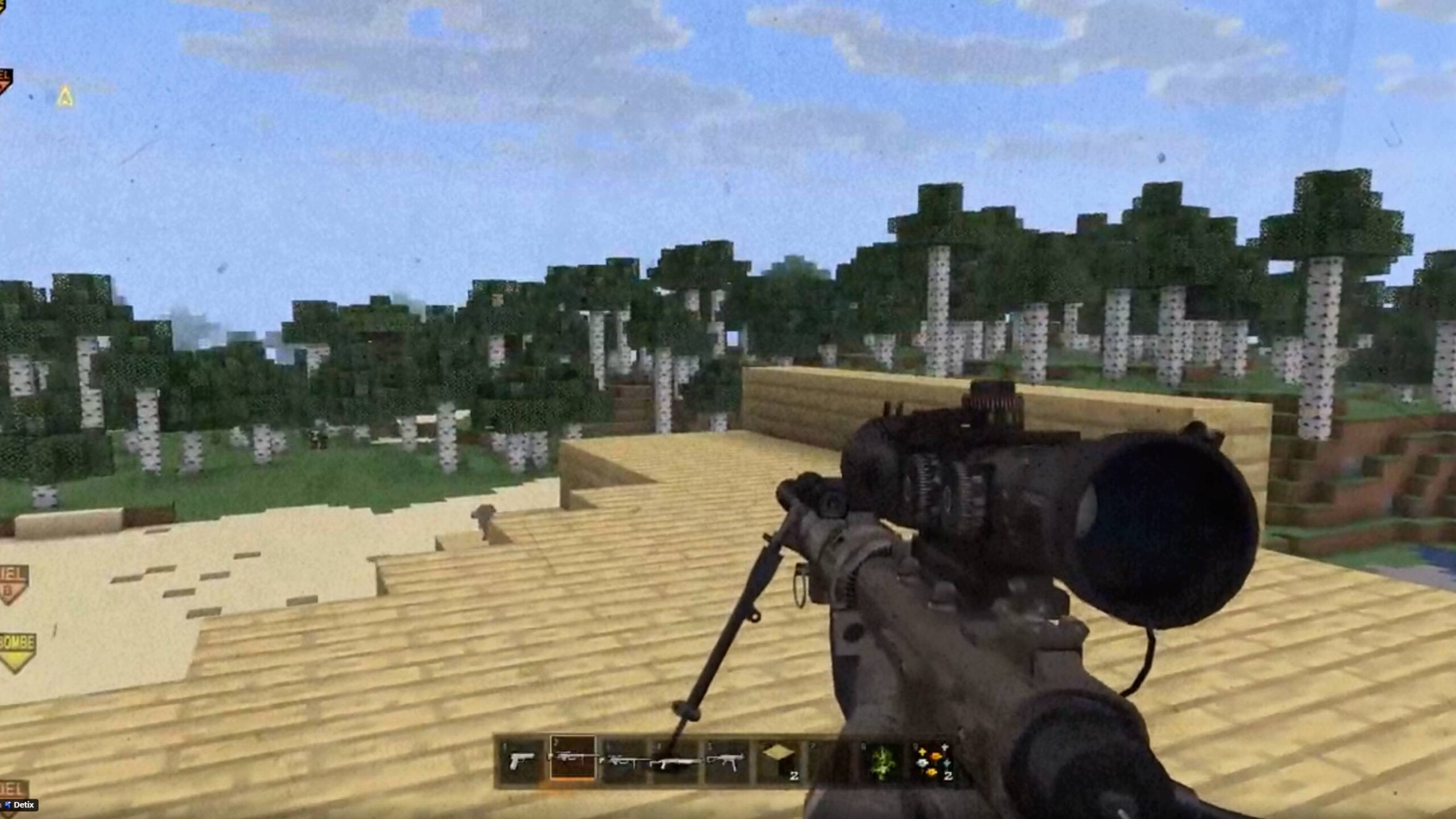
We are entering a phase of creative chaos that would have been technically impossible just eighteen months ago. If you spend any time on social media lately, you have probably seen the footage: Spider-Man swinging through the streets of Gotham, Tony Hawk-style skating through a Call of Duty map, or the blocky landscapes of Minecraft bleeding into the bleak world of Elden Ring. These are not official crossovers. They are not the result of billion-dollar licensing deals or thousands of man-hours from professional developers. They are the first wave of AI-driven game modding.
For years, the modding community was the backbone of innovation in gaming. Games like Counter-Strike and DayZ started as mods. But modding used to require deep technical knowledge. You had to understand file structures, C++, and proprietary engines. AI is changing that by lowering the floor. We are seeing the rise of the 'vibe coder'—someone who focuses on the aesthetic and mechanical intent rather than the syntax of the code. The result is a surrealist era of gaming where the walls between intellectual properties are dissolving.
The Death of the Technical Barrier
The core shift here is not just that AI can write code, but that AI can bridge the gap between different game engines and assets. When you see a mod that brings the mechanics of one game into the environment of another, you are looking at a complex translation of physics and logic. In the past, porting a movement system from a skating game into a first-person shooter would have taken weeks of debugging. Now, creators are using LLMs to handle the heavy lifting of translation and asset integration.
This is a massive win for builders, but it comes with a dose of reality. Most of what we are seeing right now is visual and mechanical 'jank.' It is experimental. It is funny. It is viral. But it is also a proof of concept for a future where games are no longer static products. Instead, they become platforms for personal expression. If you don't like how a character moves, you change it. If you want a different art style, you prompt it into existence.
Why Builders Should Care
If you are building in the crypto or AI space, you need to look past the novelty of these mashups. The real story here is the democratization of high-fidelity creation. We are moving away from the era of 'user-generated content' that looks like Roblox and into an era where user-generated content looks like AAA titles. For founders, this opens up two specific opportunities.
First, there is the infrastructure layer. As these mods become more prevalent, we need better ways to track ownership, provenance, and interoperability. This is where blockchain actually makes sense, not as a speculative token, but as a ledger for digital assets that are being constantly remixed. If I create a custom physics engine for a character and you use it in your mod, there should be a transparent way to attribute that work.
Second, there is the platform play. The traditional game studios are likely going to fight this. They are protective of their IP and their walled gardens. This creates a vacuum for new, open-source-friendly game engines designed from the ground up to be 'modded' by AI. Instead of fighting the remix culture, the next big gaming giant will likely be the one that builds the best tools for it.
The Skeptic's View
I have to be honest: most of these mods are currently 'vibes' over substance. A video of a Minecraft character in a Dark Souls boss fight is great for a ten-second clip, but it doesn't necessarily make for a better game. We are in the 'toy phase' of AI gaming. The danger for builders is spending too much time on the spectacle and not enough on the utility. A thousand viral clips do not equal a sustainable ecosystem.
We also have to talk about the legal elephant in the room. The current crop of AI mods is playing fast and loose with intellectual property. Nintendo, Sony, and Microsoft have historically been aggressive about protecting their characters. While AI makes the creation faster, it doesn't make it legal. Founders building in this space need to think about how to empower creators without landing them in a courtroom. The move toward original, AI-generated assets—rather than just remixing existing IP—is where the real long-term value lies.
The Takeaway for Founders
The takeaway here is that the 'developer' persona is changing. We used to hire developers for what they knew; soon, we will hire them for how they think. The technical skill of writing the code is being abstracted away by AI, leaving the vision and the 'vibe' as the primary differentiators.
If you are starting a project today, don't build for the world as it exists now, where every game is an island. Build for the world where every digital asset is fluid. The mashups we are seeing today are just the tip of the iceberg. The real revolution happens when these tools move out of the hands of hobbyists and into the core workflows of the next generation of studios. Stop looking at the Minecraft blocks in Elden Ring as a joke, and start looking at them as a signal that the walls are coming down.
"
Read the original at Decrypt →