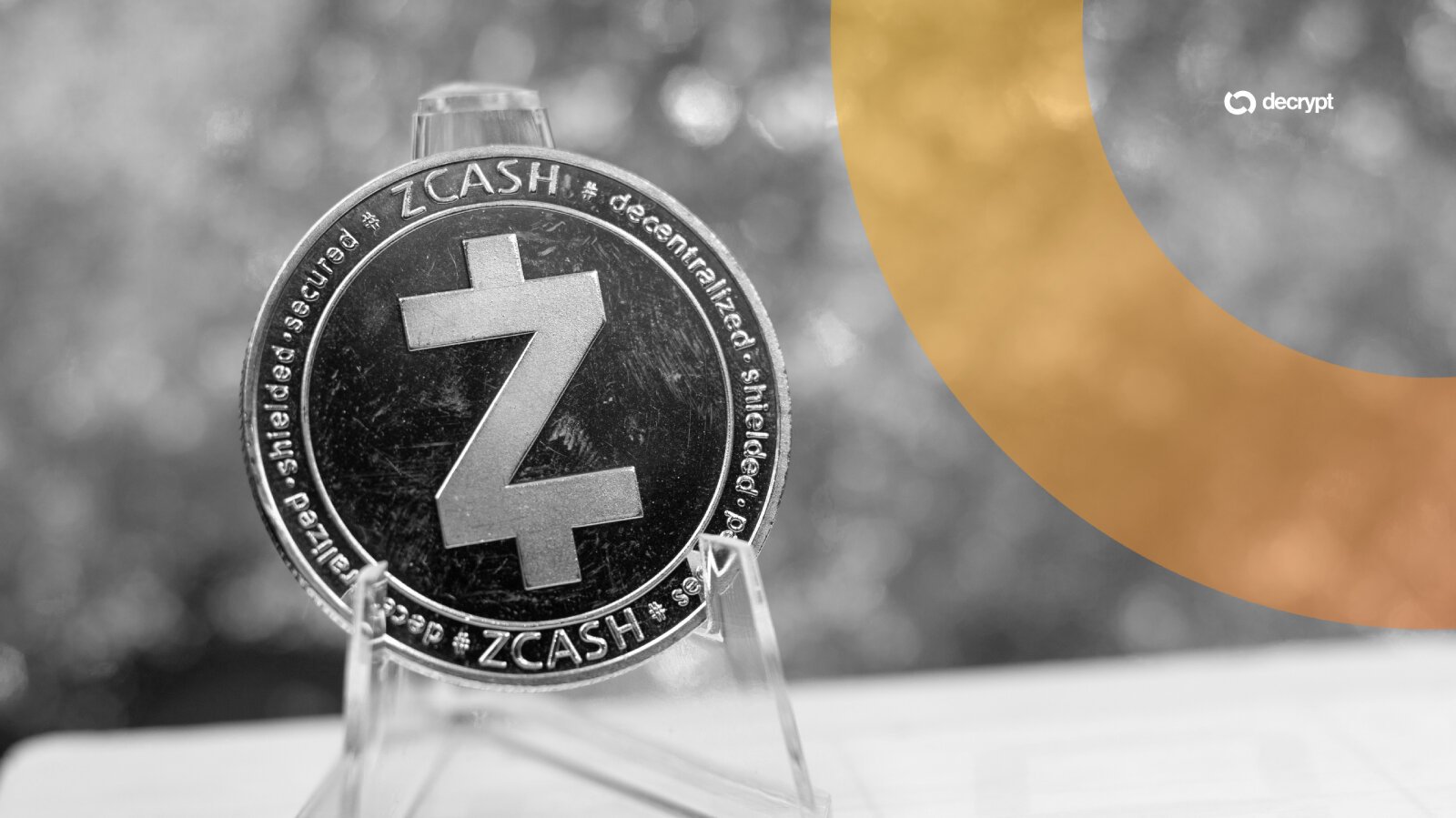
Privacy is rarely a binary state. In the world of cryptography, it is a moving target. What is secure today is often just a technical debt for tomorrow. Zcash, which has long been the gold standard for zero-knowledge privacy, is currently staring down a potential long-term vulnerability that most people haven't even considered: the ability for future quantum computers to unmask your entire financial history.
The Problem with Persistence
A developer known as Zakura recently highlighted a specific weakness in how Zcash handles shielded swaps. The core of the issue is that if you publish a single Zcash address, a future attacker with a sufficiently powerful quantum computer could potentially link every single payment that wallet has ever received. This is not a bug in the current code, but rather a limitation of the underlying cryptographic assumptions we have lived with for a decade.
For builders, this is a wake-up call regarding the difference between privacy today and privacy forever. Most of our current encryption relies on the difficulty of factoring large numbers or solving discrete logarithms. Quantum computers are theorized to be exceptionally good at exactly these tasks. While we don't have those machines sitting in a server rack yet, the data we generate today is being recorded on permanent ledgers. If that data isn't quantum-resistant, it is essentially a time-delayed doxxing.
How the Leak Happens
In the current Zcash architecture, shielded addresses serve as a waypoint. When you use a public address to receive funds, you are creating a footprint. Even if the transaction itself uses zero-knowledge proofs to hide the sender and the amount, the link between the address and the incoming notes remains vulnerable to specific types of quantum analysis.
Zakura’s proposal, which is gaining traction in the developer community, suggests a shift in how these shielded swaps are constructed. The goal is to ensure that even if a quantum computer can break the individual keys, it cannot use a single public address to re-stitch the entire history of a user's wallet. It is about breaking the chain of evidence before the chain is even built.
The Builder’s Perspective on Tech Debt
If you are building a privacy-focused application, you need to be thinking about "Forward Secrecy." It isn't enough to make a transaction private in 2024. You have to ask yourself: Will this transaction still be private in 2034? If the answer is no, you are just building a delayed-release database of sensitive information.
We often talk about ZK-proofs as a magic wand, but they are just math. Math evolves. The hardware used to solve that math evolves even faster. Zakura's move to address this now, rather than waiting for a quantum breakthrough, is the kind of proactive engineering that separates serious protocols from hype cycles.
Why Quantum Security Matters Now
Some critics argue that worrying about quantum computing today is like worrying about solar flares while your house is on fire. They think we have bigger problems, like UX and regulation. I disagree. In crypto, trust is the only real product. If the fundamental promise of Zcash—total financial privacy—can be undone retroactively, the trust in the system collapses.
- Retroactive De-anonymization: Governments or malicious actors could store encrypted blockchain data today and simply wait for the hardware to catch up.
- Address Reuse: The common habit of reusing a single address for multiple payments creates a massive target for future analysis.
- Systemic Risk: If a major privacy coin is compromised, it casts doubt on the entire ZK-SNARK ecosystem.
The Proposal: A New Layer of Shielding
Zakura’s fix involves changing the way keys are derived and how addresses interact with the nullifier set. By introducing a new method for shielded swaps, the protocol can effectively insulate the user’s identity from the quantum-vulnerable parts of the transaction history. It is a complex upgrade, but it represents a necessary evolution.
For founders, the takeaway here is clear: stop treating your protocol as a finished product. Architecture needs to be fluid. If the Zcash community can acknowledge and fix a flaw that won't even be exploitable for years, you should be looking at your own stack for similar long-term vulnerabilities.
Honest Skepticism: Will it Work?
Moving to quantum-resistant cryptography is not free. It usually comes with a cost in terms of performance, proof size, and complexity. Zcash has already struggled with the performance of its shielded transactions on mobile devices. Adding more layers of protection could potentially slow down the very user adoption they are fighting for.
However, the alternative is worse. A privacy coin that isn't private is just a slower version of Bitcoin. If Zcash wants to maintain its reputation as the premier privacy tool, it has to take these threats seriously, even if the threat is currently theoretical. The engineering work being done by Zakura is a sign of a healthy, forward-thinking developer ecosystem, but the implementation will be the real test.
The Final Word for Founders
Don't wait for a crisis to upgrade your security assumptions. The best time to fix a vulnerability is when it's still a theoretical paper in a research journal. If you are building in AI or Web3, your data is your liability. Protect it like it's going to be attacked by the computers of 2040, because eventually, it will be.
Read the original at Decrypt →