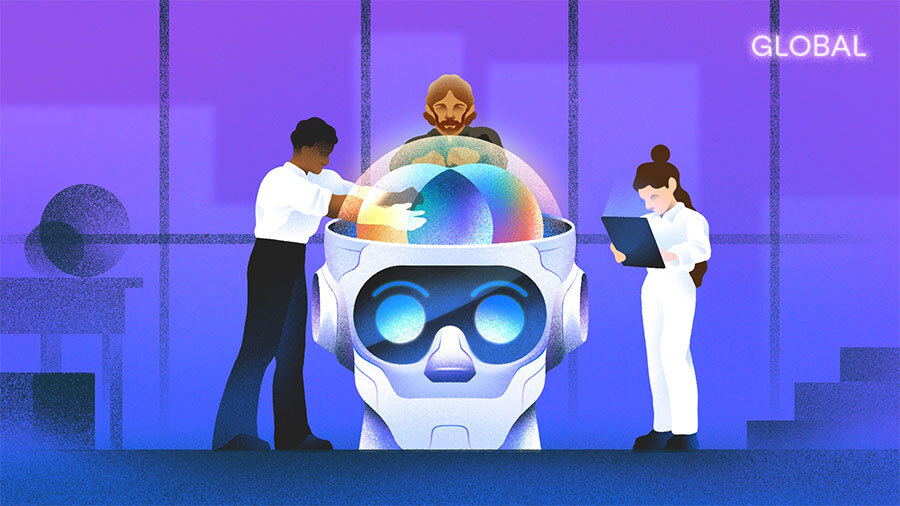
I have spent the last decade watching founders chase efficiency like it is the holy grail. We went from offshoring to no-code, and now we are staring at the next logical, albeit stranger, step: hiring agents. Not software, not subscriptions, but digital teammates that own outcomes rather than just performing tasks. At the upcoming TechCrunch Disrupt, voices from Gusto and Insight Partners are expected to weigh in on this shift, but for those of us actually building in the trenches, the implications go much deeper than a panel discussion.
The End of the Tooling Era
For a long time, we treated AI like a better hammer. You gave it a prompt, it gave you a nail. But the conversation is shifting toward agency. An agent does not wait for a prompt; it understands a goal. If your goal is to reduce churn, a tool gives you a chart. An agent monitors the data, identifies at-risk accounts, and initiates a workflow to retain them. This sounds great on a slide deck, but for a founder, it creates a massive management headache. How do you manage something that does not have a performance review?
We are entering a phase where the headcount of a startup is no longer a proxy for its scale. We have seen the rise of the one-man unicorn narrative, but the reality is likely going to be a three-person team managing a fleet of fifty agents. The friction here is not the technology—it is the culture. Startups thrive on shared mission and late-night camaraderie. You cannot share a coffee with a Large Language Model. When the labor force of your company is 70% silicon, the 30% that is carbon starts to feel a different kind of pressure.
The Accountability Gap
The biggest risk I see for builders right now is the dilution of responsibility. In a traditional startup, if the payroll breaks or the lead gen dries up, there is a human being whose job it was to prevent that. When you transition those roles to AI agents, who is accountable? If an agent makes a hallucinated promise to a customer, you cannot fire the code. You can patch it, but the brand damage is permanent.
Founders need to rethink their organizational charts. Instead of hiring for execution, we are going to be hiring for auditing. Your first five hires might not be the people doing the work, but the people quality-controlling the agents that do the work. This changes the talent profile you look for. You do not need a junior dev who can write boilerplate; you need a systems architect who can spot a logic flaw in a machine-generated pull request before it hits production.
Speed vs. Stability
Every founder is told to move fast and break things. AI agents allow you to move at a speed that is frankly terrifying. You can spin up entire marketing campaigns, sales funnels, and customer support loops in an afternoon. But speed without steering is just a fast way to hit a wall. The challenge discussed by groups like Insight Partners often revolves around how venture capital views this. VCs love efficiency, but they hate unforced errors.
If you are building today, you have to decide where the human bottleneck remains. I argue that the bottleneck should always be at the point of final delivery. Let the agents do the research, the drafting, and the data crunching, but keep a human at the gate. The moment you remove the human from the loop to save a few dollars on overhead, you lose the one thing that keeps a startup alive: intuition. Agents are logical, but they are not intuitive. They cannot read the room, and they certainly cannot predict a shift in market sentiment based on a gut feeling.
The Cultural Cost of Efficiency
We often ignore the psychological impact on the founding team. If a founder spends their whole day talking to agents instead of mentoring humans, the startup loses its soul. Culture is what keeps people working when the bank account is low and the product is buggy. You cannot build a culture with an API. We have to be careful that in our rush to automate every mundane task, we do not also automate the shared struggles that forge a real team.
I have talked to founders who are excited to replace their entire customer service department with agents. It looks great for their burn rate. But three months later, they realize they have no pulse on what their customers actually want because they no longer have those raw, human conversations being summarized by a support lead. Data is not the same as feedback. A summary is not the same as a story.
The Founder's Takeaway
If you are heading to Disrupt or just watching from the sidelines, don't get caught up in the hype of agentic workflows without asking the hard questions. Integration is easy; management is hard. As you build your next teammate, remember that you are not just adding a script to your stack. You are redefining what it means to lead.
- Define the guardrails early: Do not give an agent access to your production environment or your bank account without a multi-signature human approval process.
- Hire for oversight: Look for teammates who are comfortable managing systems, not just performing tasks.
- Maintain the human loop: Ensure that your most critical touchpoints—customer feedback and product direction—remain human-centric.
The future of the startup is not human-free; it is human-led and machine-executed. The founders who win will be the ones who treat AI as a force multiplier for their vision, not a replacement for their judgment. Keep your eyes on the tech, but keep your hands on the wheel.
Read the original at TechCrunch Startups →