The XRP Liquidity Trap Just Got a New Exit
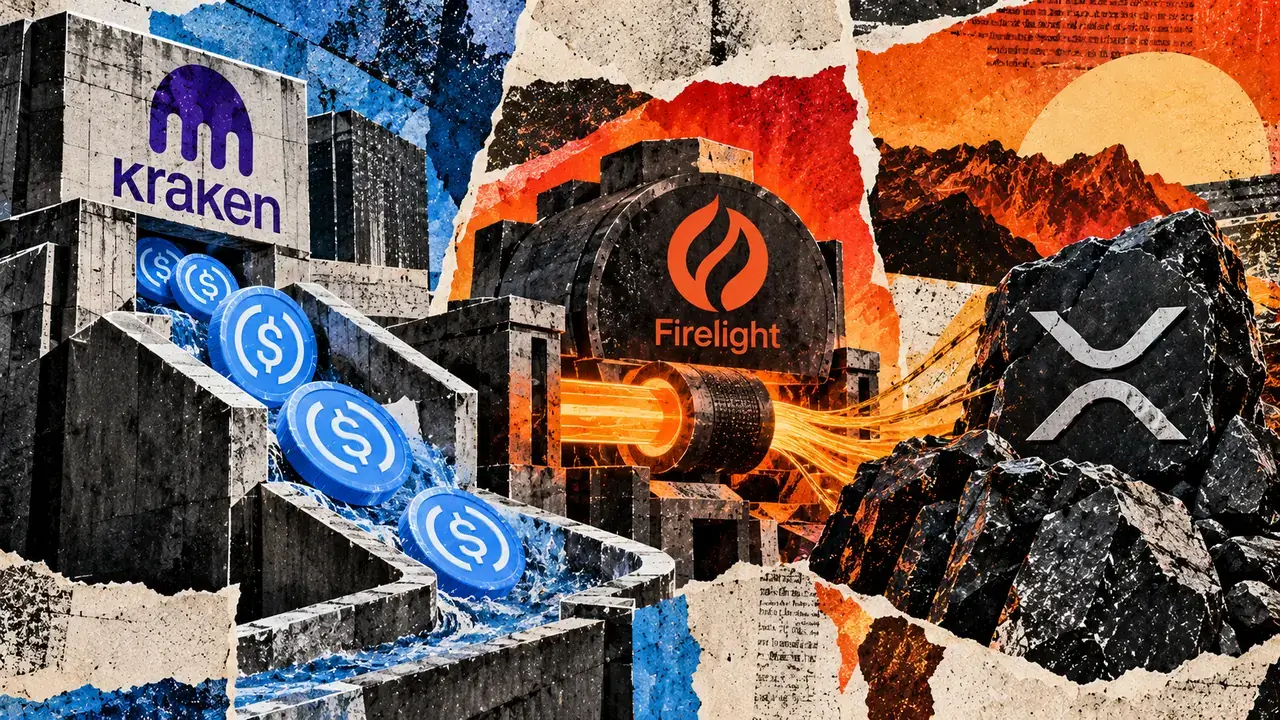
For years, the XRP Ledger has felt like a walled garden. You held the asset, you waited for legal clarity, and maybe you used it for basic payments. But while Ethereum and Solana users were busy building complex yield structures, XRP holders were mostly stuck on the sidelines. Kraken is trying to change that narrative by bringing XRP into the decentralized finance fold via a new wrapped asset, FXRP. It is a bold move, but it comes with a structural complexity that every founder and investor needs to pick apart before jumping in.
This is not just about moving a token from one chain to another. It is about a new way to monetize idle assets. Through a collaboration involving Sentora’s Firelight, holders are being offered a way to earn fees by providing backing for DeFi transactions. On paper, it sounds like the holy grail for a community that has been long on patience and short on utility. But as someone who has seen a dozen "risk-free" yield products come and go, the mechanics here deserve a skeptical look.
How the Engine Works
The core of this offering involves something called FXRP providers. These are the folks putting up the capital to mint the wrapped token. In exchange for providing this liquidity, they get a slice of the pie. Specifically, they are earning premiums from vault yields generated by Sentora’s Firelight coverage. The logic is simple: if you provide the security that allows others to trade or move value, you get paid a fee for that service.
However, the "catch" mentioned in the headlines is not a hidden fee—it is a fundamental shift in risk profile. When you participate as a provider, you are essentially acting as a backstop. You are the insurance policy. The system is designed with a stablecoin buffer to absorb initial shocks, but if losses exceed that buffer, the providers are next in line. This is a shared backing model. It is efficient for scaling liquidity, but it means your yield is directly tied to the stability and security of the entire vault system.
Why Founders Should Pay Attention
If you are building in the DeFi space, this is a case study in how to bridge legacy communities into modern ecosystems. The XRP army is massive and loyal, but they are also cautious. By using a reputable exchange like Kraken as the gateway, the friction of trust is significantly lowered. For developers, this represents a massive influx of potential liquidity that has been largely untapped for a decade.
The real innovation here is not the wrapping of the token; we have seen that with WBTC for years. The innovation is the integrated insurance layer. By baking the premium payments directly into the yield, Kraken is acknowledging that DeFi is risky and providing a structural way to mitigate that risk for the end user. This is a builder-first approach to protocol design: don't just provide a tool, provide the safety net that makes the tool usable by people who aren't developers.
The Skeptic's Corner
Let’s be honest: shared backing models are only as good as their stress tests. The stablecoin buffer is a smart addition, acting as a crumple zone in a car accident. But in a true black swan event—the kind we see in crypto every eighteen months—those buffers can evaporate in minutes. If you are an XRP holder looking for yield, you have to ask yourself if the 5% or 10% premium is worth the tail risk of a total vault drawdown.
Furthermore, we have to look at the centralization trade-off. Bringing XRP into a DeFi environment usually requires some level of custodial oversight or multisig management. Even with a decentralized label, there are points of failure. As a founder, you have to decide if you want to build on these wrapped assets or wait for native smart contract capabilities to mature on the XRPL itself. The former gives you liquidity today; the latter gives you true decentralization tomorrow.
The Infrastructure Shift
What Kraken is doing signals a broader trend in the industry. We are moving away from the era of "isolated chains." The future is clearly cross-chain, where an asset's utility is not limited by the network it was minted on. For the builders in my audience, this means you should be thinking about how your protocols handle wrapped assets. Can your system distinguish between native liquidity and synthetic liquidity? Can you price the risk of a wrapped token versus its underlying asset?
The Firelight coverage mechanism is particularly interesting because it treats DeFi yield like a traditional insurance product. This is the kind of boring, functional finance that actually makes the industry grow. It moves us away from the "yield from thin air" model of 2021 and toward a "yield for risk" model that is sustainable. It’s not sexy, and it won't make you a billionaire overnight, but it is the plumbing that makes the whole building work.
The Takeaway for Builders and Holders
If you are an XRP holder, the message is clear: your assets no longer have to sit in a cold wallet collecting dust. But you are now a participant in a complex insurance market. You are no longer just a holder; you are a service provider. Treat it as such. Understand the buffer, understand the loss triggers, and don't put in more than you can afford to lose if the vault catches fire.
For founders, the lesson is even more poignant. Liquidity is moving. The walls between ecosystems are crumbling. If you aren't building ways to ingest and utilize these cross-chain assets, you are leaving money on the table. The success of FXRP will depend entirely on how many dApps integrate it. Liquidity without utility is just a fancy way to wait for a crash. The builders who create the best use cases for this newly freed XRP will be the ones who win this cycle.
Kraken has provided the bridge. Now it is up to the builders to decide what happens on the other side. Just keep your eyes on the buffer, and don't mistake a premium payment for a free lunch. In crypto, if you don't know where the yield is coming from, you are the yield.
Read the original at CryptoSlate →