The Opportunity Cost of HODLing
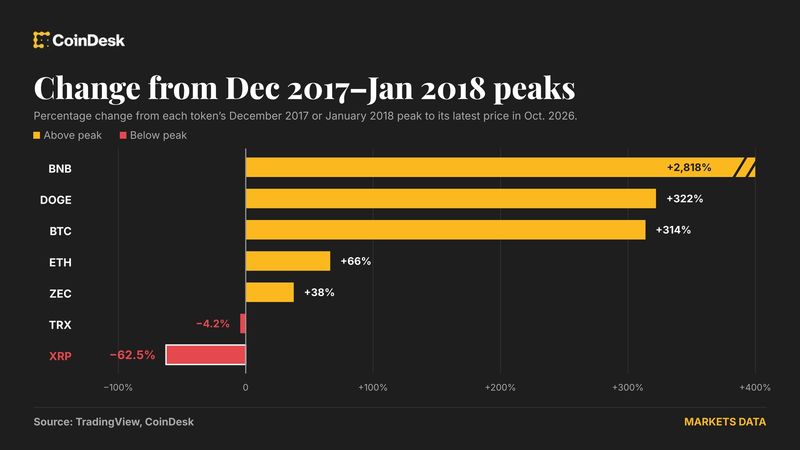
If you bought Bitcoin or Ethereum during the 2017 bull run and held on through the liquidations, the regulatory scares, and the macro collapses, you are likely sitting on life-changing gains. If you did the same with XRP, you are likely sitting on a break-even position, or worse, a loss in terms of purchasing power. This is the uncomfortable reality for one of the most dedicated communities in the crypto space.
While the rest of the market has seen multiple cycles of price discovery and new all-time highs, XRP remains anchored to a price ceiling established nearly seven years ago. For builders and founders, this isn't just a matter of bad luck. It is a fundamental lesson in the difference between a successful enterprise product and a successful investment asset.
The Enterprise Trap
Ripple, the company most closely associated with the token, has done everything a traditional startup is supposed to do. They secured massive partnerships with global banks. They built a real-world use case for cross-border settlements. They hired top-tier legal talent and went toe-to-toe with the SEC, eventually securing a landmark ruling that clarified the token's status. By all corporate metrics, Ripple is a success story.
However, that corporate success has not translated into token appreciation. The core problem is the velocity of the asset. XRP was designed to be a bridge currency. The goal is for a bank to hold it for seconds—just long enough to move value from one fiat currency to another. For the system to work efficiently, the token needs deep liquidity, not necessarily a sky-high price per unit. Unlike Bitcoin, which is positioned as a digital gold to be hoarded, XRP is a tool meant to be used and discarded in rapid succession.
The Dilution Factor
Founders need to pay close attention to supply mechanics. One of the primary headwinds for XRP price action has been the consistent pressure from programmatic sales. Large amounts of the supply remain in escrow, released periodically to fund operations and incentivize the ecosystem. While this provides the company with a war chest that most startups would envy, it creates a permanent overhead of sell pressure.
In a market driven by scarcity and narrative, XRP struggles because its supply is neither capped in the way Bitcoin’s is, nor is it being burned at a rate that offsets the releases, like we see with Ethereum's post-Merge mechanics. When you have a massive amount of supply waiting to hit the market, every price rally meets a wall of selling that stalls momentum.
The Regulatory Hangover
We cannot ignore the legal weight that has dragged on this project. The multi-year battle with the SEC created a cloud of uncertainty that kept institutional capital at bay while other ecosystems were flourishing. While the legal victory was significant, the damage to the timeline was severe. In crypto, two years is an eternity. While XRP was tied up in discovery and depositions, the rest of the world moved on to DeFi, NFTs, and now AI-integrated blockchain protocols.
For builders, the takeaway here is that winning a legal battle doesn't mean you win the market. Compliance is a baseline, not a feature. By the time XRP achieved legal clarity, the liquidity had already migrated to more dynamic environments. Being "compliant" isn't enough to make a token valuable if the rest of the industry has pivoted to newer, faster, or more decentralized alternatives.
A Founder’s Perspective on Utility
There is a recurring argument that XRP’s utility will eventually force the price upward. The theory is that as more banks use the Ledger, the demand will outstrip the supply. But this ignores how software actually works. Enterprises hate volatility. If a bank is using a bridge asset, they want that asset to be as stable as possible to minimize slippage during the settlement process. A 10x surge in price might be great for a retail holder, but it introduces massive risk for a treasury department trying to move millions of dollars.
This creates a paradox: the more successful XRP becomes as a utility tool for banks, the more pressure there is to keep it stable and liquid rather than speculative and volatile. As a founder, you have to decide what your token is for. If it’s a work token, design it for work. If it’s a store of value, design it for scarcity. Trying to be both often results in being neither.
What This Means for the Next Generation
We are seeing a new wave of AI and DePIN (Decentralized Physical Infrastructure) projects making the same mistakes. They are building incredible technology but attaching a token that has no clear reason to appreciate. They focus on the enterprise partnership and forget that a token is a cap table for the community. If the community is constantly diluted or if the utility doesn't require holding the asset, the price will reflect that.
The XRP story is a cautionary tale about the "utility" meme. Just because a technology is used doesn't mean the token associated with it is a good investment. Value capture is not the same thing as value creation. Ripple has created immense value for the banking industry, but they have struggled to capture that value for the XRP holder.
The Honest Takeaway
If you are building in this space, do not assume that a partnership with a Fortune 500 company will save your token price. Markets reward scarcity, innovation, and narrative. XRP has the partnerships, but it lost the narrative years ago. The lesson for the rest of us is to build systems where the success of the protocol is directly and mathematically tied to the benefit of the holder, not just the convenience of the corporate user.
XRP isn't dead, but it is a legacy asset in a fast-moving market. For it to reach its previous highs, it doesn't just need more banks; it needs a complete structural shift in how the market perceives its value. Until then, it remains a tool for moving money, not a vehicle for growing it.
Read the original at CoinDesk →