The Myth of Unchangeable Scarcity
For thousands of years, gold has been the final word in value. It survived the fall of Rome, the rise of the British Empire, and the messy decoupling of the US dollar. The reason is simple: it is hard to find and even harder to pull out of the ground. We have treated gold as a constant, a physical law of nature that protects wealth from the whims of kings and central bankers. But that fundamental assumption might be facing its first real stress test in history.
A startup in the United States, working on nuclear fusion technology, recently claimed to have successfully transmuted mercury into gold. This isn't the stuff of medieval alchemy or basement workshops anymore. This is high-energy physics. If this process becomes commercially viable, we aren't just looking at a scientific breakthrough; we are looking at the potential collapse of gold's primary value proposition: scarcity.
The Infinite Mint Bug
In the world of software development, we talk about bugs that allow for infinite token minting. It is the ultimate nightmare for any protocol founder. If a hacker can create supply out of thin air, the price of the existing tokens crashes to zero. Gold has always been thought of as the one asset immune to this bug. You cannot just code more gold into existence. You have to mine it, refine it, and store it.
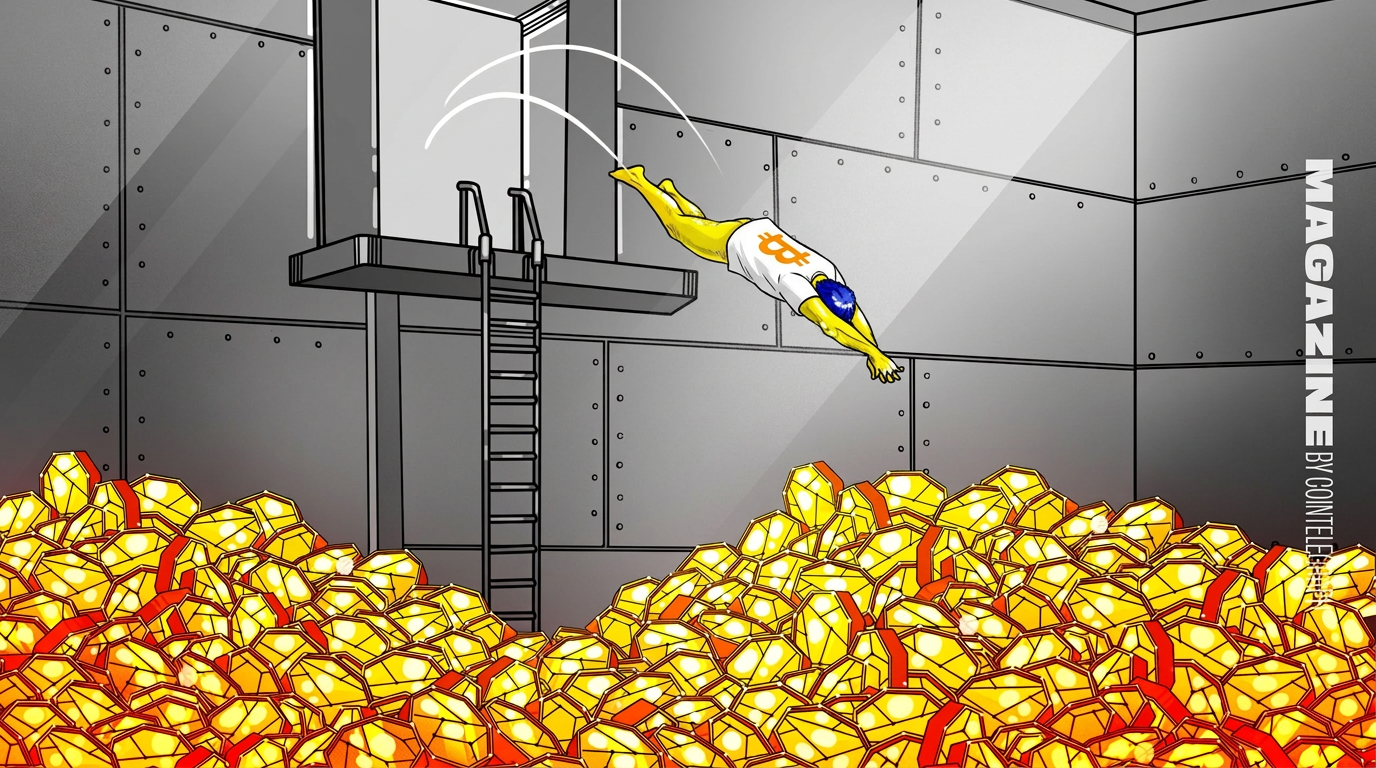
However, if fusion technology allows for the cost-effective creation of gold atoms from cheaper elements, gold becomes just another industrial commodity. It becomes like aluminum—once more precious than silver until we figured out how to extract it efficiently. If gold can be printed, it loses its status as a store of value. It becomes a manufactured good. This is what I call the infinite mint bug of the physical world.
Why Physics is Now a Liability
The problem with physical assets is that they are bound by our understanding of physics. As our technology improves, our ability to manipulate physical matter improves with it. We are getting better at deep-sea mining, asteroid prospecting, and now, atomic transmutation. Each of these breakthroughs, while impressive, actively devalues the gold sitting in your vault.
For a builder or a founder, this is a lesson in system design. If your system relies on a physical bottleneck that can be cleared by a future technological leap, your system has a shelf life. Gold’s bottleneck has always been the rarity of the element in the Earth's crust. But if we can build a machine that ignores the crust and works at the atomic level, the bottleneck vanishes.
Bitcoin’s Mathematical Moat
This is where the conversation shifts to Bitcoin. For years, critics have called Bitcoin "fake gold" or "digital pretend-money." But the mercury-to-gold breakthrough highlights the one thing Bitcoin has that gold never will: a mathematical guarantee of scarcity that is independent of physical supply chains.
Bitcoin doesn't care if we find a mountain of gold on Mars. It doesn't care if fusion reactors can churn out gold bars by the ton. The Bitcoin protocol is governed by code, not by the availability of atoms. To change the supply of Bitcoin, you would need to convince a global, decentralized consensus of participants to voluntarily devalue their own holdings. That is a social and economic barrier, which is much harder to overcome than a scientific one.
The Founder’s Perspective on Portability
If you are building a business or a treasury strategy, you have to look at the long-term viability of your reserves. Gold is heavy, hard to verify without specialized equipment, and apparently, now potentially synthesizable. Bitcoin is weightless, instantly verifiable by a laptop, and mathematically capped at 21 million units.
I have always been a bit skeptical of the hyper-maximalist view that Bitcoin replaces everything, but these developments in fusion make the case for digital assets much stronger. When the "physicality" of an asset becomes its weakness rather than its strength, the logic of the market dictates a move toward the digital. You can't transmute a Bitcoin. You can't mine a Bitcoin from an asteroid. You can only earn it or buy it from someone who already has it.
What This Means for the Market
We are likely decades away from gold being printed at a scale that ruins the market. The energy costs of fusion are still astronomical, and the amount of gold produced is currently minuscule. But markets are forward-looking. The moment the world realizes that gold is no longer truly finite, the "monetary premium" attached to it will start to bleed out.
Smart money will look for a place where the supply rules cannot be broken by a breakthrough in a lab. This creates a massive tailwind for Bitcoin. It moves from being a speculative alternative to being the only asset left that actually has a fixed supply. If you're a builder in this space, your job is to make the tools that facilitate this transition. The infrastructure for a post-gold world needs to be robust, user-friendly, and secure.
The Takeaway
Gold has had a great run. It served humanity well for five millennia. But we are entering an era where human ingenuity is beginning to outpace the scarcity of the earth. If you can make it in a lab, you shouldn't use it to store your life's work. Bitcoin’s lack of physical form is its greatest security feature. While the world tries to figure out how to handle the possibility of infinite gold, the 21 million cap on Bitcoin looks more like a fortress every single day.
The greatest threat to gold isn't a new currency; it is the inevitable progress of human technology. When we solve for scarcity in the physical world, we must find it in the digital one.
Read the original at Cointelegraph →