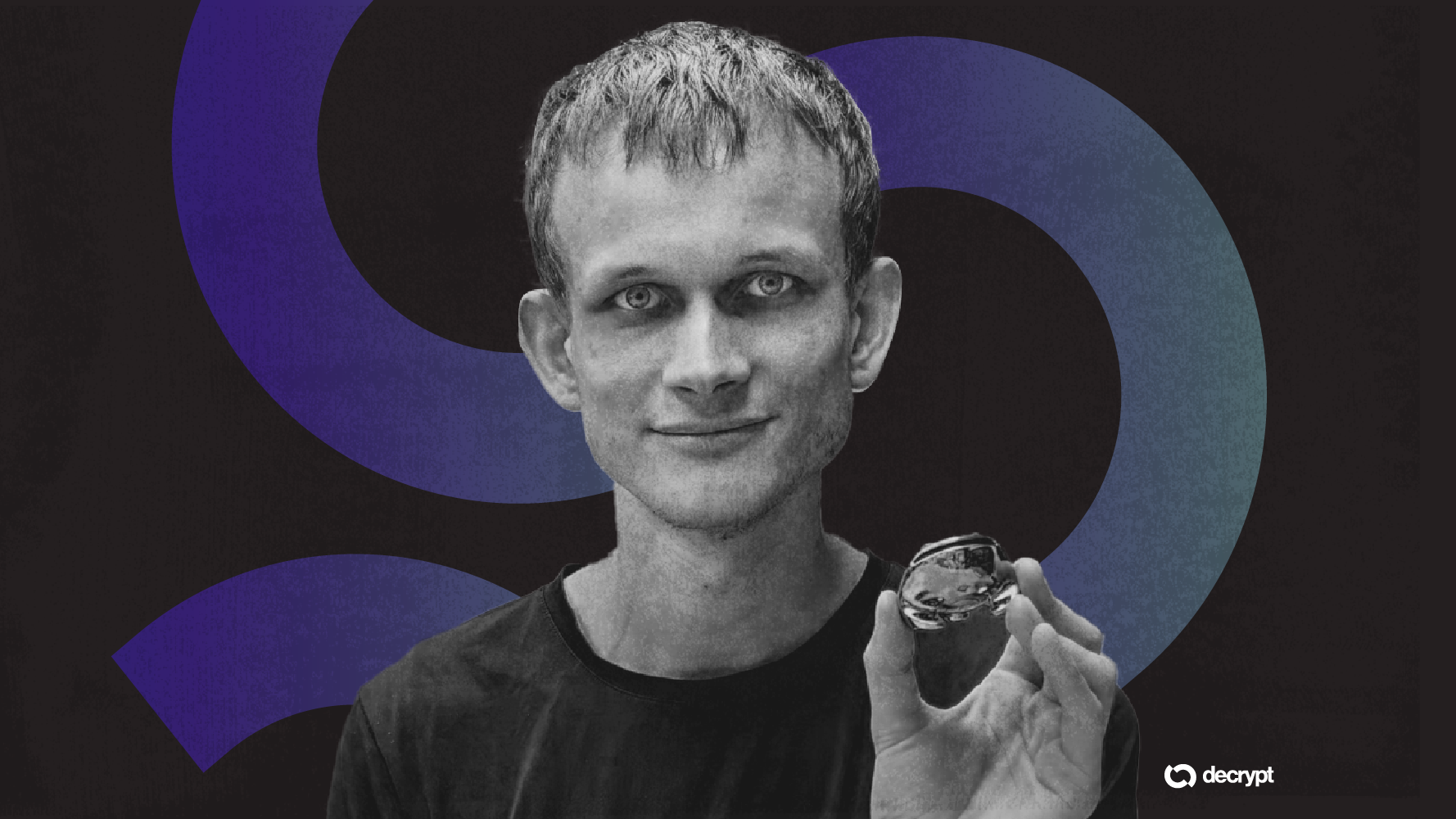
We have spent years worrying about quantum computers breaking our encryption, but we might be looking at the wrong threat. While quantum is a theoretical boogeyman that requires massive hardware leaps, artificial intelligence is a current reality that is getting better at finding bugs than the humans who write them. Vitalik Buterin recently laid out a vision for what he calls bunker mode, a defensive shift for Ethereum that assumes the walls are already being breached by automated systems.
The End of Slow Discovery
In the early days of crypto, a bug could sit in a smart contract for months. If you were lucky, a white-hat hacker would find it and tell you. If you were unlucky, a human exploiter would eventually stumble upon it. The timeline for discovery was human. AI changes that math entirely. We are entering an era where large language models and specialized code-analysis AI can scan millions of lines of Solidity in seconds, looking for reentrancy attacks or logic flaws that a tired developer missed at 3:00 AM.
Vitalik is signaling that the industry needs to move past basic audits. If AI can find bugs faster than we can patch them, then the very foundation of how we build on-chain needs to change. It is no longer enough to be secure by today's standards. We have to be secure against a machine that never sleeps and learns from every exploit in history simultaneously.
What Bunker Mode Actually Means
When Buterin talks about bunker mode, he isn't just talking about better firewalls. He is talking about architectural hardening. This includes moving toward cryptographic primitives that are resistant to both quantum attacks and AI-driven brute force. But more importantly, it means building systems that are simple enough to be formally verified. Complexity is the enemy of security. The more complex a system is, the larger the surface area for an AI to find a loophole.
For those of us building in this space, this is a wake-up call. We have been chasing features and throughput, often at the expense of simplicity. If we want to survive the next five years, we have to start building as if we are already under constant, automated attack. That means prioritizing code clarity over clever optimizations.
The AI Arms Race in Security
The irony is that the same tools threatening the network are also our best hope for defending it. Vitalik suggests that we need to lean into AI-assisted formal verification. This isn't just running a linter; it is using AI to prove that a piece of code mathematically cannot do anything other than what it is intended to do. The goal is to reach a state where the cost of finding a bug is significantly higher than the cost of securing the code.
However, we should be skeptical of the idea that AI will be a silver bullet for security. Just as we use AI to shield our contracts, attackers will use it to generate polymorphic malware and automated exploit scripts. It is a classic arms race, but with a much faster cycle than we saw in the traditional web2 world. In web2, a zero-day might be valuable for years. In a world of AI-driven crypto exploits, a zero-day might be drained in milliseconds.
The Founder Perspective: Build for Resilience
If you are a founder, you need to look at your roadmap and ask yourself if your protocol can survive a 100x increase in exploit attempts. Most can't. We rely too much on the fact that most hackers are human and have limited bandwidth. When that bandwidth becomes infinite thanks to AI agents, your protocol becomes a target of opportunity for an algorithm.
Bunker mode isn't about hiding; it is about building structures that don't fall down when the wind blows. It means using battle-tested libraries, avoiding custom assembly unless absolutely necessary, and embracing modularity where one failure doesn't bring down the whole house. Vitalik is right to be concerned, but we shouldn't be paralyzed. We should be disciplined.
Practical Steps for Builders
- Prioritize Formal Verification: If your code handles significant value, human eyes are no longer sufficient. You need mathematical proof of correctness.
- Simplify Your Logic: Every line of code you remove is a line of code an AI can't exploit. Strip away the fluff.
- Adopt Quantum-Resistant Primitives: Even if quantum is years away, the transition takes time. Starting now gives you a head start on the inevitable migration.
- Use AI to Attack Your Own Code: Before you deploy, run your code through the best analysis models available. If the AI finds a bug, fix it. If it doesn't, keep looking.
The Takeaway
The transition to bunker mode is a necessary evolution for Ethereum and the broader crypto ecosystem. We are moving out of the experimental phase and into an era of high-stakes automated warfare. Vitalik’s call for quantum and AI resistance isn't just technical jargon; it is a survival strategy. The builders who succeed will be those who stop chasing the next hype cycle and start building digital fortresses that can withstand the machine age.
Read the original at Decrypt →