If you have been watching the on-chain data for XRP lately, you might have noticed a trend that seems like a reason to celebrate. The number of so-called whale wallets—those holding over one million tokens—is ticking upward. In the world of crypto sentiment analysis, this is usually the signal everyone waits for. It implies institutional accumulation, high-conviction buying, and a shrinking liquid supply. But if you are building in this space, you know that the raw data rarely tells the full story without the right context.
The Illusion of Accumulation
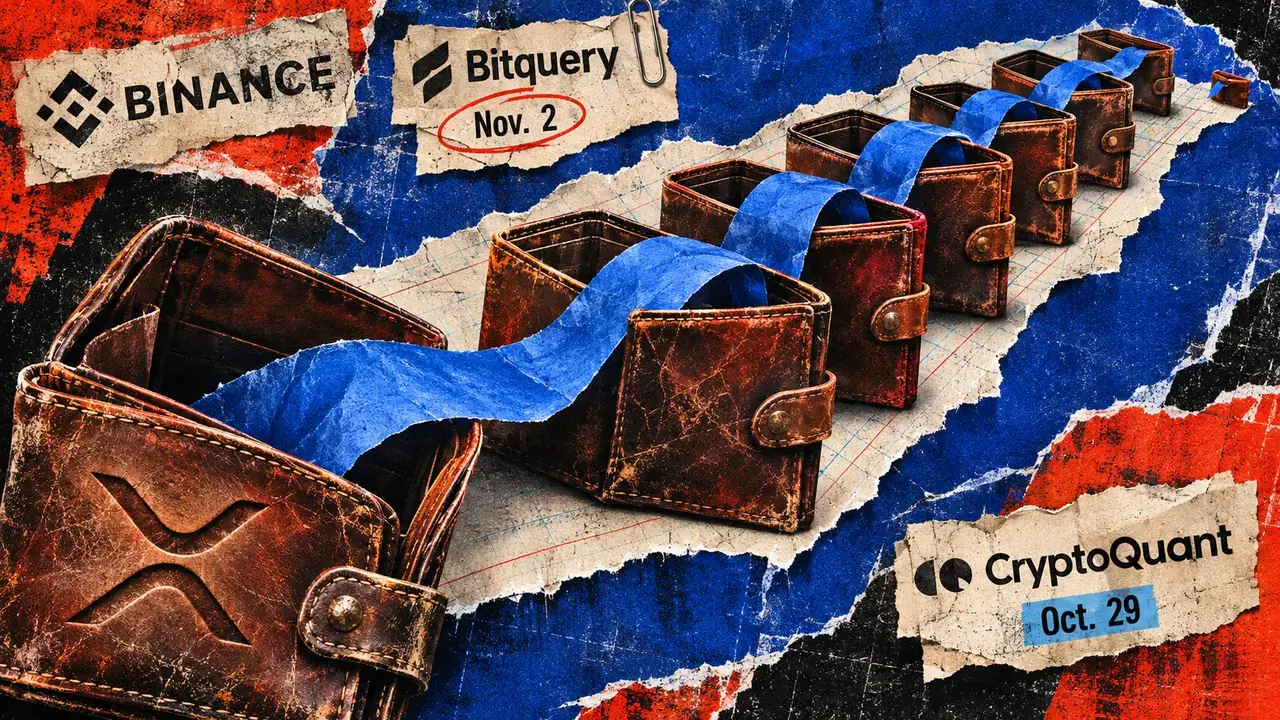
Lately, the narrative around XRP has been focused on its legal status and its potential role in cross-border payments. When the whale count rises, the community tends to view it as a confirmation of that narrative. However, recent forensic analysis from Bitquery suggests that this specific spike in whale activity isn't coming from new buyers or institutional confidence. Instead, it appears to be a side effect of a security breach.
Data shows that a significant portion of these new high-balance wallets are linked to the recent exploit of Binance-related XRP holdings. When a large exchange or a high-profile individual gets hit, the stolen assets don't just vanish. They are moved, often broken up into smaller but still substantial chunks to avoid immediate detection or freezing. In this case, the stolen funds were distributed into six distinct accounts, each holding over a million tokens. To an automated data crawler, these look like six new whales. In reality, it is one bad actor trying to hide their tracks.
Why Builders Should Care About Data Integrity
As founders and developers, we rely on data to make decisions. We look at wallet growth, transaction volume, and holding patterns to gauge the health of an ecosystem. This situation highlights a fundamental flaw in how we interpret blockchain metrics. If your product or your investment strategy relies on "whale watching," you are effectively outsourcing your intuition to a metric that is incredibly easy to manipulate—either intentionally by wash traders or unintentionally by hackers.
We talk a lot about the transparency of the blockchain, but transparency is not the same as clarity. The ledger shows us that the tokens moved, but it doesn't tell us the intent. When we see a wallet balance cross a certain threshold, our bias is to assume it represents a market participant with a long-term vision. We forget that the blockchain is indifferent. It records the movements of a thief just as clearly as it records the movements of a hedge fund.
The Santiment Disconnect
Platform metrics from providers like Santiment are often the gold standard for retail traders. They aggregate these wallet movements and present them as bullish or bearish indicators. While these platforms do their best to filter out exchange wallets and known labels, the delay between a hack and the labeling of those addresses creates a window of misinformation. During that window, the "fake bullish" signal propagates through social media, driving retail FOMO based on a lie.
For those of us building tools or services in the XRP Ledger ecosystem, this is a reminder to build layers of verification into our own dashboards. Relying on a single source of truth for wallet categorization is a risk. If your dapp reacts to whale movements, you need to ensure you aren't triggering actions based on the movement of illicit funds.
The Founder's Perspective on Ecosystem Health
I have seen this play out in dozens of cycles. A project gets hit, the funds move, and the community tries to find a silver lining in the resulting volume. It is a coping mechanism. But true ecosystem growth doesn't come from fragmented stolen loot. It comes from utility, developer activity, and actual capital inflow.
The XRP Ledger has always been a bit of an outlier in the crypto world. It has a dedicated, almost religious following, and it has survived more regulatory pressure than almost any other chain. But that resilience shouldn't blind us to the technical realities of its on-chain behavior. When we see a sudden influx of large holders during a period of exchange vulnerability, the skeptical move is usually the right one.
The blockchain records the movements of a thief just as clearly as it records the movements of a hedge fund. Transparency is not the same as clarity.
The Risk of Misaligned Incentives
There is also the issue of how these signals affect market liquidity. When retail traders see whale counts rising, they might be tempted to provide liquidity or take leveraged positions. If the "whales" are actually hackers, those hackers eventually need to exit. When they do, they won't care about market impact or maintaining a floor price. They will dump those millions of tokens into whatever liquidity is available, leaving the retail followers to hold the bag.
As builders, we have a responsibility to be honest about these metrics. If you are running a community or a project, don't signal-boost every green chart you see. It is better to be the person who pointed out the anomaly than the person who cheered for a rally that turned out to be a robbery.
The Takeaway for the Week
The lesson here is simple: verify the source of the growth. A million-token wallet is only a bullish signal if that million tokens was bought on the open market or moved from an exchange into cold storage by a legitimate holder. If it is the result of a hack being split into multiple addresses, it is actually a looming sell wall.
Stop looking at the whale count as a standalone metric for success. Look at the number of active developers, the diversity of the nodes, and the actual volume of non-speculative transactions. That is where the real value is being built. Everything else is just noise, and in this case, the noise is coming from a crime scene.
Read the original at CryptoSlate →