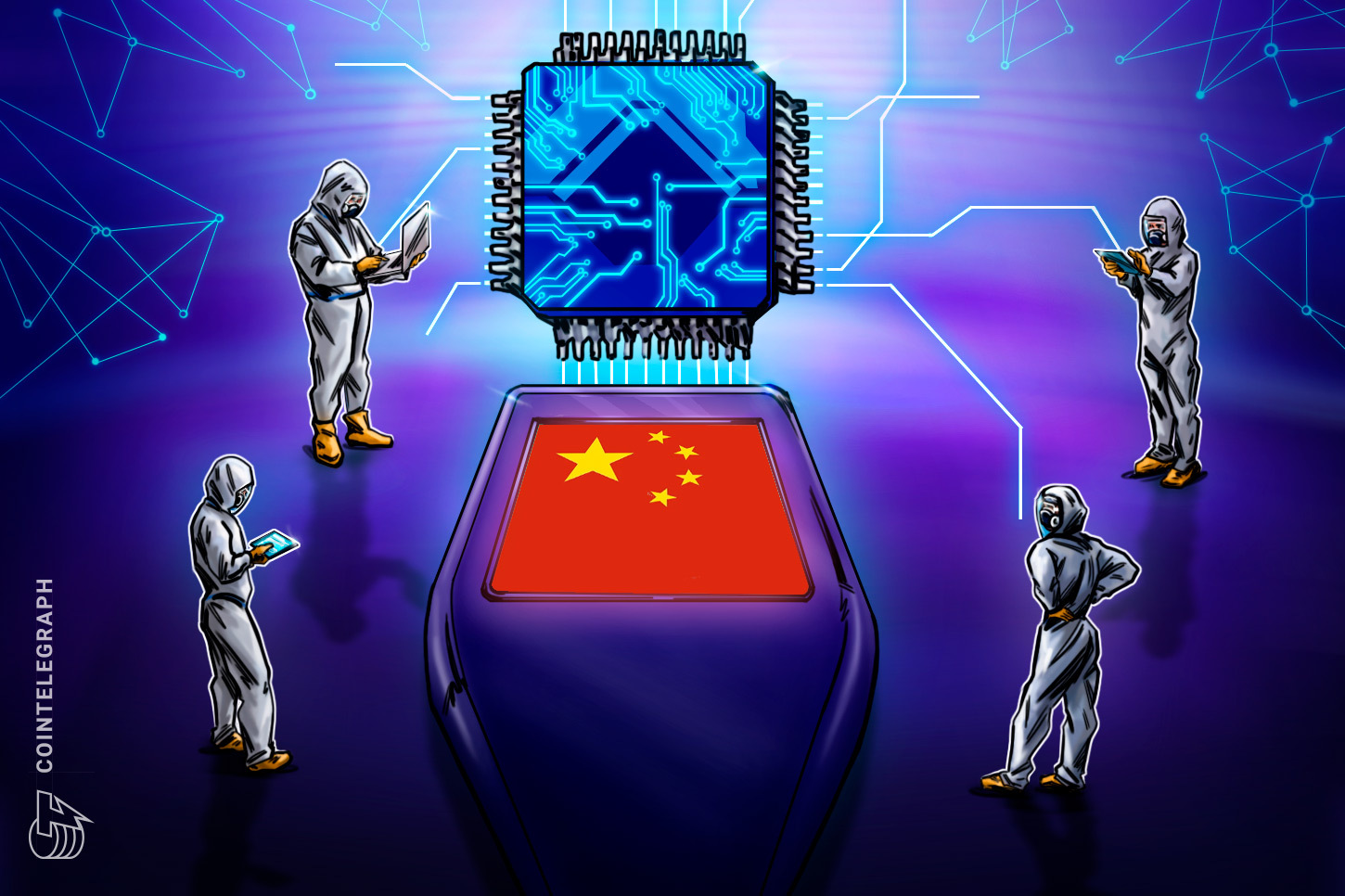
Building a foundational model from scratch is becoming a fool's errand for anyone without a decade of power grid access and a blank check. But if you can't out-compute the giants in Silicon Valley, you can certainly copy their homework. That is the core of the latest friction between the White House and Moonshot AI, one of China's most prominent AI startups.
The Methodology of the Shortcut
U.S. officials are now pointing fingers at Moonshot, claiming the firm essentially siphoned the intelligence out of Anthropic’s Claude models to build their own system, internally known as K3. This process, often called model distillation, isn’t exactly top-secret science. It involves using a high-performing model—like Claude or GPT-4—to generate massive amounts of synthetic training data. You then take that data and use it to train a smaller, cheaper, “student” model. The student ends up mimicking the reasoning and behavior of the master without requiring the same multi-billion dollar R&D budget.
For a founder, this is the ultimate growth hack. It’s efficient. It’s fast. But when a Chinese firm does it to a U.S.-backed lab, the White House calls it industrial-scale theft. We aren’t talking about a few students messing around with API keys; the accusation here is that Moonshot systematically extracted the logic and “fable” of Anthropic’s tech to bypass the hard work of original discovery.
The Geopolitics of the API
This isn’t just about a single company. This is the first real shot across the bow regarding the “export” of intelligence through software interfaces. For years, the U.S. has focused on choking off hardware—preventing high-end Nvidia chips from reaching Beijing. But you don’t need H100s to perform distillation if you have an internet connection and a subscription to a platform like Anthropic or OpenAI.
The U.S. government is now realizing that if they can’t stop the hardware, they have to police the outputs. If Moonshot truly used Anthropic’s tech to build K3, it highlights a massive hole in the current regulatory framework. You can ban a chip, but how do you ban a thought process that has already been digitized and served up via API?
What This Means for Builders
If you’re building in this space, you need to watch this carefully. The White House is hinting at potential sanctions and even stricter export restrictions. This could mean that U.S.-based AI labs will be forced to implement much more aggressive “know your customer” (KYC) protocols for their APIs. In the near future, getting an API key might require the same level of verification as opening a bank account.
For founders in neutral zones or those trying to bridge the gap, the message is clear: the era of the open API is under threat. If the U.S. determines that providing access to a model is equivalent to exporting a weapon, the friction for developers is going to skyrocket. We are looking at a future where AI models are siloed by borders, and the dream of a borderless “global brain” is getting crushed by national security concerns.
The Distillation Trap
There is a technical debt to consider here, too. Distillation is a shortcut, but it creates a ceiling. If you only ever train your model on the outputs of a competitor, you are essentially creating a digital echo. You will never surpass the model you are copying. Moonshot might have saved time, but by leaning on Claude’s logic, they are bound to Claude’s biases and limitations.
I’ve seen this in the crypto space for years. Projects fork a successful protocol because they want the immediate users and the familiar code, but they lose the ability to innovate from first principles. When the market shifts, the forks are the first to die because they don’t actually understand why the original was built the way it was.
The Inevitable Crackdown
The White House making this public is a warning shot. They are signaling to other Chinese firms—and the U.S. companies hosting them—that the free ride is over. Expect to see more pressure on Anthropic, OpenAI, and Google to monitor exactly who is hitting their endpoints and for what purpose. If a single IP address from a suspicious region is generating millions of tokens of complex reasoning data every day, the hammer is going to fall.
The reality is that intelligence is now a strategic resource. We are seeing the birth of a new kind of protectionism. It isn’t about steel or oil anymore; it’s about the weights and measures of neural networks. If you are a builder, you need to diversify your infrastructure now before the digital iron curtain fully drops.
The Takeaway
- Model distillation is being reclassified from a common engineering tactic to a tool of industrial espionage in the eyes of U.S. regulators.
- API access is the next major battleground for export controls, which will likely lead to invasive KYC for developers.
- While distillation is fast, it limits a company’s long-term ability to innovate beyond the limitations of the “teacher” model.
- Founders should prepare for a fragmented AI landscape where geographical location dictates tool availability.
Read the original at Cointelegraph →