The Quantum Reality Check
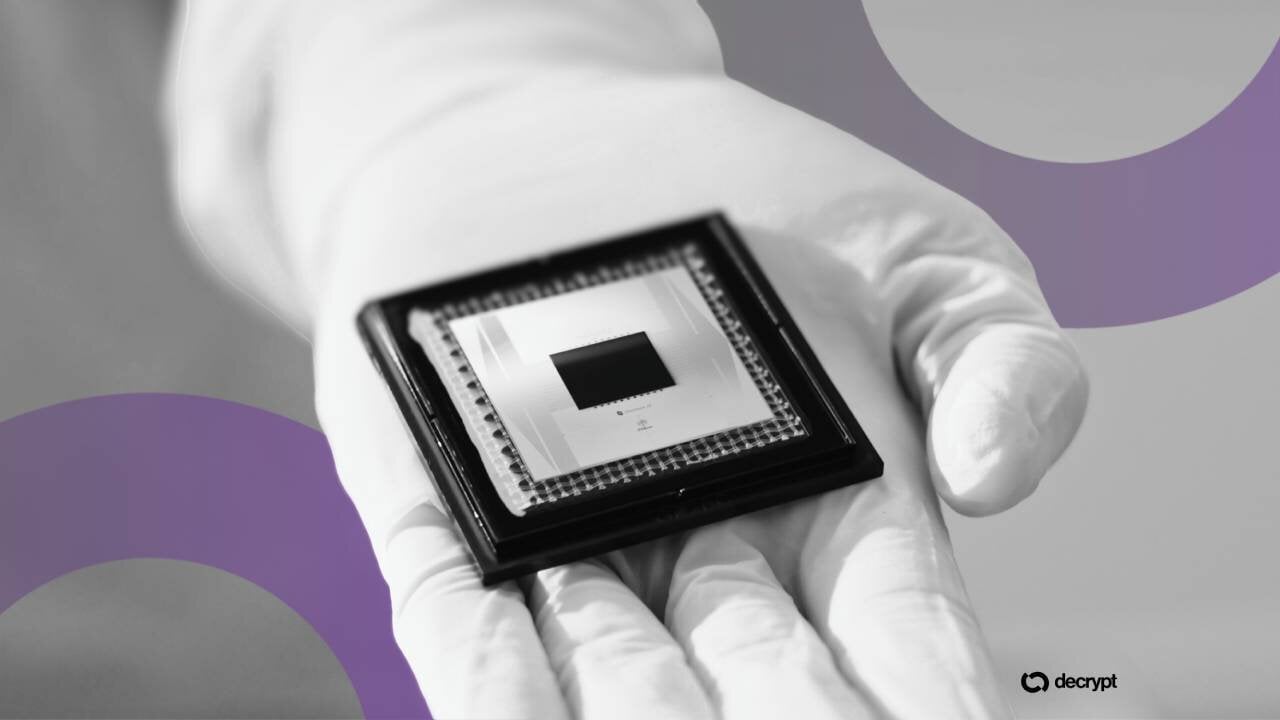
While the Bitcoin development community is currently bogged down in another cycle of internal debate regarding protocol efficiency and block space utility, the hardware world is moving at a pace that should make every founder look up from their terminal. IonQ recently pulled the curtain back on its Superion 256 system. This isn't just another research paper or a laboratory experiment housed in a university basement. They have started manufacturing actual chips and testing prototypes for mass production.
For those of us building in the trenches of crypto and AI, the word quantum usually falls into one of two buckets: science fiction hype or a distant problem for the next generation. But IonQ is attempting to bridge the gap between theoretical physics and industrial manufacturing. The Superion 256 represents a shift from bespoke, handcrafted quantum rigs to something that looks like a repeatable production line. If you are building on-chain, you need to stop thinking about quantum computing as a boogeyman and start thinking about it as an engineering deadline.
The Superion 256 Shift
Most quantum computers we have seen to date are fragile monsters. They require extreme cooling, massive footprints, and are prone to noise that renders their calculations useless. IonQ is pushing a different architecture using trapped ions, and the Superion 256 is their play at scaling this up. By moving into the prototype testing phase for mass-produced chips, they are signaling that the era of laboratory curiosity is ending. They want these machines in data centers, not just physics labs.
For a founder, the technical specifications are less important than the trajectory. When hardware hits the manufacturing phase, the cost of compute starts to drop and the accessibility starts to rise. We have seen this play out with GPUs and AI. The moment the hardware becomes a commodity, the software layer explodes. The problem is that our current software layer in crypto is built on cryptographic assumptions that assume this hardware won't exist for thirty years.
Bitcoin’s Internal Distraction
While these hardware milestones are being hit, the Bitcoin ecosystem is arguably distracted. We are seeing intense debates over how to handle the next set of protocol improvements, ranging from scaling solutions to how to handle Ordinals and inscriptions. These are important conversations for the current market cycle, but they feel like arguing over the deck chairs while a new type of iceberg is being manufactured in a factory nearby.
Bitcoin’s security relies on the Elliptic Curve Digital Signature Algorithm (ECDSA). It is robust, battle-tested, and currently impenetrable by classical computers. However, it is mathematically vulnerable to Shor’s algorithm, which a sufficiently powerful quantum computer could execute to derive a private key from a public key. The Bitcoin community knows this, but the consensus-driven nature of the protocol makes moving toward quantum-resistant signatures a slow, painful process. The Superion 256 is a reminder that the hardware side isn't waiting for the developers to reach a consensus.
What This Means for Builders
If you are a founder in the Web3 space, you don't need to panic, but you do need to audit your roadmap. Building on legacy standards without a plan for migration is becoming a liability. We are entering a transition period where "quantum-ready" will shift from a marketing buzzword to a requirement for institutional trust. If IonQ succeeds in manufacturing these systems at scale, the timeline for the first meaningful attacks on legacy cryptography will move up.
- Infrastructure longevity: Are the smart contracts you are deploying today upgradeable? If you are locking value into immutable code that uses current signature standards, you might be creating a time capsule for future hackers.
- User experience vs. Security: The shift to quantum-resistant cryptography often involves larger signature sizes and more computational overhead. Founders need to figure out how to implement these without destroying the user experience.
- Data Privacy: For AI founders, quantum computing is a double-edged sword. It offers the potential for massive leaps in model training and complex optimization, but it also threatens the privacy of the datasets we use to train those models.
The Industrialization of Qubits
The real story here isn't just the 256 qubits. It is the manufacturing. When a company starts talking about chip production and prototypes, they are moving into the scaling phase. This is where the price-to-performance ratio starts to move in favor of the attacker. Up until now, the cost of running a quantum experiment was so high that no one would waste it on trying to crack a Bitcoin wallet or a secure database. As IonQ and its competitors industrialize the process, the cost of that compute drops.
We have to look at this through the lens of founder pragmatism. You shouldn't pivot your entire company to solve quantum problems, but you should be skeptical of any protocol that doesn't have a clear, documented path to cryptographic agility. The ability to swap out signature schemes is no longer a luxury feature; it is an insurance policy against the manufacturing progress of companies like IonQ.
The biggest risk to the blockchain ecosystem isn't a drop in price, it's a static defense against a dynamic hardware landscape.
A Skeptical Take on the Timeline
I want to be clear: IonQ moving to manufacturing doesn't mean Bitcoin is broken tomorrow. There is still a massive gap between a 256-qubit system and the millions of physical qubits likely required to break ECDSA at scale. There is also the issue of error correction, which remains the Achilles' heel of the entire industry. IonQ’s prototypes are a step forward, but they are not the finish line.
However, being a founder means managing risk. The risk isn't just the day the computer turns on; it's the "harvest now, decrypt later" strategy. Hostile actors can collect encrypted data and signed transactions today, waiting for the hardware to catch up in a decade. If you are building systems that handle sensitive long-term data, the Superion 256 is a signal that your window of safety is narrowing.
Takeaway for the Founder
Stop waiting for the Bitcoin devs to settle their debates before you think about your own stack. The hardware world is moving toward the industrialization of quantum power. Your job is to ensure that whatever you are building today isn't obsolete by the time IonQ’s next three generations of chips hit the market. Build for agility, keep an eye on the manufacturing milestones, and don't let the noise of protocol politics distract you from the shift in the physical layer of computing.
Read the original at Decrypt →