When you spend your days staring at code repositories and model architectures, it is easy to forget that the most complex hardware we have ever built is currently hurtling through the vacuum of space at thirty-eight thousand miles per hour. November 2026 is shaping up to be a month that forces us to look up, not just for the sake of curiosity, but to gain some much-needed perspective on what it means to build things that last.
The Voyager Milestone: Coding for the Long Haul
The headline act for me this month isn't a celestial event, but a human one. Voyager 1 is hitting a milestone that sounds like science fiction: it is reaching one light-day of distance from Earth. Think about that for a second. If you send a ping to Voyager 1, it takes 24 hours to get there, and another 24 hours to hear back. That is a 48-hour round-trip latency. If you think your API response times are sluggish, imagine debugging a system where every command takes two days to confirm.
For builders in the crypto and AI space, Voyager is the ultimate case study in resilience. This spacecraft was launched in 1977. It is running on technology that is effectively prehistoric by modern standards, yet it is still sending data back from interstellar space. We often talk about 'future-proofing' our stacks, but most of us are lucky if our documentation is still relevant six months from now. Voyager reminds us that simplicity and robust design are the only things that survive the test of time. It is a masterclass in building for an environment where there is no 'undo' button and no physical access for repairs.
The Meteor Buffet: Taurids and Leonids
Moving from the man-made to the natural, November is providing a heavy schedule of meteor showers. We have the Taurids early in the month and the Leonids following closely behind. NASA describes this as a 'buffet,' which is a polite way of saying there is a lot of debris hitting our atmosphere all at once.
The Taurids are interesting because they are slow-movers. They aren't the blink-and-you-miss-it streaks we usually see. They linger. In a world where we are obsessed with high-frequency trading and millisecond inference times, there is something to be said for the slow burn. The Taurids are the result of the fragmentation of Comet Encke, and they serve as a reminder that even the largest structures eventually break down into smaller, high-impact pieces. In the startup world, we see this often—massive legacy companies fragmenting, leaving behind smaller, faster-moving projects that light up the sky for a moment.
The Leonids, peaking around the 17th and 18th, are the opposite. They are fast, hitting the atmosphere at about 44 miles per second. This is the high-velocity disruption we are more familiar with in the tech sector. These meteors originate from Comet Tempel-Tuttle. Every 33 years, this shower turns into a meteor storm where you can see thousands of streaks per hour. 2026 isn't a storm year, but the steady rhythm of the Leonids is a lesson in consistency. Great projects aren't just about the big 'storm' moments; they are about showing up every year, cycle after cycle.
Planetary Alignment and the Supermoon
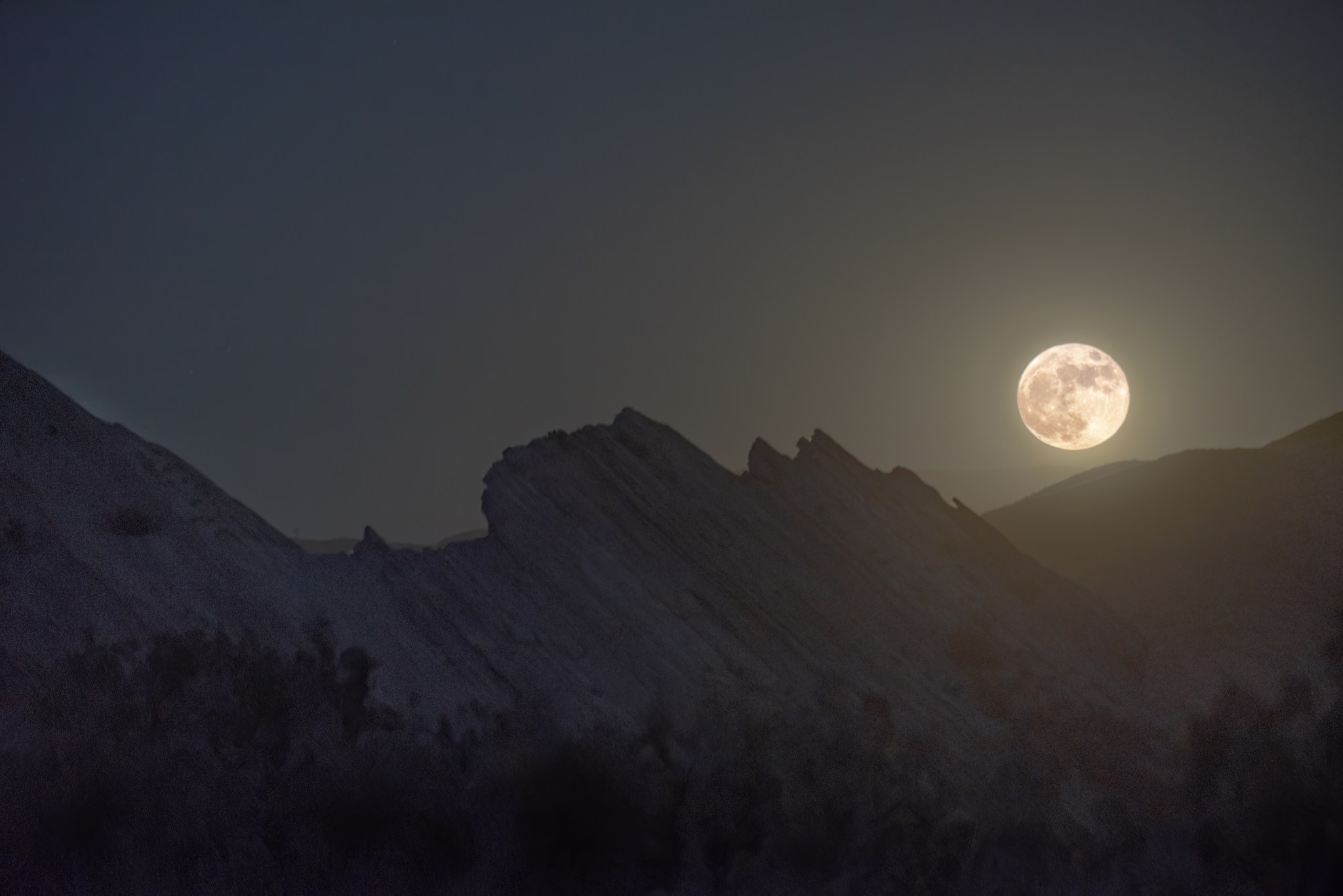
Mid-month, we get a visual pairing of Mars and Jupiter. They will appear close together in the morning sky. It is a rare alignment of the red planet and the gas giant, providing a clear marker for anyone looking East before dawn. Then, on November 24th, we get the final supermoon of the year. Because the moon is at its perigee—the closest point to Earth in its orbit—it appears significantly larger and brighter than usual.
In the crypto markets, we talk about 'moons' as a metaphor for irrational exuberance. But a supermoon is a physical reality. It is a reminder that cycles exist, and proximity matters. When things get close—whether it is two planets in the sky or two technologies converging—the friction and the visibility increase. The convergence of AI and decentralized compute is our current 'planetary alignment.' It’s easy to spot if you’re looking in the right direction, but most people are still asleep when the best views are available.
The Builder Perspective: Legacy vs. Hype
Why does an editor at a crypto and AI news site care about NASA’s November schedule? Because we are in the business of building the next 'Voyagers.' We are trying to create protocols and intelligence layers that will outlive the current hype cycle. Seeing a spacecraft reach a light-day of distance while running on 1970s logic gates is a humbling reality check for anyone complaining about gas fees or GPU shortages.
We spend so much time looking at our screens that we forget the scale of the sandbox we are playing in. The meteor showers are a reminder that the universe is constantly moving, shifting, and shedding old weight. The supermoon is a reminder of the power of cycles. And Voyager is the proof that if you build something well enough, it can go further than anyone ever intended.
The Takeaway
Don't get buried in the day-to-day noise of the markets. Take a page from the Voyager team: build for the long-term, account for extreme latency, and ensure your core logic is robust enough to survive forty years in the dark. The sky in November 2026 is giving us a free lesson in durability and perspective. It would be a mistake to ignore it.
Read the original at NASA Breaking News →