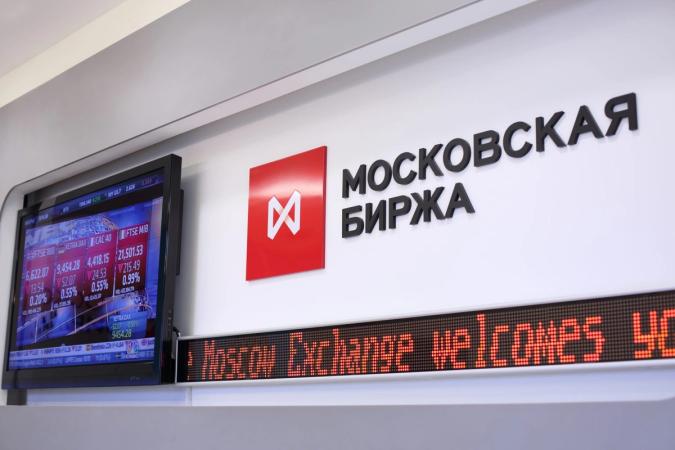
We have reached the point in the cycle where the lines between geopolitical maneuvering and financial infrastructure have blurred into a single, messy reality. The Moscow Exchange, currently under heavy U.S. sanctions, has announced it will list Bitcoin and Tether’s USDT this December. It is a move that feels inevitable for a country looking to bypass traditional trade hurdles, but for those of us building in this space, it raises some uncomfortable questions about the tools we use every day.
The Practicality of Desperation
Russia isn’t doing this because they have suddenly become believers in the cypherpunk manifesto. This is a practical play. When you are cut off from the global banking system, you look for the path of least resistance. Currently, that path is paved with stablecoins. The Moscow Exchange wants to claw back the trading volume that Russian citizens have been taking to offshore platforms for years. By bringing it in-house, they gain control, oversight, and a way to facilitate trade that doesn't rely on the SWIFT network.
For the average builder, this is a reminder that utility eventually beats ideology. People will use what works when they have no other options. Bitcoin is the neutral asset, and USDT is the digital dollar. In a sanctioned environment, these are no longer speculative bets; they are survival tools.
The Tether Paradox
The most interesting part of this story isn't Bitcoin—it is Tether. The irony here is thick enough to choke on. Tether has a long, documented history of complying with U.S. sanctions. They have frozen hundreds of millions of dollars in wallets at the request of the Department of Justice and the FBI. Yet, here we have an exchange sanctioned by those same U.S. authorities preparing to make USDT a primary trading pair.
This creates a friction point that builders need to watch closely. If a sanctioned exchange lists a centralized stablecoin, the issuer of that stablecoin is placed in a corner. Do they freeze every wallet associated with the exchange? If they do, the exchange’s plan fails. If they don’t, Tether risks further ire from U.S. regulators. It is a high-stakes game of chicken where the collateral is the perceived neutrality of the world’s largest stablecoin.
Why Builders Should Care
If you are building DeFi protocols or cross-border payment rails, this development is a stress test for your assumptions about censorship resistance. We often talk about decentralization as an abstract ideal, but this is the real-world application. We are seeing a major nation-state attempt to use decentralized (or semi-decentralized) assets to circumvent the financial hegemony of another nation-state.
- Regulatory Blowback: Expect the U.S. Treasury to tighten the screws on any bridge or protocol that interacts with these flows.
- Liquidity Fragmentation: We might see a "clean" USDT versus a "gray market" USDT if exchanges are forced to segregate assets.
- Validation of the Use Case: Despite the optics, this proves that digital assets are the only viable alternative to the legacy banking stack in times of crisis.
The Founder Perspective
As a founder, I look at this and see a massive compliance headache looming on the horizon. If you are operating a platform that allows for permissionless transfers, how do you handle the potential influx of liquidity coming from a sanctioned bourse? The technical challenge isn't just about moving the tokens; it’s about the metadata and the provenance of those tokens.
We are moving toward a bifurcated internet and a bifurcated financial system. One side will be governed by Western compliance standards, and the other will be a patchwork of localized exchanges and neutral protocols. The Moscow Exchange listing is just the first domino. It signals that the "permissionless" nature of crypto is being tested by the most powerful entities on earth.
The neutrality of the protocol is only as strong as the exit ramps. When the exit ramp is a sanctioned state entity, the protocol is no longer just code; it is a political statement.
The Infrastructure Reality
We need to be honest about what Bitcoin and USDT are at this stage. They are the new plumbing. Just as a sanctioned country can still use the internet protocol (TCP/IP), they can use the Bitcoin protocol. The difference is that the financial layer has much more aggressive gatekeepers. The Moscow Exchange is betting that the demand for these assets is so high that the gatekeepers won't be able to stop the flow without breaking the system itself.
For those of us in the trenches, the takeaway is clear: stop looking at crypto as a niche investment class. It is being integrated into the foundational layers of global conflict. Your code might be neutral, but the way it is being deployed by state actors is anything but. This December will be a massive case study in whether centralized issuers like Tether can truly enforce the borders that the U.S. government wants to maintain.
Takeaway for the Week
The Moscow Exchange listing is a signal that the era of "crypto as a toy" is officially over. It is now a tool of statecraft. If you are building in this space, you need to decide if you are building for the regulated world or the neutral one, because the middle ground is disappearing fast. Keep your eyes on the wallet freezes—that is where the real story will be told.
Read the original at CoinDesk →