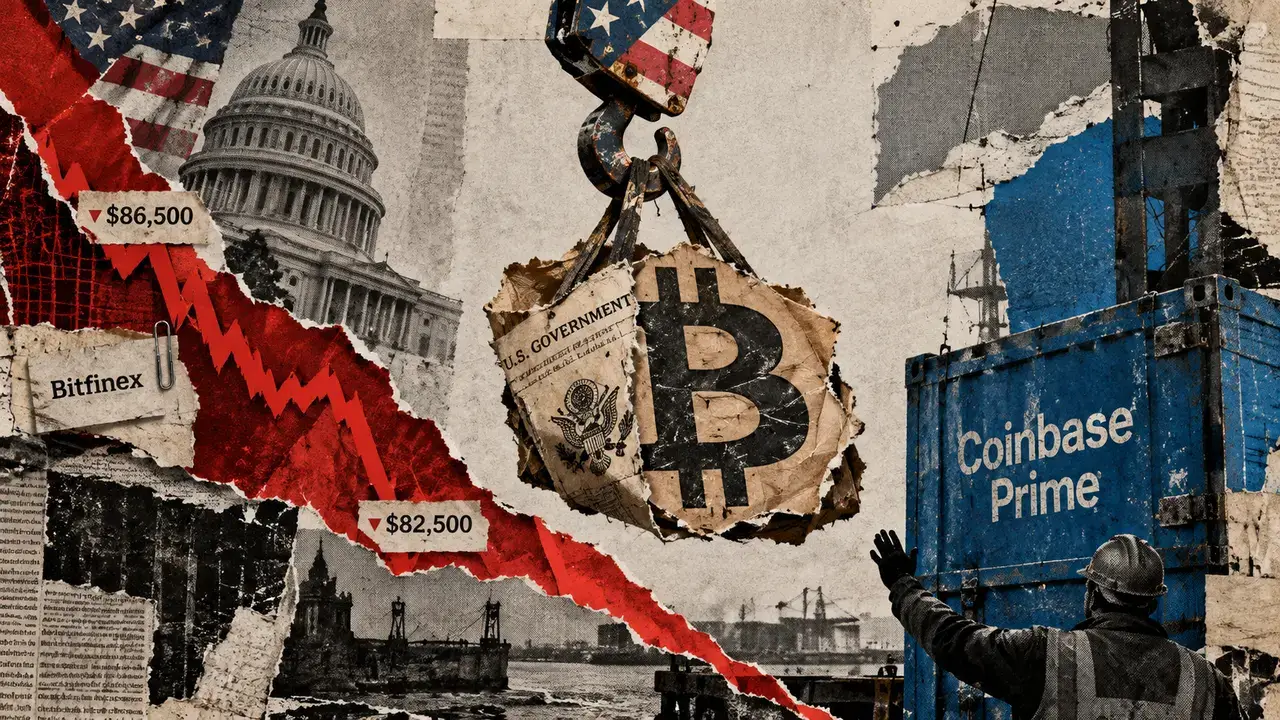
We have reached a weird point in the history of money where a single clerk in a federal office can press a button and erase billions of dollars in market cap across the global crypto ecosystem. It happened again this week. While the rest of us were watching price charts and debating the next Fed move, the US government moved 12,267 BTC to Coinbase Prime. At current rates, that is about $1.1 billion.
For those keeping track at home, this isn't new money. These funds are part of the recovery from the 2016 Bitfinex hack. It is essentially seized property sitting in digital evidence lockers. But when the government starts moving weight to an exchange, the market reacts like a nervous cat. Prices dipped roughly $4,000 as soon as the news hit. It is a reminder that in the world of decentralized finance, the most centralized player is still the one with the biggest stick.
The Logistics of a Billion-Dollar Liquidation
Galaxy Research caught the movement early. The Bitcoin moved from a government-controlled address to a middle-man wallet, eventually landing at Coinbase Prime. For builders, the technical flow matters less than the operational intent. When assets hit an institutional custody platform like Coinbase Prime, they aren't there to sit in cold storage. They are there to be sold, traded, or distributed.
This creates a massive overhang. When we talk about "sell pressure," we usually mean miners paying their electricity bills or early investors taking profit. But the government operates on a different logic. They don't care about your DCA strategy or the technical support levels at $60,000. They have a mandate to liquidate seized assets according to legal timelines. This makes them the ultimate "insensitive seller."
Why Builders Should Care
If you are building a protocol, a dApp, or a fintech startup, you might think the Department of Justice's wallet activity has nothing to do with your code. You are wrong. This volatility directly impacts liquidity, user sentiment, and the cost of capital. When the market sees a billion-dollar transfer, risk appetite disappears instantly. Users stop experimenting with new protocols and retreat to stables or fiat.
More importantly, it highlights the fragility of our current market structure. We claim to be building a system that is independent of legacy institutions, yet we are still tethered to the actions of a few government agencies holding massive amounts of legacy-recovered coins. As long as the Silk Road and Bitfinex seizures remain in state hands, the "sword of Damocles" will hang over every bull run.
The Transparency Paradox
One of the few silver linings here is that we can actually see it happening. In the traditional financial world, if the government decided to dump a massive position in a specific asset class, the public would find out weeks or months later in a filing. In crypto, the moment the transaction hits the mempool, every analyst with a scanner is sounding the alarm.
This transparency is a tool for founders. It allows for a level of defensive planning that does not exist in traditional markets. However, it also creates a feedback loop of fear. The moment the government moves $5, you will see a thousand "Breaking News" tweets that trigger automated selling algorithms. It is a game of high-speed psychological warfare where the government holds all the cards.
The Long Road to Distribution
We need to stop looking at these events as isolated incidents. The US government is one of the largest holders of Bitcoin in the world, largely due to successful law enforcement actions. They didn't buy in because they believe in the whitepaper; they are holding it because they took it from people who broke the law. This creates a massive, non-ideological supply that will eventually be forced back into the market.
For founders, this means building for resilience. If your project’s success depends on Bitcoin staying above a certain price floor, you are effectively gambling on the speed of the US legal system's liquidation process. That is a bad bet. We need to build systems that can withstand these $4,000 swings, because as long as there are billions of dollars in seized assets waiting for a signature, these flash crashes will remain a regular feature of the landscape.
Strategic Takeaways for the Founder
The immediate takeaway is simple: don't let the noise distract you, but don't ignore the signal either. The government is moving coins, and they will likely move more. This is part of the professionalization of the space, even if it feels like a setback in the short term. The fact that they are using Coinbase Prime suggests a move toward standardized, institutional-grade disposal rather than OTC backroom deals.
- Build for Volatility: Assume $5k swings are a standard Tuesday. If your liquidation thresholds or treasury management can't handle a government-induced dip, fix them now.
- Watch the Flow: Don't just watch the price; watch the wallets. Tools that track government movements are now essential infrastructure for any crypto-adjacent business.
- Ignore the Hype: Every time this happens, the "Bitcoin is dead" crowd comes out. Ignore them. The asset is moving from a dormant state locker into the broader market. That is a long-term net positive for circulation, even if the short-term price action hurts.
Ultimately, we are seeing the slow-motion unwinding of the "wild west" era of crypto. These seized coins are the ghosts of hacks and darknet markets past. The sooner they are distributed and absorbed by the market, the sooner we can move on to a market driven by actual utility and builder-led value rather than the leftovers of federal investigations. It’s going to be a bumpy ride, but the end of this overhang is necessary for the next phase of growth.
Read the original at CryptoSlate →