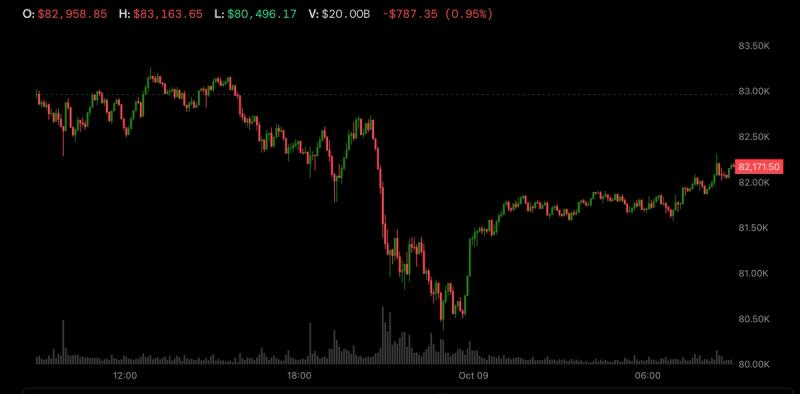
The United States government just sent a billion-dollar reminder that they are currently one of the largest whales in the crypto ecosystem. According to on-chain data, a massive chunk of Bitcoin previously seized from the 2016 Bitfinex hack has started moving again. We aren't just talking about a few satoshis for testing; we are talking about a $1 billion transfer following a series of smaller, yet still massive, $770 million movements.
The Logistics of a Billion-Dollar Ping
For those of us building in this space, we usually think of whale movements in terms of hedge funds or early adopters. We rarely talk about the Department of Justice as a primary market force, yet here we are. The wallet in question has been tagged by analysts for years. It holds the remnants of the recovery from Ilya Lichtenstein and Heather Morgan, the couple behind the infamous Bitfinex breach. While the headlines focus on the dollar amount, the real story is the operational shift.
When the government moves money, they don't do it for fun. They do it for custody changes, liquidations, or preparation for legal distributions. Moving a billion dollars in a single transaction suggests that the administrative pipes are being cleared. For builders, this is a signal of impending volatility. Whenever the government touches their bags, the market flinches. It doesn't matter if they are selling or just rearranging their digital furniture; the mere movement creates a ripple effect in liquidity and sentiment.
Why Builders Should Care
You might be wondering why a founder building a DeFi protocol or a generative AI tool should care about the DOJ's wallet activity. The answer is simple: stability. Our industry is still largely pegged to the price action of Bitcoin. Large-scale government liquidations can trigger liquidations in decentralized lending protocols, spike gas fees, and shift the narrative from innovation back to regulation and enforcement.
Every time a transaction of this magnitude occurs, it validates the transparency of the blockchain—which is good—but it also highlights the central points of failure in the broader ecosystem—which is bad. We are building "decentralized" futures while staring at a centralized entity that holds enough supply to tank the market on a Tuesday afternoon just because an internal audit finished early.
The Bitfinex Shadow
The Bitfinex hack is a piece of crypto history that refuses to stay in the past. It is the ghost that keeps haunting the order books. The government has successfully recovered a staggering amount of these funds, but the distribution process remains a black box. For founders, the uncertainty is the enemy. We can code around bugs, and we can pivot around market trends, but we cannot predict the timing of a federal auction or a mass transfer to a centralized exchange.
This specific movement of $1 billion follows a smaller but significant $770 million shuffle. When you see staggered movements like this, it usually points to a systematic process. They are likely moving funds into newer, more secure custody solutions or preparing to satisfy court mandates. Regardless of the intent, the sheer volume acts as a wet blanket on organic price discovery.
The Founder's Perspective
From where I sit, this is a call for better treasury management. If your startup’s runway is tied to assets that can be devalued by a single government transaction, you aren't running a business; you're gambling on federal bureaucracy. We need to be building tools that decouple utility from these massive, government-influenced price swings.
We also need to look at the optics. The mainstream media sees "billion-dollar government seizure" and thinks of crime and risk. We need to counter that by showing the value of the technology beyond the price tag. The fact that we can even track this movement in real-time is a testament to the tech we are building. Try tracking $1 billion in seized cash moving through the Federal Reserve's internal ledgers with this level of granularity. You can't.
Preparation over Paranoia
Don't get caught up in the doom-scrolling. Yes, the government is moving money. Yes, it might lead to a sell-off. But as builders, our job isn't to trade the news; it's to build through it. This event should serve as a stress test for your protocols and your business models.
- Check your collateral ratios.
- Review your liquidations thresholds.
- Ensure your communication channels are open for when the market inevitably asks, "Why is the price dropping?"
The US government is now a permanent fixture in the crypto markets. They are a participant, whether we like it or not. The Bitfinex recovery is just one chapter in a much longer book of state-controlled digital assets. The best thing we can do is treat them like any other large, unpredictable whale: watch the wallet, acknowledge the risk, and keep shipping code.
Takeaway
The government moving $1 billion in Bitcoin isn't a sign of the end times; it's a sign of maturity. The infrastructure to move, track, and manage these assets is now part of the federal toolkit. For builders, this means the environment is becoming more complex, and our strategies must evolve to account for state-level market participants. Stay lean, stay transparent, and don't let the whale splashes sink your boat.
Read the original at Cointelegraph →