The Invisible Keyboard
We spent years arguing about whether prediction markets were legal. Now that they are here, we are discovering exactly why the government was so terrified of them in the first place. It is not just about gambling; it is about the ultimate insider trade. When you are the person typing the words that the President of the United States is about to say, you aren't just an observer. You are the source code.
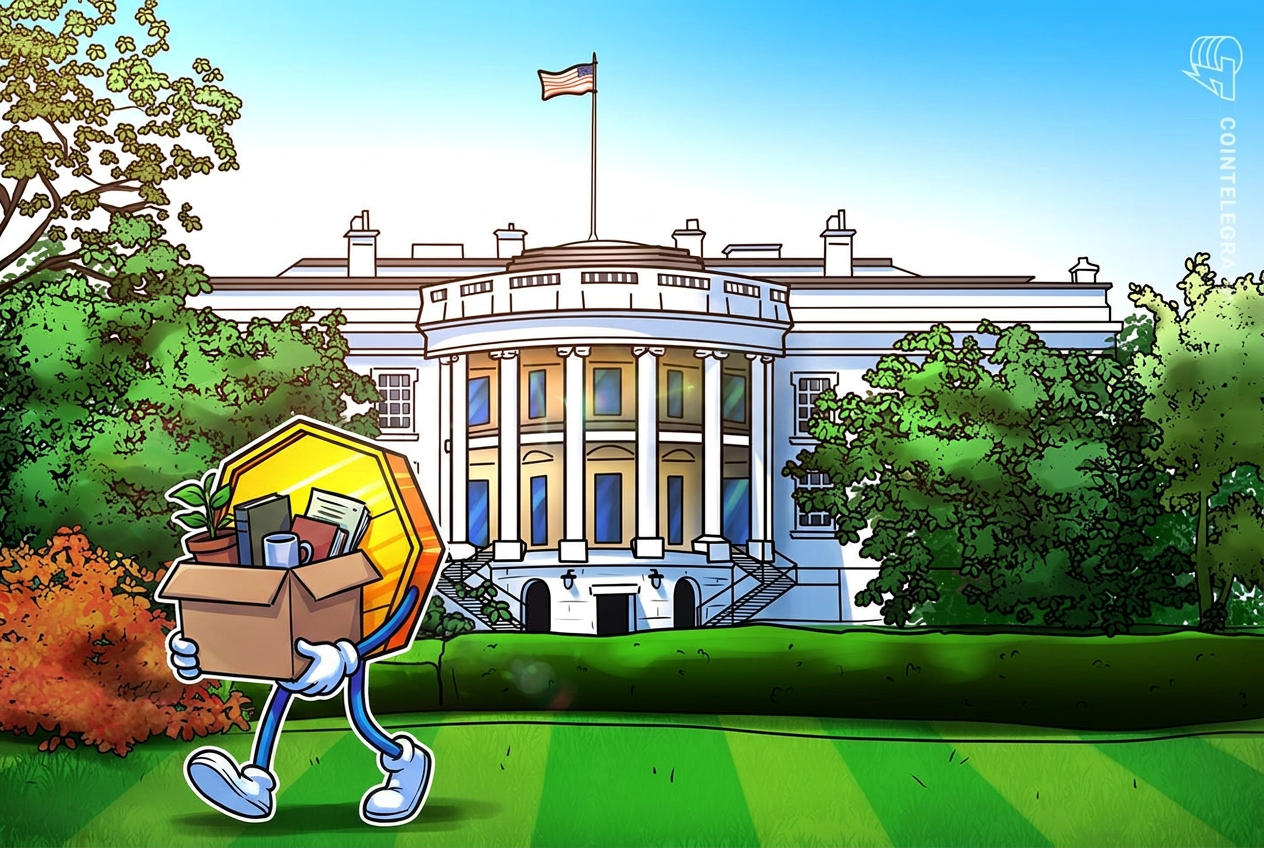
News recently broke that Gabriel Perez, a teleprompter operator for the White House, is no longer employed by the federal government. While the official line is thin, the context is loud: Perez was accused of using his unique access to Donald Trump’s prepared remarks to place bets on Kalshi. We are talking about specific, granular market triggers—phrases, policy mentions, or rhetorical flourishes—that only someone in the room would know were coming minutes before the rest of the world.
The Proximity Arbitrage
For founders in the decentralized finance and prediction market space, this isn't just a gossip story. It is a stress test for the entire vertical. If you are building a platform designed to extract the "wisdom of the crowd," you have to account for the fact that some members of that crowd aren't wise—they just have an earpiece. This is proximity arbitrage, and it is the most difficult thing to police in a permissionless environment.
Perez’s role was clerical but critical. He handled the text. In the world of high-stakes political betting, that text is the oracle. If a market asks whether a specific trade tariff will be mentioned in a rally, the guy loading the screen is the first person on earth with the answer. In this case, the bets were allegedly placed on Kalshi, a platform that has fought tooth and nail for legal legitimacy in the U.S. markets. This creates a massive headache for the platforms themselves, who now have to act like regulators to survive.
The Founder’s Dilemma
If you are building in Web3 or AI, you are likely obsessed with data integrity. But humans are always the weakest link in your security stack. We talk a lot about Sybil attacks or 51% attacks, but the "Teleprompter Attack" is a much older, more manual form of corruption. It is the exploitation of the delay between a decision being made and that decision being announced.
As builders, we have to ask: can a market ever be truly fair when the subjects of the bets are sentient humans with staff? If I’m building a prediction tool, how do I filter for this kind of behavior without KYCing every government intern? The answer usually isn’t more technology; it’s better market design. We need to look at how we structure these bets to ensure that a single actor with early access cannot drain the pool before the public even knows the race has started.
Transparency vs. Integrity
The irony here is that prediction markets are often touted as the most transparent way to see the future. The price reflects the truth. However, if the price reflects a leak, the market ceases to be a predictive tool and becomes a laundering machine for insider knowledge. This undermines the social utility of what we are trying to build. We want these markets to provide signal, not just facilitate the transfer of wealth from the uninformed to the well-connected.
The department’s decision to part ways with the operator is the expected outcome, but it doesn't solve the underlying vulnerability. There will always be a teleprompter operator. There will always be a court reporter. There will always be a junior dev with access to the production environment. The incentive to profit from that access is now liquid, 24/7, and globally accessible thanks to the rails we have built.
What This Means for the Sector
Expect more friction. The government is already looking for reasons to tighten the screws on Kalshi and Polymarket. A story about a federal employee allegedly front-running a presidential speech is exactly the kind of ammunition regulators love. It allows them to frame prediction markets not as a tool for economic insight, but as a playground for corruption.
Builders need to be proactive. If your platform relies on real-world outcomes, you need to think about "dark periods" or delay-mechanisms that mitigate the advantage of being in the room. If we don't build these safeguards ourselves, the government will build them for us via litigation and bans. This isn't just a political scandal; it's a technical requirement for the next phase of decentralized markets.
The Takeaway
Trustless systems are supposed to remove the need for honest actors, but in the realm of prediction markets, we are still heavily dependent on the integrity of the data source. When the source is a human speech, the person holding the script is the ultimate insider. For this industry to survive, we have to figure out how to handle the human element, because the teleprompter won't be the last time someone tries to bet on a secret they were paid to keep.
Read the original at Cointelegraph →