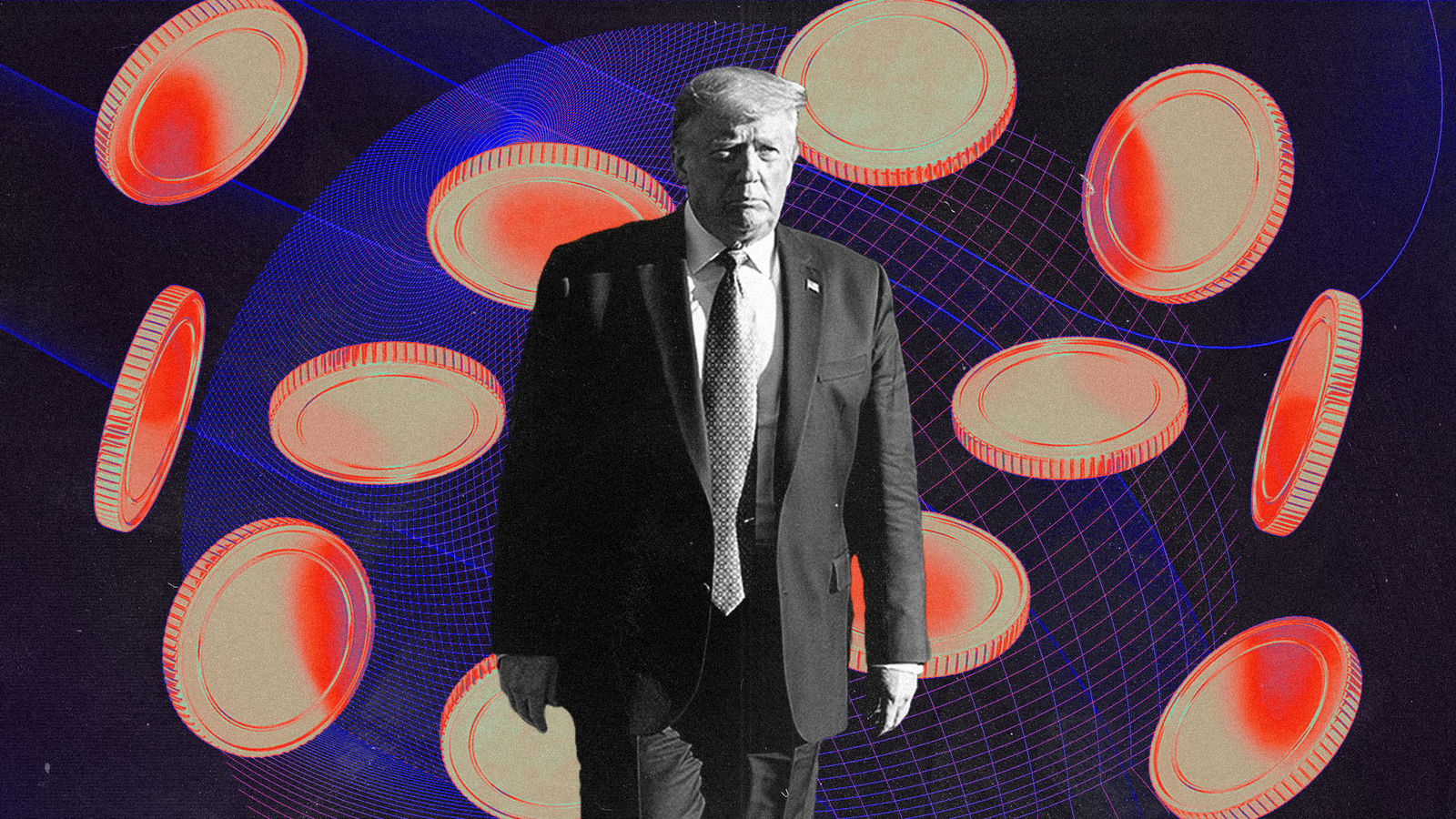
We are living through a strange era where the leader of the free world is doubling down on a segment of the crypto market that most serious developers treat as a distraction. Donald Trump is hosting his second memecoin dinner tonight, featuring a guest list that looks more like a 2017 initial coin offering graveyard than a 2024 tech summit. Floyd Mayweather, Kevin O’Leary, and Tristan Thompson are all reportedly on the menu.
The Real Cost of Volatility
The headline stat here is hard to ignore: the TRUMP token is down roughly 99% from its all-time high. For those of us building infrastructure or working on decentralized AI, that number is a reminder of why we avoid tying our identity to speculative assets. It is one thing for a retail trader to lose a few hundred bucks on a gamble; it is another for a political movement to be anchored to a chart that looks like a vertical cliff.
When a token drops that far, it usually means the liquidity has evaporated and the narrative has shifted. In the builder community, we call this a ‘ghost chain’ or a ‘zombie asset.’ Yet, the dinner parties continue. This highlights a massive disconnect between the people who use crypto for marketing and the people who use crypto to solve problems. If you are building a product, seeing 99% drawdowns should be a warning sign about the type of audience you are attracting.
The Celebrity Playbook
Having Floyd Mayweather and Kevin O’Leary in the room tells you everything you need to know about the goals of this event. These are individuals who understand branding and attention, but they are not the ones writing the smart contracts or managing the node infrastructure. Mayweather has a history with crypto promotions that did not end well for the average investor, and O’Leary was a vocal advocate for FTX before its collapse.
For founders, this celebrity involvement is a double-edged sword. On one hand, it brings eyes to the industry. On the other hand, it reinforces the stereotype that crypto is just a playground for the wealthy to extract value from the hopeful. If your marketing strategy relies on a retired boxer or a reality TV star, you are building on sand. Real utility does not need a gala dinner to justify its existence.
Why Builders Should Be Skeptical
As the Editor in Chief at STKR News, I talk to founders every day who are struggling to get VC attention because the ‘noise’ of memecoins is drowning out the ‘signal’ of actual innovation. When the media focuses on a token that has lost nearly all its value, it makes it harder for serious projects to explain why blockchain matters for data integrity or AI verification.
- Distraction of Capital: Every dollar flowing into a 99% drawdown memecoin is a dollar not going into decentralized physical infrastructure or open-source AI models.
- Regulatory Risk: High-profile events involving speculative assets often invite the kind of scrutiny that leads to bad legislation for everyone.
- The Narrative Gap: We want to be known for building the future of the internet, not for hosting expensive dinners while portfolios burn.
Learning from the Crash
A 99% drop is not just a dip; it is a total failure of the asset’s economic design or its community’s conviction. Usually, it is both. Builders should look at the TRUMP token as a case study in what happens when the ‘why’ behind a project is purely based on a personality. Personalities are fickle. Software, if written well, is not.
If you are building something that can disappear because one person stopped tweeting about it, you are not building a decentralized application. You are building a fan club with a balance sheet.
We need to move toward a model where value is derived from throughput, security, and utility. The memecoin cycle is a test of our patience as an industry. It is a siren song that promises quick liquidity but delivers long-term reputation damage. Seeing this dinner happen now, at the bottom of a chart, feels less like a celebration and more like a distraction from the work that actually needs to be done.
The Founder Perspective
If I am sitting in the founder’s seat today, I am ignoring the guest list at this dinner. I am looking at my codebase. I am looking at my user retention. I am looking at how my project survives if the entire celebrity class decides crypto is no longer ‘cool’ next month. The projects that survived the 2022 crash were the ones that had nothing to do with the hype cycles of the time.
The takeaway for anyone in the trenches is simple: do not mistake fame for fundamentals. A dinner with a former president might be a great networking opportunity for some, but it does not fix a broken tokenomic model. It does not provide a scaling solution for Ethereum. It does not solve the privacy issues in AI training data.
We are at a crossroads. We can either follow the path of celebrity-driven speculation that ends in 99% losses, or we can focus on the boring, difficult work of building tools that people actually need. I know which side I am on. The hype will fade, the dinners will end, and the only thing left will be the code that actually works.
Read the original at The Block →