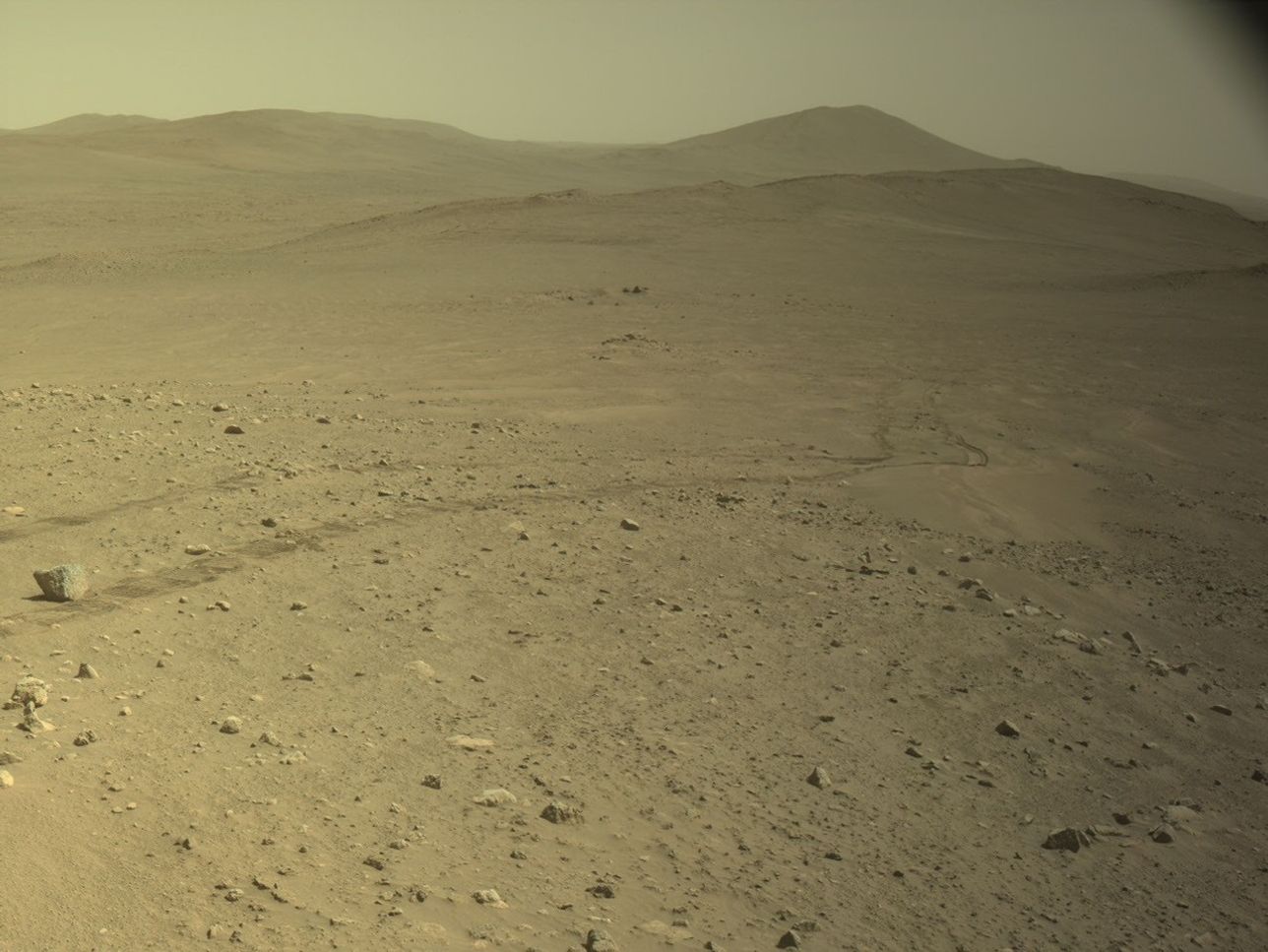
NASA recently hit a milestone that most people will skim over in a news feed, but if you are building in the robotics or AI space, you need to pay attention. The Perseverance rover officially set a new record for the longest distance driven on another world, hitting over 45 kilometers on the Martian surface. It sounds like a simple stat, but for those of us looking at the infrastructure of the future, this is a masterclass in autonomous systems operating in high-stakes, zero-latency environments.
The Logistics of Long-Distance Autonomy
When we talk about autonomous vehicles on Earth, we usually focus on avoiding pedestrians or navigating traffic lights. On Mars, the stakes are different but arguably higher. If a rover gets stuck in a sand trap or clips a sharp rock, there is no AAA to come to the rescue. The project is over, and billions of dollars in hardware become very expensive space junk.
For a long time, rover movement was painfully slow. Engineers back on Earth would look at images, map out a few meters, and send the commands. Then they would wait. This was manual, tedious, and limited how much science we could actually do. You can't find the good stuff if you spend three years just trying to get over the next hill.
Perseverance changed that by offloading the decision-making to the machine itself. This record isn't just a testament to durable tires; it is a win for onboard compute. The rover uses an advanced navigation system that processes terrain in real-time, allowing it to move while it thinks. For founders, the takeaway here is clear: the closer the intelligence is to the edge, the more efficient the system becomes.
Building for Extreme Reliability
In the crypto and AI worlds, we often talk about "uptime" and "fault tolerance." We build decentralized networks so that if one node goes down, the system survives. NASA is dealing with the ultimate hardware version of this. They are operating a machine that cannot be patched in person, running on hardware that has to survive radiation and extreme temperature swings.
The odometer hitting 45 kilometers is a validation of their "builder-first" mentality. They didn't just build a car; they built a mobile laboratory that manages its own risks. As we see more AI agents deployed into real-world applications—whether that's automated warehouses or drone delivery—the logic NASA uses for Mars is becoming the standard for Earth. You have to assume the connection will fail. You have to assume the environment will be hostile. You have to build the logic to handle the unexpected without waiting for a server to tell you what to do.
Why Milestones Matter for the Ecosystem
Records like this are often dismissed as vanity metrics, but they serve a purpose for the broader engineering community. They prove that we are getting better at remote operations. If we can navigate 28 miles of Martian desert autonomously, the barriers to automating logistics here at home are purely regulatory and social, not technical.
From a founder's perspective, I look at this and see a massive opportunity for specialized AI models. Perseverance isn't running a general-purpose LLM to figure out where to drive. It is running highly specialized vision and pathfinding algorithms. This is a reminder that while the world is chasing "General Intelligence," the most successful deployments of AI today are highly specific, reliable, and purpose-built for the task at hand.
The Skeptic's View on Space Milestones
I’m always a bit skeptical when I see big government agencies touting records. It is easy to get caught up in the romance of space exploration and ignore the practical applications. However, the engineering reality here is hard to argue with. The move from the early Sojourner rover—which could barely travel the length of a football field—to Perseverance covering marathons is a massive leap in capability.
We are seeing a similar trajectory in AI. We went from basic pattern matching to systems that can reason through complex problems. The challenge for builders now is to find their "Mars." What is the high-value, high-risk environment where your tech can solve a problem that humans simply can't handle due to distance, danger, or scale?
Takeaway for Builders
Stop focusing on the distance and start focusing on the autonomy. The value isn't in the 45 kilometers; it's in the fact that the rover did the work itself. If you are building a product today, ask yourself how much of the "manual drive" you can take away from your user. Whether it's a DeFi protocol managing its own liquidity or an AI agent handling customer support, the goal is the same: move the intelligence to the edge and let the system run.
The real breakthrough isn't how far the rover went, but how little it needed us to get there.
We are entering an era where the most valuable systems are the ones that require the least amount of human intervention. NASA just gave us a 45-kilometer proof of concept. Now it's time to apply that same logic to the rest of the tech stack.
Read the original at NASA Breaking News →