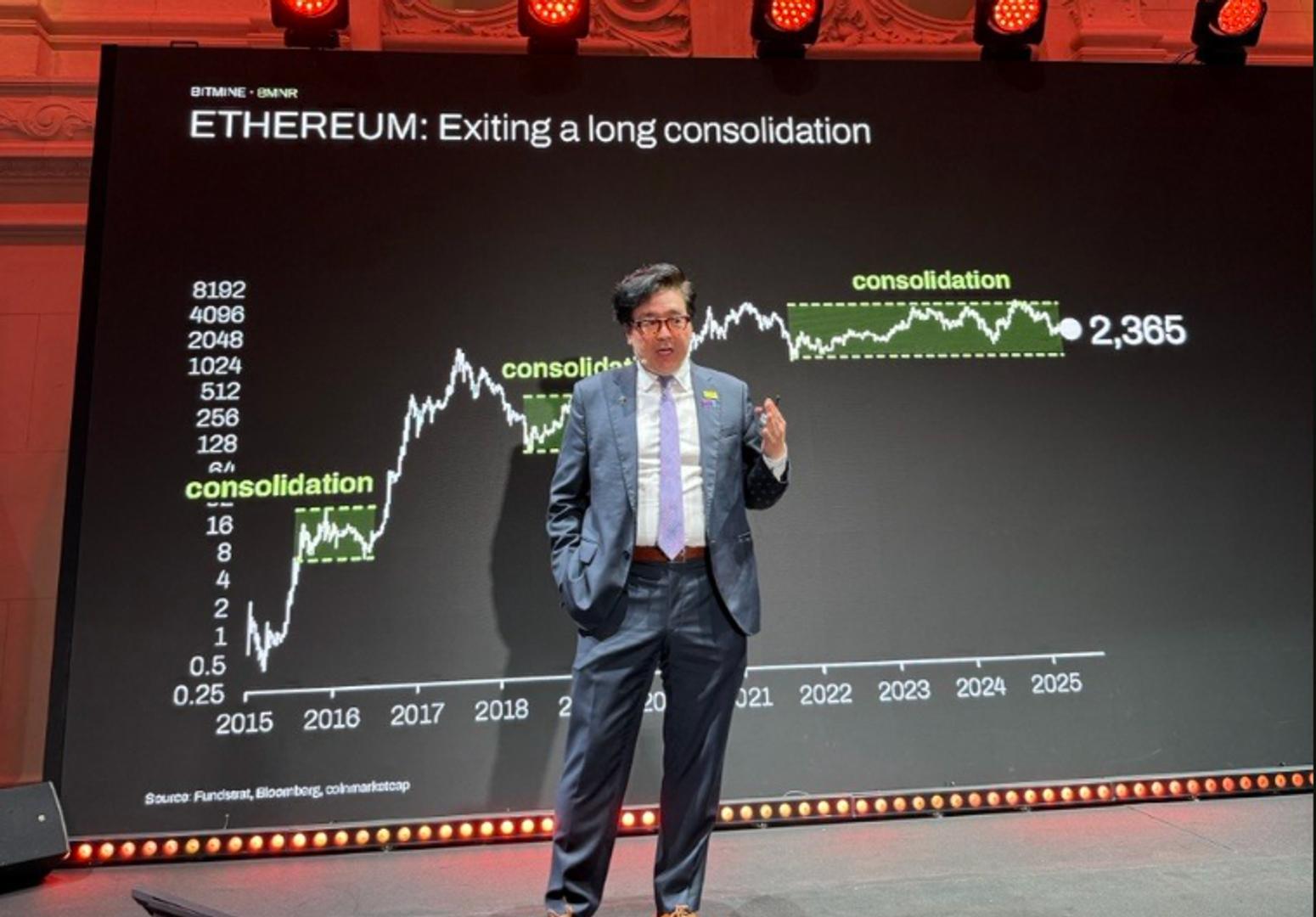
We have reached the point in the market cycle where the big fish stop pretending they are just service providers and start acting like central banks. Tom Lee’s Bitmine is the latest example of this evolution. By scooping up another 9,926 ETH last week, they have officially hit a milestone that should make every builder in this space stop and look at their own balance sheets: they now own 4.8% of the total Ethereum supply.
This is not a sudden pivot. Bitmine has been on a buying streak since June 2025, consistently absorbing liquidity while others were busy chasing the latest AI-agent meme coins or worrying about short-term regulatory hiccups. For those of us building in the trenches, this represents a massive shift in how the industry’s heavyweights view asset accumulation. It is no longer about just keeping the lights on; it is about capturing the underlying rails of the future economy.
The End of the Pure Miner Era
For years, companies like Bitmine were defined by their hardware. They were infrastructure plays—machines, cooling systems, and power contracts. But the transition of Ethereum to Proof of Stake changed the fundamental math for these operators. If you cannot mine the asset with brute force anymore, you have to acquire it through market dominance and treasury management. Bitmine is essentially saying that the best way to secure their future is to own the network itself.
When a single entity starts approaching a 5% stake in the second-largest blockchain, it changes the gravity of the ecosystem. We are seeing a consolidation of power that mirrors the early days of the traditional banking system. For builders, this is a double-edged sword. On one hand, it provides a massive vote of confidence in Ethereum’s long-term viability. On the other, it raises questions about decentralization and who really calls the shots when the stakes get this high.
Why Builders Should Care
If you are a founder, you might think Bitmine’s treasury moves don't affect your day-to-day operations. You would be wrong. This kind of accumulation affects everything from gas price stability to the governance of the protocol. When massive amounts of ETH are locked up in corporate treasuries rather than circulating in the DeFi ecosystem, it changes the liquidity dynamics we all rely on.
Moreover, Bitmine’s strategy highlights a growing trend of "institutional hoarding." They aren't buying this ETH to flip it for a 20% profit next month. They are building a moat. As a founder, you need to ask yourself if you are building on a platform that is becoming increasingly dominated by a handful of institutional giants. The tools we use need to remain accessible, and if the supply becomes too concentrated, we risk trading one set of gatekeepers for another.
The Long Game vs. The Short Hype
One thing I respect about this move is the sheer discipline of it. Since June 2025, through every dip and every peak, they have stayed the course. While the rest of the market was distracted by the latest shiny object in the AI-crypto intersection, Lee and his team were focused on the foundational layer. This is a lesson for every founder: do not let the noise of the news cycle distract you from the core value of what you are building.
"Strategic accumulation during periods of uncertainty is what separates the legacy players from the flashes in the pan."
Bitmine is playing a decade-long game. They are betting that Ethereum is not just a platform for smart contracts, but the global settlement layer for all value. If they are right, owning 5% of that supply makes them one of the most powerful financial institutions on the planet. If they are wrong, they have spent billions on a very expensive experiment.
Skepticism Is Still Required
However, we shouldn't just applaud this blindly. Large treasury holdings create central points of failure. If Bitmine ever faced a liquidity crisis or a regulatory crackdown that forced a sell-off, the impact on the Ethereum price would be catastrophic. We are building systems intended to be decentralized, yet we are seeing the same patterns of wealth concentration that plagued the old world.
As builders, we have to keep pushing for solutions that distribute power. Whether that is through better DAO structures, more robust Layer 2 scaling that lowers the barrier to entry, or simply encouraging a more diverse set of validators. We cannot allow the ecosystem to become a playground for a few mega-corporations, no matter how much we might like the people running them.
The Founder’s Takeaway
The message from Bitmine is clear: Ethereum is the prize. If you are building in this space, you need to be aware that the big money is no longer just watching from the sidelines. They are moving in, and they are moving in deep. You need to ensure your projects are resilient enough to handle a landscape where institutional players hold the majority of the chips.
- Accumulation is the new mining. If you aren't thinking about your long-term treasury, you're falling behind.
- Decentralization is a spectrum, and we are currently sliding toward the concentrated end.
- Ignore the weekly price action; follow where the supply is migrating.
We are entering a phase where the "crypto" part of the industry is becoming inseparable from the "finance" part. Bitmine is just the first of many who will try to corner the market. Our job as builders is to make sure the technology remains useful for everyone else, even as the whales continue to grow.
Read the original at CoinDesk →