The Shift Toward Structural Deflation
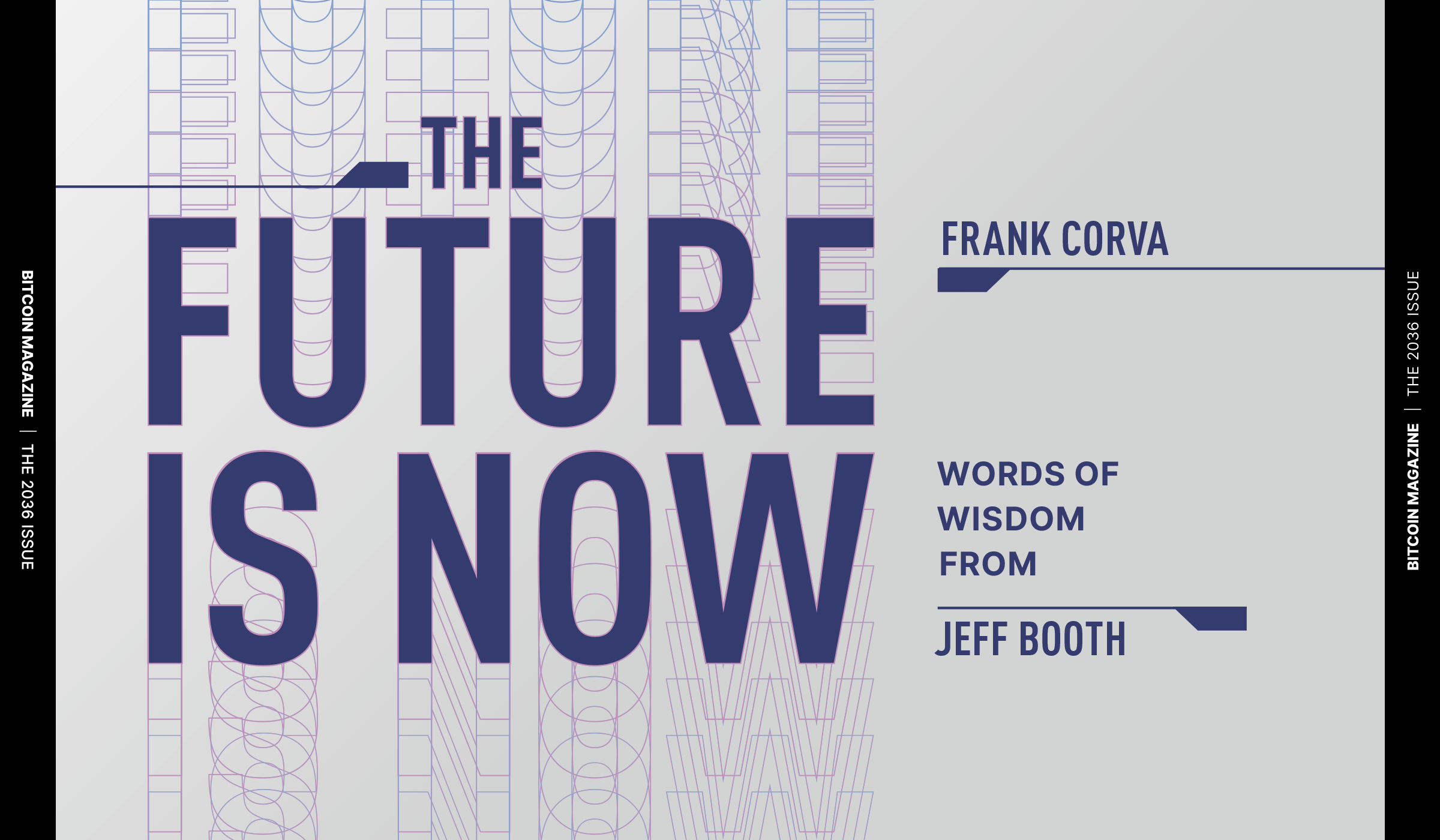
When we talk about the next decade of technology, most founders get caught up in the flavor of the week. Whether it is a new large language model or a faster layer-one blockchain, the focus is usually on the tool rather than the environment. Jeff Booth has spent the last few years arguing that we are ignoring the most important macro shift of our lifetime: the transition from an economic system that requires inflation to survive to one that functions on structural deflation.
As we look toward 2036, the reality is that technology is inherently deflationary. It makes things cheaper and more efficient. In a traditional fiat system, this is viewed as a threat because the entire global debt pile requires constant currency devaluation to remain serviceable. But for builders, the friction between a deflationary tech stack and an inflationary money supply is where the biggest problems—and opportunities—lie. If you are building for a world where money loses value, you are essentially swimming against a tide that will eventually exhaustion your resources.
The Error in Our Current Economic Logic
The core of the argument Booth often brings to the table, which resonates deeply with the founder mindset, is that our current system is built on a fundamental error. We have been conditioned to believe that prices must always go up for an economy to be healthy. This logic is a byproduct of a debt-based monetary system. In a vacuum, technology should be driving the cost of living toward zero. Everything from energy to information should be getting cheaper every single year.
When you build in a system where the money is broken, you are forced to optimize for extraction rather than value creation. You spend your time figuring out how to raise prices or cut corners just to keep pace with the declining purchasing power of your capital. By moving the world toward a Bitcoin-based standard, we are effectively re-aligning the economic incentives with the reality of technological progress. It is about moving from a system of manipulation to a system of truth.
Why 2036 Matters for Founders
Why focus on a date like 2036? Because cycles take time to play out. We are currently in the messy middle of a transition. The next twelve years will likely bridge the gap between Bitcoin as a speculative asset and Bitcoin as the base layer of global commerce. For those building in the crypto and AI space, this means your total addressable market is changing from a subset of tech enthusiasts to the entire global population that is tired of their savings evaporating.
Founders need to realize that AI is the ultimate deflationary force. It is the automation of intelligence. When you combine that with a monetary system that cannot be printed, you get a massive explosion in productivity that actually benefits the person doing the work. In the current system, the gains from AI and automation mostly accrue to the people closest to the money printer—the banks and the government. In the 2036 vision, those gains accrue to the users and the builders themselves.
Building for a Hard Money World
If you are starting a company today, you have to ask yourself if your business model relies on cheap debt or if it creates genuine value. A lot of the unicorn companies of the last decade were hallucinated into existence by zero-interest-rate policies. They weren't actually profitable; they were just efficient at capturing subsidized capital. In a hard money world, that game ends. Efficiency and utility become the only metrics that matter.
This is a healthy shift, even if it feels painful right now. It forces founders to be more disciplined. It forces us to build things people actually want to pay for, rather than things that just look good on a VC pitch deck. When the money cannot be manipulated, the market becomes a much clearer signaling mechanism. You know exactly when you are winning and exactly when you are failing, without the noise of stimulus and inflation clouding the data.
The Role of Decentralized Protocols
We are seeing the convergence of several layers of technology. Bitcoin provides the secure, immutable ledger. AI provide the intelligence and automation. Decentralized protocols like Nostr provide the communication layer that cannot be censored. When you stack these three things together, you get an ecosystem that is essentially immune to the traditional points of failure that plague centralized tech companies.
- Sovereignty: Users own their data and their money.
- Transparency: Rules are encoded in math rather than being subject to the whims of a board of directors.
- Efficiency: Middlemen are stripped away because the protocol handles the trust.
For a builder, this means you don't have to ask for permission to innovate. You don't have to worry about a platform changing its API terms and killing your business overnight. You are building on top of open-source foundations that are designed to last for decades, not just until the next funding round.
A Perspective on Risks and Realities
It is easy to get caught up in the idealism, but we have to remain skeptical of the path there. The transition to a new economic paradigm is never smooth. Governments don't typically enjoy losing control over the currency. We will likely see more attempts at regulation, more central bank digital currencies (CBDCs), and more attempts to fence in the open-source world. The decade leading up to 2036 will be defined by this friction.
"If you want to change the system, you don't fight the old one; you build a new one that makes the old one obsolete."
That quote is the roadmap. The builders who win in 2036 won't be the ones who lobbied the hardest for better regulations. They will be the ones who built tools that were so much better, so much more efficient, and so much more honest that the old system simply couldn't compete anymore. It is about creating a parallel infrastructure that functions regardless of what the legacy institutions do.
The Takeaway for Builders
The next twelve years represent a massive reset. If you are a founder, stop looking at Bitcoin as just another ticker on a screen. Look at it as the only piece of the global infrastructure that actually matches the deflationary nature of the tech you are building. When the money is as honest as the code, the potential for human progress is uncapped. Focus on value, ignore the noise of the legacy markets, and build for the long-term reality of a decentralized, deflationary world.
Read the original at Bitcoin Magazine →