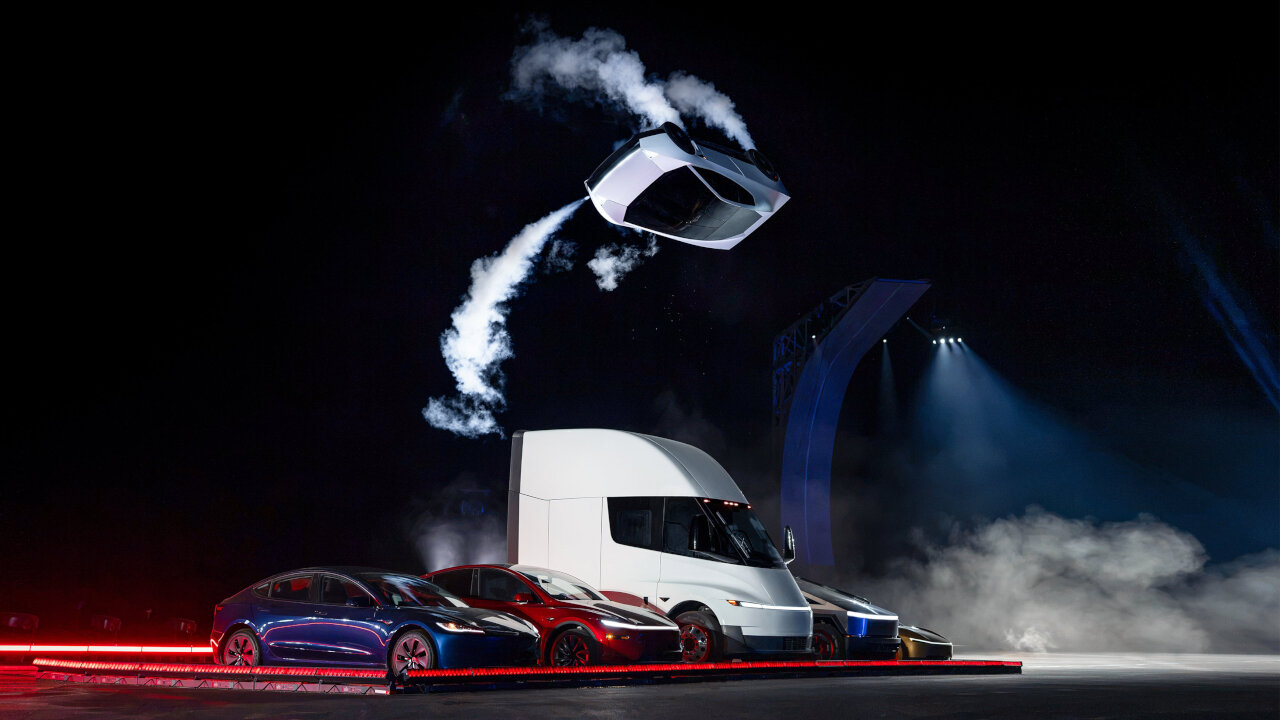
Elon Musk recently showed off the Tesla Roadster again. This time, it wasn't just a fast electric car sitting on a stage. It was a vehicle equipped with SpaceX cold-gas thrusters that allowed it to jump over a row of other Teslas and land safely. It is, quite literally, a flying car. But there is a catch: you can’t buy one, you can’t drive it on a public street, and you probably won't see it until 2028.
The Engineering Paradox
As a founder, I look at this and see two distinct stories. The first is the engineering feat. Using compressed air to provide directional thrust on a consumer vehicle is brilliant. It solves the weight-to-performance ratio problem that haunts every EV builder. Batteries are heavy. To make a car go faster, you usually need more batteries, which makes the car heavier. By using thrusters, Tesla is bypassing the limitations of rubber and asphalt.
However, the second story is the one that matters for the rest of us: the reality of the "Invite-Only" tag. This isn't a product launch; it is a technology demonstration masquerading as a luxury commodity. When a company moves the goalposts to a 2028 delivery date for a car originally promised years ago, we have to look at the underlying motive. Is this about transportation, or is this about maintaining the brand's status as an innovator at a time when the competition is finally catching up?
The Vaporware Trap for Founders
In the crypto and AI space, we see this all the time. A project promises a revolutionary consensus mechanism or a trillion-parameter model that runs on a toaster. They release a video, the token price or the valuation spikes, and then the roadmap stretches out into the next decade. Tesla is doing the same thing here, just with more expensive hardware.
For builders, there is a lesson in how Musk manages expectations while simultaneously blowing them out of the water. He is selling a future that doesn't have to comply with current regulations. Because the "Rocket" version isn't street legal, Tesla doesn't have to worry about crumple zones, pedestrian safety laws regarding high-pressure nozzles, or the logistical nightmare of a car that jumps. They are building in a sandbox.
Why Constraints Matter
Real innovation happens within constraints. Building a car that can drive 300 miles, charge in twenty minutes, and cost forty grand is significantly harder than building a rocket-assisted toy for billionaires. When you remove the constraints of reality—like road legality—you aren't really solving a problem for the market. You are just performing.
In our world, the "flying car" is the fully decentralized, infinitely scalable blockchain that costs zero dollars to use. It's the AI that can reason perfectly without hallucinations. We see the demos, we see the "jumps," but we are still waiting for the version we can actually use to build a business. The Roadster is a reminder that the coolest technology often serves as a distraction from the boring, difficult work of making current products better.
The 2028 Horizon
Waiting until 2028 is a lifetime in the current tech cycle. In four years, the entire landscape of AI and energy storage will be unrecognizable. By the time this Roadster is supposed to ship, the hardware inside it might already be obsolete. This is a common pitfall for long-tail R&D projects: they are designed for today’s hype but delivered in tomorrow’s reality.
If you are a founder, don't get caught in the trap of building for 2028. The market doesn't care about what you can do in a controlled environment with an invite-only beta. They care about what solves their problem today. The Roadster is a spectacle, but a spectacle doesn't move the needle for the average person.
Takeaway for Builders
The Tesla Roadster "Rocket" is a masterclass in brand positioning, not product delivery. It keeps the audience looking at the sky while the company deals with the grounded reality of production delays and market shifts. As a builder, your goal should be the opposite: deliver the grounded reality so well that people don't need the rockets to be impressed.
Innovation without accessibility is just a hobby. If the people who need your product can't touch it, it doesn't exist yet.
We need to stop rewarding the jump and start rewarding the landing. Tesla showed us a car that can fly, but they haven't shown us a company that can deliver it to the masses. Until then, it is just another piece of beautiful, expensive vaporware.
Read the original at Decrypt →