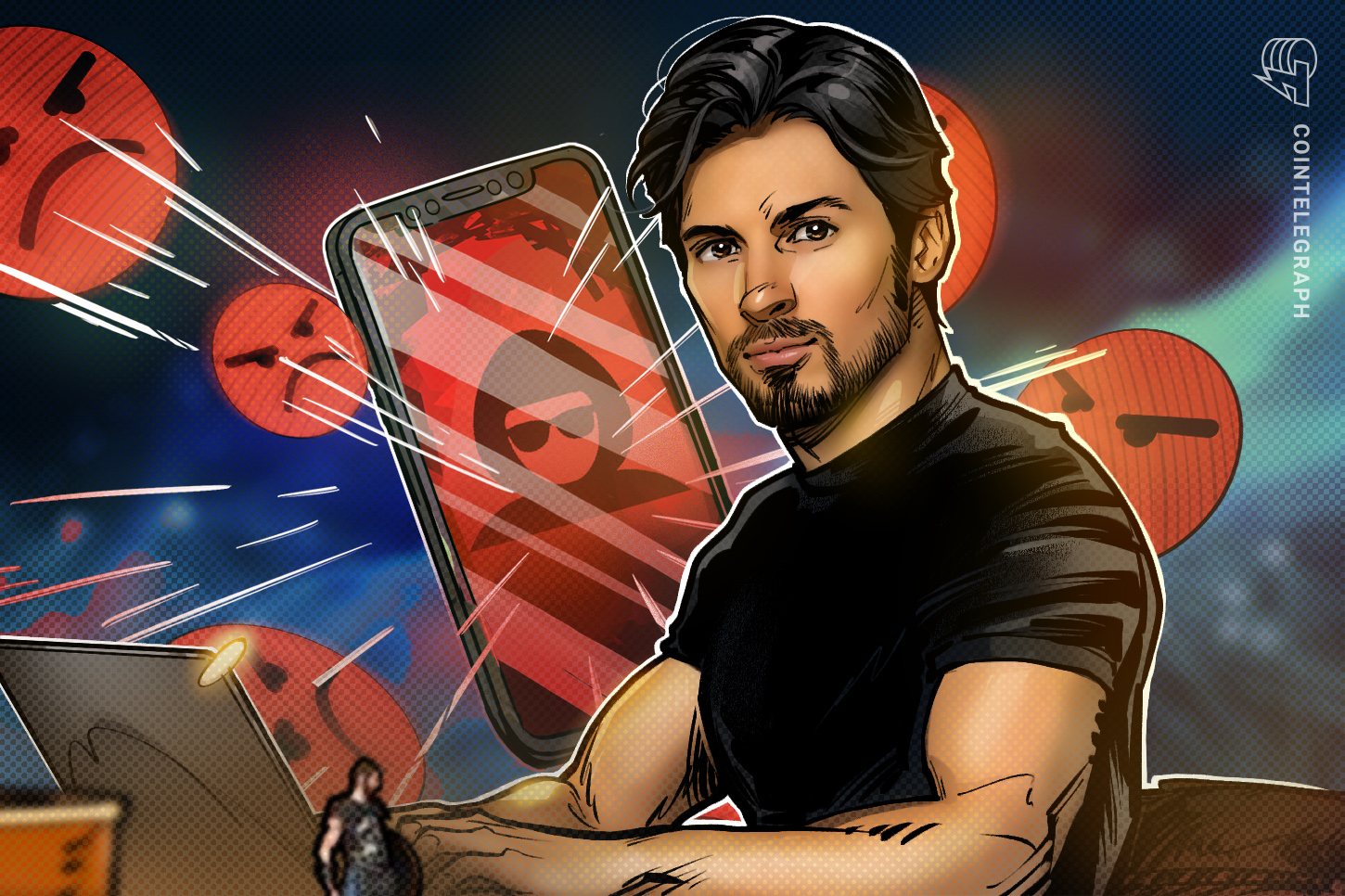
Being a tech founder used to mean you were competing for market share. Today, if you build at scale, you are competing with nation-states for the right to exist. Pavel Durov, the man behind Telegram, is currently the ultimate case study in what happens when your platform becomes too big for governments to ignore, yet too stubborn for them to control.
We already knew about the pressure from the West. Durov has been under the microscope in France for months, facing a laundry list of charges ranging from facilitating illegal transactions to failing to police child abuse material and drug trafficking. But the plot just thickened significantly. Russia’s Federal Security Service (FSB) has now confirmed that Durov is internationally wanted by the Kremlin, specifically on terrorism-related charges.
For those of us building in the crypto and AI space, this isn't just a headline about a billionaire in hot water. it is a signal that the era of the 'neutral platform' is effectively over. If you build a tool that preserves privacy, you will eventually be treated as a combatant by every side of a geopolitical conflict.
The Russian Reversal
The irony here is thick enough to choke on. For years, the narrative around Telegram was that it was a backdoor for Russian intelligence. Critics pointed to Durov's Russian roots and the fact that the app remained operational within the country despite official 'bans' that were rarely enforced with real teeth. The assumption was that some kind of deal had been struck.
This latest move by the FSB flips that script. By issuing an international arrest warrant and accusing him of involvement in terrorism, Russia is signaling that Durov is no longer an asset—or at least, he’s not a cooperative one. This puts him in a unique, and frankly terrifying, position. He is now being squeezed by the very country he fled years ago and the Western democratic system he sought refuge in.
For builders, this highlights a hard truth: sovereignty is a myth when you rely on physical borders. Durov thought he could play the middle, balancing his operations between Dubai, Europe, and his Russian ties. Instead, he has become a target for everyone. When both the FSB and French authorities want to put you in a cell, you haven't found balance—you've run out of room to hide.
The 'Founder as Liable Party' Problem
The core of the legal argument against Durov—both in Russia and France—is that he is personally responsible for what his users do. This is a massive shift in how we think about platform liability. For decades, Section 230 in the U.S. and similar frameworks elsewhere protected founders. You build the pipes; you aren't responsible for the sewage flowing through them.
That protection is evaporating. The charges Durov faces suggest that if you build encrypted or semi-private communication tools, the state now views your refusal to build a backdoor as an act of complicity. In Russia’s case, they are using the 'terrorism' label, which is the ultimate trump card for overriding civil liberties. In France, they are using 'failure to moderate.' Different language, same result: the founder’s head is the one on the chopping block.
If you are building an AI model or a decentralized protocol today, you have to ask yourself: at what point does my feature list become an indictment? If your platform grows to hundreds of millions of users, the state will eventually demand a key. If you don't have one, or if you refuse to give it up, they will simply redefine your existence as a criminal enterprise.
The Ghost of VKontakte
We shouldn't forget that Durov has been here before. He lost his first major company, VKontakte (VK), because he refused to hand over user data to the FSB during political protests. He was ousted, the company was taken over by Kremlin-aligned entities, and he left the country with a pocket full of cash and a point to prove. Telegram was his second act—a way to build something that supposedly couldn't be taken away.
But the FSB’s recent announcement shows that you can never truly leave your past behind when you operate on a global scale. The fact that they are pursuing him for terrorism charges now, while he is already entangled with French authorities, looks like a strategic move to ensure that no matter where Durov ends up, he is beholden to a government power. It is a pincer maneuver.
What This Means for the Builders
If you’re a developer or a founder in the foxhole right now, there are three major takeaways from the Durov situation:
- Neutrality is a liability. In the current geopolitical climate, being neutral is seen as being opposition. Governments don't want platforms they can't influence; they want tools they can weaponize.
- Decentralization isn't just a buzzword; it's a survival strategy. Telegram is centralized. There is a neck to wring. If Durov were the head of a truly decentralized protocol with no central entity, there would be no one to arrest in a Parisian airport and no one for the FSB to put on a wanted list.
- Jurisdiction shopping is failing. Durov moved to Dubai to avoid this exact scenario. It didn't work. Once you step foot in a country with an extradition treaty or an active interest in your data, your 'offshore' status disappears instantly.
We are entering an era of 'hard' tech where the code you write has immediate, high-stakes political consequences. The FSB’s move against Durov is a reminder that the digital world is not a separate realm. It is closely tethered to the physical world of jails, warrants, and state power.
The Bottom Line
Pavel Durov is being used as an example. The message to founders is clear: moderate your users to our liking, give us the data we want, or face the consequences. Whether it's France or Russia, the goal is the same—the total subversion of private communication to state interests. As builders, our only real defense is to build systems where we don't hold the keys, because as Durov is finding out, holding the keys eventually leads to someone trying to take your hands off.
Read the original at Cointelegraph →