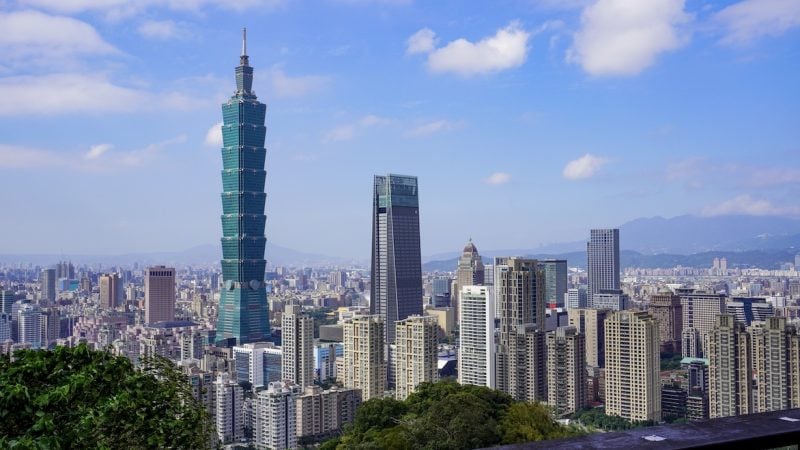
Taiwan has officially signaled that its era of casual crypto regulation is over. For several years, Taipei was a relatively quiet place for digital asset companies—a middle ground between the heavy-handed bans in mainland China and the high-octane trading hubs like Hong Kong or Singapore. But with the passage of a comprehensive new regulatory framework, the island is professionalizing its local industry through sheer force of law.
This isn't just a basic registration requirement. The new legislation, which is now headed to the President for a final signature, represents a fundamental shift in how the government views decentralization. It treats crypto service providers less like experimental tech startups and more like traditional financial institutions. For founders, this means the cost of doing business in Taiwan just went up significantly.
The End of the Honor System
In the past, Taiwan relied heavily on anti-money laundering compliance. As long as you checked those boxes, you were mostly left alone. The new law changes the hierarchy. Under the new rules, any entity offering virtual asset services must obtain a formal license. This creates a clear barrier to entry. If you don't have the license, you aren't just operating in a grey area; you are acting illegally.
The penalties for non-compliance are notably harsh. We aren't just talking about small administrative fines that can be written off as a cost of doing business. The government is introducing potential criminal liability and massive monetary penalties for those operating without authorization. For builders, this means your legal budget needs to be as robust as your engineering budget.
The Reserve Mandate Challenge
One of the most consequential parts of this bill is the mandate regarding reserves and asset segregation. The law requires exchanges and custodians to keep a strict separation between company funds and customer assets. Furthermore, it mandates specific reserve levels to ensure that if something goes wrong, the users aren't left holding an empty bag.
From a founder’s perspective, this is a double-edged sword. On one hand, it builds trust. The industry is still reeling from the various collapses of the last few years where user funds were treated like a slush fund for venture bets. On the other hand, maintaining these reserves is capital-intensive. It limits the agility of a startup to pivot or scale quickly because so much of their liquidity is locked up in mandatory safety nets.
Why Taiwan is Moving Now
Taiwan’s Financial Supervisory Commission (FSC) has been under pressure to bring order to the local market. There is a desire to protect retail investors, but there is also a geopolitical layer to consider. Taiwan wants to be seen as a stable, rule-based technology hub. By implementing a framework that mirrors international standards, they are making it easier for large institutional players to enter the domestic market while making it harder for fly-by-night operations to survive.
We are seeing a trend across Asia where jurisdictions are competing to be the "safest" place for crypto rather than the "freest." Japan set the template, Hong Kong followed with its VASP licensing, and now Taiwan is planting its flag. The goal is to weed out the noise and leave only the most well-capitalized players standing.
What This Means for Builders
If you are building a product in the Taiwan ecosystem, your roadmap likely just got a lot more complicated. Here is how I see the impact shaking out:
- Increased Overhead: Compliance is now a core product feature. You cannot build a financial application in Taiwan without an internal team dedicated solely to staying on the right side of the FSC.
- Consolidation: This law will likely trigger a wave of mergers. Smaller exchanges that cannot afford the licensing fees or the reserve requirements will either shut down or be swallowed by larger, better-funded entities.
- User Confidence: While the barriers are higher, the users who remain will likely feel safer. This could lead to an increase in total value locked (TVL) within the local ecosystem as the "risk of ruin" from exchange insolvency is mitigated by law.
The skepticism comes in when we look at how these laws are actually enforced. Regulation often lags behind technical innovation. While the government is busy defining what an exchange is, the industry is moving toward decentralized protocols that don't have a central office for the FSC to mail a summons to. How this law handles truly decentralized finance remains a significant question mark.
The Regulatory Catch-22
There is a recurring theme in crypto regulation: the more you regulate a centralized bridge, the more you drive people toward decentralized alternatives that are even harder to monitor. Taiwan is focusing heavily on the on-ramps and off-ramps. By tightening the screws on licensed exchanges, they are ensuring that the point where fiat meets crypto is secure.
However, for a founder, this creates a competitive disadvantage compared to offshore entities that might still target Taiwanese users without following the rules. The FSC will need to prove they can actually stop unlicensed foreign actors from poaching the market, otherwise, they are just punishing the companies that choose to be transparent and compliant.
A High Bar for Entry
The new mandates also include requirements for periodic audits and reporting. This isn't a one-time setup fee. It's a permanent tax on your operations. For a local founder, this means you need to be very sure about your monetization strategy early on. You can't just "grow first and figure out the business model later" when the government is demanding audited balance sheets every quarter.
The law also touches on the marketing of digital assets. We are likely to see a crackdown on how crypto is advertised to the public. The days of bold promises and high-leverage trading ads on the side of Taipei buses are probably numbered. Expect more disclosure statements and less hype.
The Takeaway
Taiwan's move proves that the "Wild West" era of crypto is officially a memory in major Asian markets. For the builders I talk to, this is a signal to stop playing games with compliance. If you want to operate in Taiwan, you need to be prepared to act like a bank. You need the licenses, you need the reserves, and you need the legal counsel.
The winners in this new environment won't necessarily be the ones with the most innovative tech. They will be the ones who can navigate the bureaucracy while maintaining a product people actually want to use. It's a harder path, but it's the only one left on the map for those who want to build a long-term business on the island.
Read the original at CoinDesk →