Space is the Ultimate Stress Test for Biology
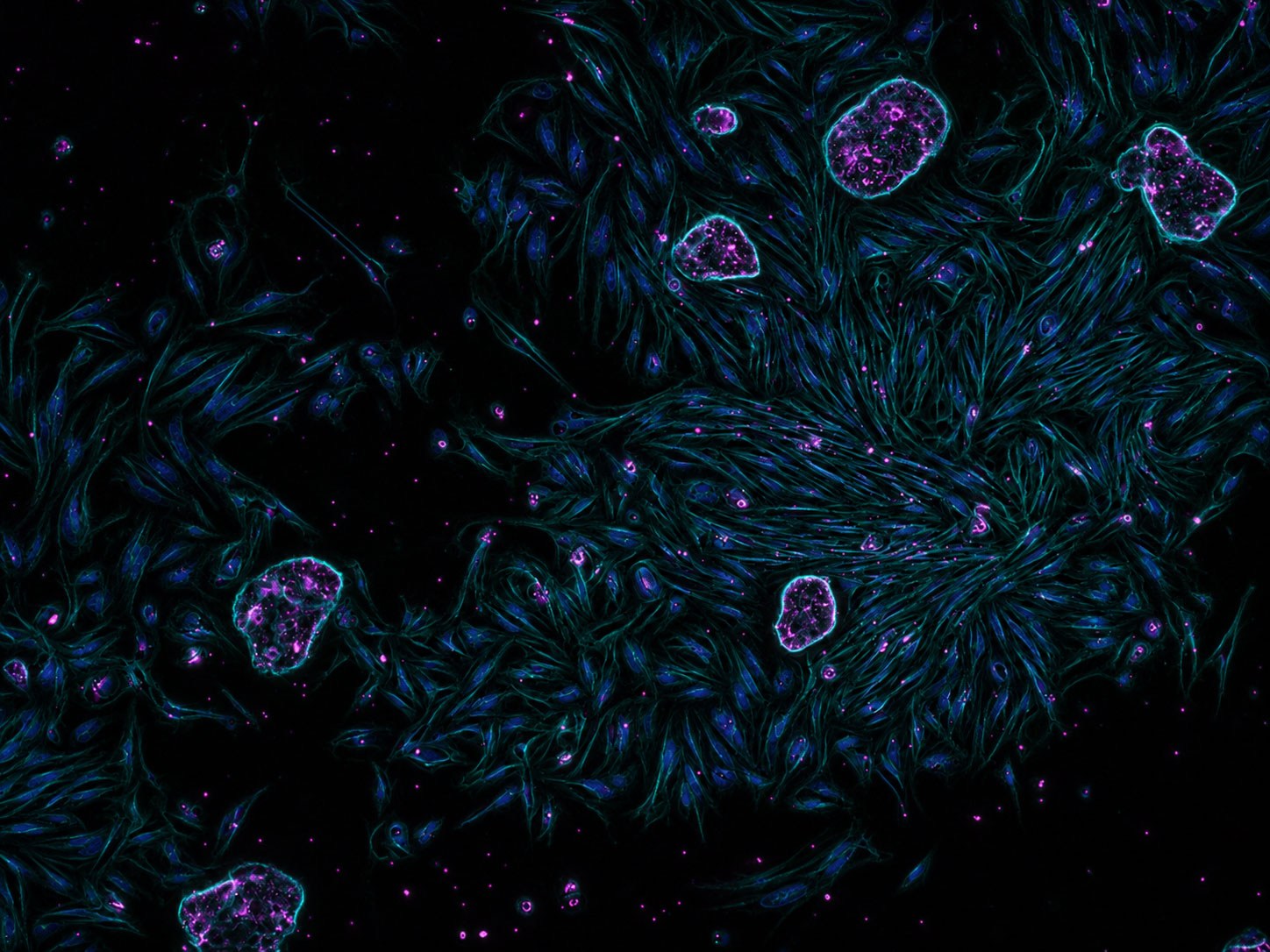
We spend a lot of time talking about the 'final frontier' as a place for satellites and mining, but the real breakthrough might be in how we break things down at the cellular level. NASA recently highlighted an investigation called Encapsulate-1, where they are growing gastric microtumors on the International Space Station. They are using patient-derived samples inside biochips to watch how cancer behaves when you strip away the one thing we take for granted on Earth: gravity.
As a founder, I look at this and see a classic debugging scenario. When you have a complex system that is failing—in this case, human biology—you change the environment to see which variables are actually driving the failure. On Earth, gravity masks certain cellular behaviors. In microgravity, those cells act differently. They move differently. They interact with their neighbors in ways that don't happen in a lab in Houston or Boston. This isn't just about 'space medicine'; it is about finding the edge cases of human biology.
The Biochip as a Sandboxed Environment
The tech behind this, the Encapsulate biochip, is essentially a sandbox. By housing these tumor samples in a controlled, hardware-driven environment, researchers can observe the mechanics of metastasis—how cancer spreads—without the interference of planetary weight. If you can understand the movement of a cell in an extreme environment, you can better predict how it will move in a standard one.
For the builders in the audience, this is the equivalent of running your code on an entirely different architecture to see where the memory leaks are. We often get stuck in 'local maxima' on Earth, assuming that the way a tumor grows here is the only way it can grow. NASA is proving that by removing a fundamental constant, we can see the hidden logic of the disease.
Why Founders Should Care About Microgravity Research
You might think orbital oncology is too far out of reach for a typical startup, but the implications for personalized medicine are immediate. The goal of Encapsulate-1 is to predict a patient's risk of metastasis. If we can build models that predict how a specific person's cancer will travel based on its behavior in microgravity, we are moving toward a level of personalization that makes current chemotherapy look like a blunt instrument.
- Data over Hype: This isn't a 'cure for cancer' headline. It is a 'better data for cancer' headline. We need to respect the difference.
- Extreme Environment Testing: Just as AI models are stress-tested with adversarial data, biological models need the 'adversarial' environment of space to reveal their true nature.
- Hardware-Software Convergence: The biochip is the real hero here. It’s the interface between raw biology and measurable data.
The Skeptical Take: Constraints and Costs
Let’s be honest—sending biochips to the ISS is expensive, slow, and hard to scale. While the insights are profound, the bottleneck is the orbit itself. For this to truly change the game for builders in the biotech space, we need more than just a few successful NASA images; we need a lower barrier to entry for orbital research. We are seeing the rise of commercial space stations, which might solve the 'compute' problem of space biology, but we aren't there yet.
The risk here is that we get enamored with the 'cool factor' of space and lose sight of the application. The value isn't that the cancer is in space; the value is the data that comes back down. If that data doesn't integrate into terrestrial hospital systems or drug development pipelines, it's just an expensive science project.
Reframing Metastasis as a Mechanical Problem
Most people think of cancer as a purely chemical or genetic problem. But as the Encapsulate-1 study shows, it is also a mechanical problem. It’s about movement, fluid dynamics, and physical interaction. When you remove gravity, you are looking at the 'physics' of the tumor. This is a shift in perspective that founders should pay attention to. Sometimes the solution to a problem isn't another line of code or a different chemical compound—it’s a better understanding of the physical constraints the system is operating under.
The move toward personalized medicine requires us to stop treating every patient as a statistic and start treating every tumor as a unique mechanical system.
The Infrastructure of Orbital Biotech
We are seeing the early days of a new infrastructure stack. You have the launch providers (SpaceX), the habitat (ISS/Axiom), and now the specialized hardware (Encapsulate biochips). This stack is what will allow the next generation of biotech founders to run experiments that were impossible ten years ago. If you are building in the AI or bio space, you need to be looking at these 'unconventional' data sources. The next big breakthrough in predictive oncology likely won't come from a standard clinical trial; it will come from a dataset that looks at biology in a way we've never seen before.
Building for the Long Game
The lesson here for builders is simple: don't be afraid to change the environment to find the truth. Whether you're debugging a LLM or a gastric tumor, the most valuable insights often come from the places where the rules of the world don't apply. NASA’s work with microtumors is a reminder that we still have a lot to learn about the 'basics' of biology. We are still in the early stages of understanding the human machine.
Takeaway
Space isn't just for explorers; it is the ultimate laboratory for stress-testing the mechanics of disease. By removing gravity, researchers are uncovering the hidden movement patterns of cancer cells, which will eventually lead to more accurate, personalized risk assessments on Earth. Builders should watch the biochip space closely—it is the bridge between orbital research and practical, life-saving applications.
Read the original at NASA Breaking News →