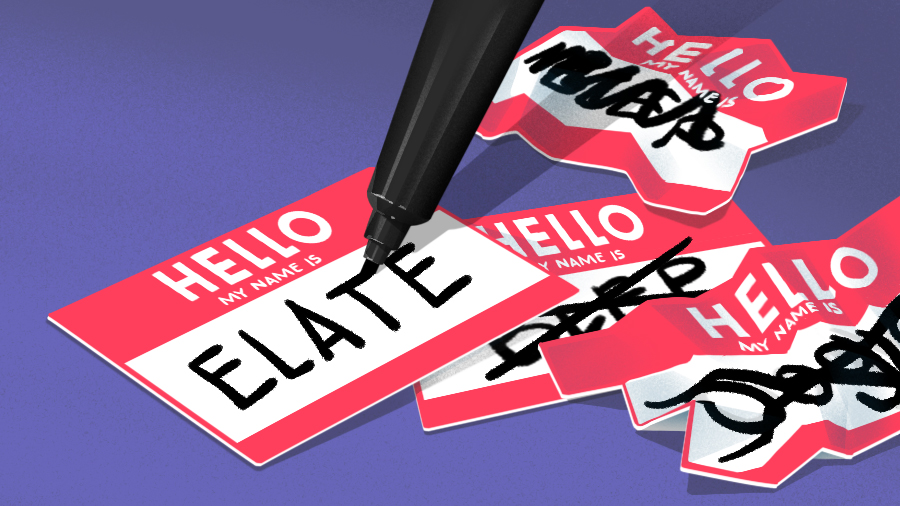
Naming a company used to be about search engine optimization or descriptive clarity. If you built a tool for tracking crypto portfolios, you named it Portfolioly. If you launched an AI agent for legal work, you called it LawBot. But look at the current crop of startups raising seed rounds, and you will notice a shift toward the vague. We are entering the era of the 'chameleon name'—brands that mean nothing so they can eventually mean anything.
The Death of the Descriptor
In the early days of Web2, we had the 'ly' suffix craze. Then we moved into the 'drop the vowel' phase (Flickr, Tumblr). Recently, we went through a period where every AI company felt the need to end in .ai or start with 'Neural'. The problem is that these names pin you to a specific technology or a specific solution. For a builder, that is a trap.
We are seeing a trend where founders are choosing abstract nouns or even made-up words that sound vaguely established. They are doing this because the market is moving faster than ever. If you name your company 'SolanaPay' and the liquidity moves to a different L1, you are stuck with an expensive rebrand. If you call it 'Flow', you can be a payment processor, a meditation app, or a liquid cooling system for GPUs without changing your logo.
The Pivot-Proof Brand
The average startup will pivot at least twice before finding true product-market fit. In the AI space, that timeline is compressed. You might start as a wrapper for GPT-4, realize the margins are non-existent, and pivot to custom hardware within six months. If your name is 'GPT-Helper', you are dead on arrival. If your name is 'Onyx', you just update your landing page.
Investors are also leaning into this. A generic, high-quality name suggests a certain level of maturity and longevity. It tells a venture capitalist that you are building an institution, not just a feature. It also avoids the 'cringe factor' of chasing trends that might feel dated by the time the Series B rolls around. Think about how many 'Meta' companies are currently wishing they had stuck with something less tied to a dying hype cycle.
The Psychology of the Blank Slate
Why is this happening now? Part of it is the sheer noise in the market. When there are ten thousand new AI startups launched every quarter, 'AI-Writer' becomes invisible. A name like 'Anthropic' or 'Cohere' feels like it has gravity, even if the word itself doesn't immediately tell you what the product does. It invites the user to learn more rather than letting them dismiss the product based on a label.
For builders, this is a strategic move. It allows for a 'blank slate' approach to marketing. You can mold the brand's identity as the product evolves. In a world where the underlying tech—be it LLMs or blockchain protocols—is becoming a commodity, the brand is the only thing that actually accrues value over the long term.
The Domain Name Tax
There is a practical side to this, too. Short, abstract names are harder to get, but they are more valuable. Founders are increasingly willing to spend a significant portion of their seed capital on a premium .com or a clean four-letter word. They view it as an asset on the balance sheet. If the business fails, the domain can often be liquidated for a decent return.
- Flexibility: Abstract names allow for horizontal and vertical expansion without friction.
- Resale Value: Generic premium domains hold value better than niche descriptors.
- Professionalism: Moving away from 'cutesy' names helps in B2B sales cycles where trust is the primary currency.
What Builders Need to Consider
If you are currently in the naming phase, stop trying to be clever. Don't look for a name that explains your tech stack. Your tech stack will be obsolete in eighteen months. Instead, look for a name that describes your vibe or your ambition. Are you fast? Are you secure? Are you invisible? Name the company after the feeling you want the user to have, not the code you just wrote.
The best name is one that you don't have to explain, but that doesn't limit where you can go. If your brand is a cage, you'll eventually outgrow it.
We are seeing a return to 'corporate' sounding names, but with a modern minimalist twist. Think of it as 'Stripe-ification'. Stripe doesn't tell you it's a payment processor for developers. It's just a line. It's simple. It's foundational. That is what you should be aiming for. Avoid the temptation to add 'AI' to your name just for the temporary SEO boost. It’s a short-term gain that leads to long-term irrelevance.
The Takeaway
The trend toward vague, flexible naming is a symptom of a volatile market. Founders are finally admitting that they don't know exactly what their company will look like in three years. By choosing a name that acts as an empty vessel, they are giving themselves the room to breathe, to fail, and to eventually find the right path without the baggage of an outdated identity. Stick to the basics: keep it short, keep it abstract, and make sure you can pivot without permission.
Read the original at Crunchbase News →