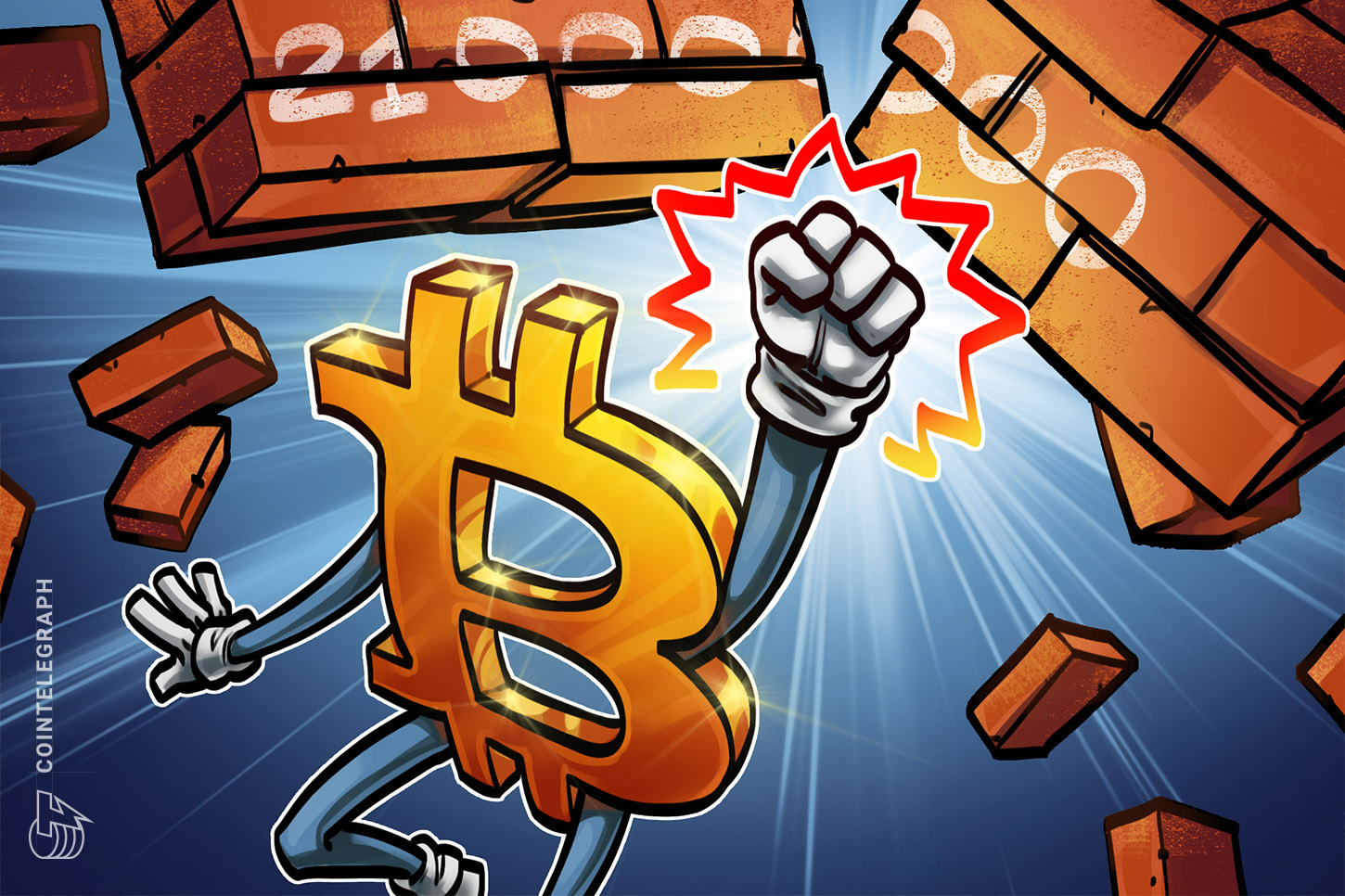
When you start messing with the core tenets of Bitcoin, you are usually asking for a fight. One of those tenets, the 21 million hard cap, is seen by many as the only reason the asset has value in the first place. But recently, StarkWare CEO Eli Ben-Sasson suggested it might be time to reconsider that limit, proposing a 4% annual inflation rate instead.
His logic centers on a problem many builders have discussed behind closed doors: human error. We have all heard the stories of people losing hard drives in landfills or getting locked out of hardware wallets from 2011. This lost supply, according to Ben-Sasson, means the actual circulating amount of Bitcoin is slowly shrinking, and eventually, the fee-only model for miners might not be enough to keep the network secure.
The Scarcity Trap
For founders in the space, scarcity is the main marketing hook. It is easy to explain to a VC or a retail buyer that there will only ever be a fixed amount of an asset. It removes the risk of a central bank printing the value away. However, the reality of a fixed supply becomes complicated once the block rewards dry up. When the last Bitcoin is mined around the year 2140, miners will rely entirely on transaction fees to fund their operations.
Ben-Sasson is arguing that a tail emission—a small, perpetual amount of inflation—would solve the security budget problem. If 4% of the supply is added back in every year, it could offset the estimated amount of Bitcoin that gets lost due to deaths, lost keys, and forgotten seed phrases. In his view, this keeps the network alive and functional indefinitely, rather than letting it starve under the weight of its own rigidity.
Why Builders Should Care
If you are building on Bitcoin or a Layer 2 like Starknet, the security of the base layer is your primary concern. If the incentives for miners collapse, the security of every dapp and satoshi on that chain goes with it. We often talk about Bitcoin as digital gold, but gold is physically heavy and hard to lose in a software sense. You do not lose gold because you forgot a twelve-word mnemonic. Digital assets are fundamentally different because their existence depends on active maintenance of private keys.
From a founder perspective, the debate is really about sustainability versus ideology. The 21 million cap is an ideological goal. A tail emission is a pragmatic engineering solution. Most builders I know value pragmatism, but in crypto, the community is the boss. And the Bitcoin community has historically reacted to these kinds of suggestions by showing the proponents the door.
The Argument Against Inflation
The pushback is predictable and, honestly, quite valid. If you change the supply cap once, what stops you from changing it again? The entire value proposition of Bitcoin is its predictability. If a group of developers or CEOs can decide to shift to a 4% inflation model today, they can decide to move to 8% tomorrow when they need more funding for a specific project.
Critics also point out that high fees are a sign of a healthy network. If Bitcoin is successful as a global settlement layer, the transaction fees on the base layer should be high enough to incentivize miners without needing to mint new coins. If the fees are not high enough, it means nobody is using the network, and inflation won't save a dead ecosystem anyway.
The Technical Difficulty
Changing the 21 million cap is not as simple as a software update. It would require a hard fork. We have seen what happens when Bitcoin forks—it creates two chains, splits the liquidity, and confuses the market. Most institutional investors aren't buying Bitcoin for its technical flexibility; they are buying it for its lack of flexibility. They want the guarantee that their 1 BTC will always represent 1/21,000,000th of the total supply.
As someone who looks at the tech from a builder's lens, I see the logic in Ben-Sasson's concern. Lost keys are a real economic drag. But I also see the massive risk in moving the goalposts. When you build on a platform, you want to know the rules of the game are set in stone. If the rules start changing because a few people think they have a better idea, the foundation starts to feel like sand.
A Middle Ground?
Is there a way to solve the loss of coins without inflating the supply? Some suggest that Layer 2 solutions can help by keeping more activity—and thus more fees—flowing toward the miners. Others think we just need to accept that Bitcoin will become more scarce over time, making each remaining satoshi more valuable despite a shrinking set of active participants.
What Ben-Sasson is doing is starting a conversation that most people are too afraid to have. He is asking if the current path is truly sustainable for the next hundred years. It is a bold move, especially for a CEO in the Ethereum-adjacent scaling space, to weigh in on Bitcoin's fundamental economics.
- Fixed supply protects holders but risks security long-term.
- Tail emission protects security but dilutes existing holders.
- Lost keys are a permanent deflationary pressure that software cannot fix.
The Takeaway
Bitcoin is more than just a piece of software; it is a social contract. Breaking that contract by introducing inflation would likely destroy the brand, even if it technically improved the security budget. For builders, the lesson here is simple: technical perfection often loses to social consensus. You can have the best economic model in the world, but if your users don't trust your numbers to stay the same, they will go somewhere else.
Ben-Sasson’s 4% suggestion will likely remain just that—a suggestion. But the underlying issue of how we keep the lights on when the block rewards hit zero is a problem that every long-term builder in this space eventually has to solve. We might not like the answer, but we should at least be honest about the math.
Read the original at Cointelegraph →