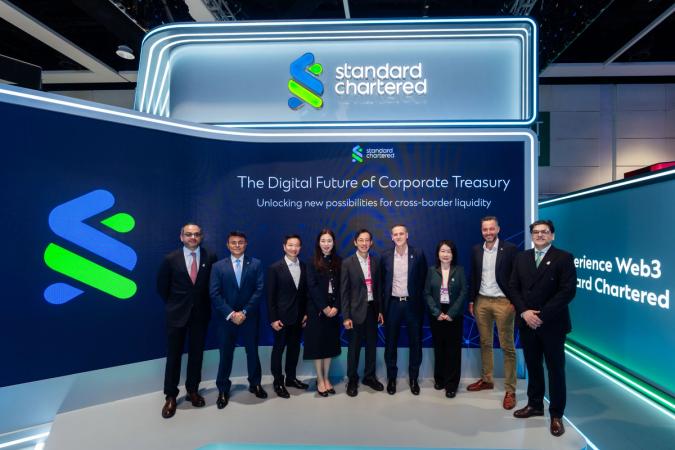
We have spent years hearing about how blockchain will disrupt the big banks. The narrative was simple: crypto would eventually replace the slow, clunky systems of traditional finance. But as is often the case in tech, the giants aren't waiting to be disrupted. They are adopting the architecture and stripping away the parts they don't like.
The latest example comes from Hong Kong, where Standard Chartered has launched a tokenized deposit system for corporate clients. This isn't a pilot for retail users to buy coffee with stablecoins. This is a move focused on the plumbing of high-level corporate treasury. By using the Hong Kong Monetary Authority's EnsembleTX system, the bank is now moving deposits between participating institutions 24/7, with settlement happening in central bank money.
The End of Business Hours
For most people, the concept of a bank being closed on weekends is an annoyance. For a corporate treasurer managing billions of dollars in liquidity across multiple time zones, it is a massive inefficiency. Traditional interbank settlement systems are tied to the operating hours of central banks and clearings houses. If you need to move a massive chunk of capital on a Sunday to cover an obligation in another market, you are usually out of luck until Monday morning.
Tokenization fixes this by turning a bank deposit into a digital asset that lives on a shared ledger. When Standard Chartered moves a tokenized deposit, it isn't just sending a message that says money is coming; it is moving a digital representation of that value that settles instantly. Because this is happening within a regulated sandbox backed by the central bank, the counterparty risk is essentially mitigated. The money is there, it is verified, and it is final.
Why Builders Should Care
If you are building in the DeFi space or working on enterprise blockchain solutions, this move should serve as a reality check. We often talk about decentralization as the primary goal, but for the people who actually move the world's money, the goal is efficiency and regulatory clarity. Standard Chartered isn't using a public permissionless chain for this. They are using a controlled environment that gives them the benefits of blockchain—speed, transparency, and programmability—without the volatility or regulatory headaches of public crypto markets.
As a founder, you have to ask yourself: are you building tools that ignore these legacy giants, or are you building the bridge that helps them move faster? The opportunity right now isn't in trying to kill the banks, but in providing the infrastructure that makes their transition to a tokenized economy possible. The banks have the liquidity and the customers; they just lack the agile tech stacks to maximize that liquidity.
The Role of Central Bank Money
The most important part of this news isn't the "token" aspect—it is the "central bank money" aspect. In the world of high finance, not all money is created equal. Commercial bank money carries the risk of the bank failing. Central bank money is the gold standard of safety. By settling these tokenized transactions in central bank money, Hong Kong is creating a hybrid system that offers the safety of the old world with the velocity of the new one.
This is what we call 'programmable money.' When you tokenize a deposit, you can attach logic to it. You can create smart contracts that trigger payments only when certain conditions are met, such as the arrival of goods at a port or the signing of a digital contract. This eliminates the need for manual escrow and reduces the friction of international trade. For the corporate clients at Standard Chartered, this means their capital is no longer sitting idle; it is working faster and more intelligently.
The Skeptic's Corner
Of course, we have to be honest about the limitations here. This is a walled garden. While it is a significant step forward, it is still a centralized version of a decentralized technology. The banks are still the gatekeepers. If you were hoping for a future where corporations manage their treasuries on Ethereum or Solana, this move actually pushes that further away. It suggests that the future of institutional finance will be a series of interconnected private ledgers rather than one giant public one.
There is also the question of interoperability. Standard Chartered is working within Hong Kong's EnsembleTX framework. But what happens when they need to move that value to a bank in London or New York that uses a different proprietary system? We are currently seeing the birth of 'digital islands.' Each jurisdiction is building its own tokenized ecosystem. The real challenge for builders over the next five years will be creating the 'connective tissue' that allows these different institutional blockchains to talk to one another.
The Founder Perspective
If I am starting a fintech or AI-driven finance company today, I am looking closely at these institutional pilots. The tech is being validated by the most conservative players in the market. That is a huge green flag for the underlying utility of blockchain. However, the 'crypto-native' approach of avoiding banks is becoming less viable for anyone who wants to handle serious volume.
The smart play is to focus on the 'middleware.' Companies that can provide identity verification, automated compliance, and cross-chain settlement for these institutional tokens will be the big winners. The banks don't want to build every piece of this stack themselves; they want to plug into reliable, audited services that help them maintain their lead.
The Takeaway
Standard Chartered’s move in Hong Kong is proof that the 'Tokenization of Everything' is moving out of the whitepaper phase and into the real world. It isn't flashy, it isn't going to make a meme coin moon, and it isn't going to end the banking system. Instead, it is making the banking system do what it was always supposed to do: move value efficiently so that businesses can grow. The future isn't about replacing the banks; it's about upgrading their DNA.
- Tokenized deposits allow for 24/7 settlement, removing the limitations of traditional banking hours.
- Settling in central bank money provides the highest level of security for corporate treasury functions.
- The growth of 'digital islands' creates a massive opportunity for builders focused on interoperability and middleware.
- Institutions are choosing controlled, regulated environments over public, permissionless blockchains.
Read the original at CoinDesk →