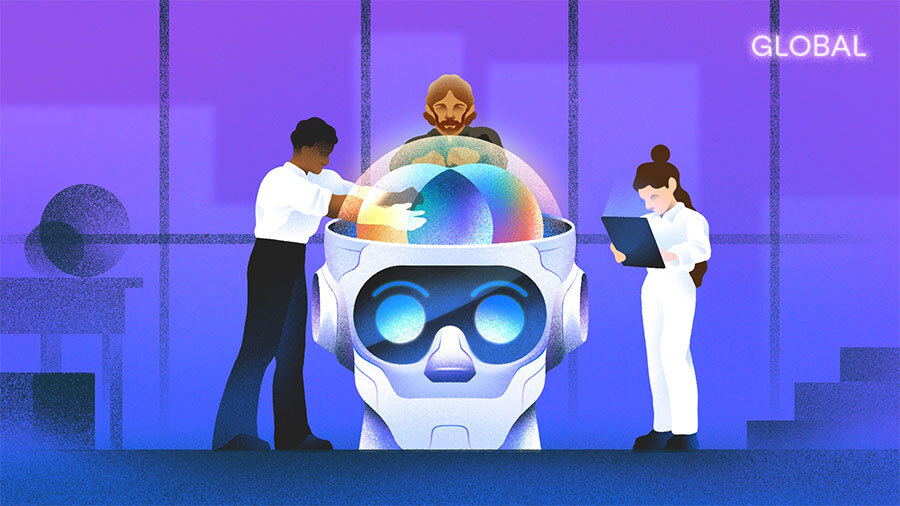
We have entered a strange era where the people selling the most powerful technology on the planet are the ones telling us how terrified we should be. Recently, Anthropic CEO Dario Amodei and OpenAI’s Sam Altman have shifted their focus toward a specific nightmare scenario: the intersection of large language models and biological warfare. They are warning that AI could lower the barrier to entry for creating pathogens, effectively handing a recipe for a pandemic to anyone with a high-speed internet connection.
As a founder, you have to look past the headlines and ask what this actually means for the building environment. When the biggest players in the game start asking for regulation, it is rarely just out of the goodness of their hearts. It is often a defensive moat-building exercise. But in the case of biotech, the risks are tangible enough that the entire industry is about to face a massive cultural and technical shift.
The Barrier to Entry Problem
For years, the safeguard against biological misuse was complexity. If you wanted to engineer a virus, you needed a PhD, a million-dollar lab, and access to specialized physical materials. AI is eroding that specialized knowledge gap. While current LLMs won't give you a step-by-step guide to cooking up a bioweapon today, they are becoming remarkably good at predicting protein structures and identifying the genomic sequences that make viruses more contagious or more lethal.
The concern raised by leaders like Amodei is that AI can help bridge the gap between intent and execution. An actor who knows what they want to achieve but lacks the specific technical expertise can use these models to troubleshoot their process, find alternative ways to source precursors, and optimize their designs. This isn't about the AI doing the lab work; it's about the AI acting as the ultimate lab assistant for someone with bad intentions.
The Impact on Open Source Culture
This is where it gets difficult for the builder community. The ethos of both crypto and AI has largely been built on open-source principles. We believe that transparency makes systems more secure. But biotech operates on a different threat model. In software, a vulnerability can be patched. In biology, once a redesigned pathogen is released, there is no "undo" button. There is no hard fork to save the network.
We are likely going to see a tightening of access to specialized datasets. If you are building in the AI space, expect a world where high-quality biological data is no longer freely available. The fear of AI-enabled bioweapons will be used as a primary justification to lock down models and the data used to train them. For the independent developer, this creates a significant disadvantage, as the "frontier" models held by the big labs will be the only ones with the capability to perform high-end biological reasoning.
The Physical Bottleneck
Despite the panic over digital blueprints, there is still a physical reality that AI cannot solve yet: DNA synthesis. To turn a digital sequence into a physical reality, you need a synthesis provider. This is currently the most effective chokepoint. The industry is already moving toward a reality where every DNA order is screened against known pathogens and suspicious sequences.
For founders in the synthetic biology space, compliance is no longer an afterthought. You have to assume that every part of your workflow—from the prompts you feed an LLM to the orders you place with a foundry—will eventually be subject to intense scrutiny. The friction is increasing, and that friction is the price of preventing a catastrophic event. We have to be honest about whether we are willing to pay it.
A Founder’s Perspective on the Risk
When I look at the warnings from Altman and Amodei, I see a mix of genuine concern and strategic positioning. By highlighting the bioweapon risk, they are setting the stage for a regime where only a few "vetted" companies are allowed to develop highly capable models. They are framing AI safety not just as a technical problem, but as a matter of national security.
If you are building at the intersection of AI and biotech, you need to be prepared for the "security first" mindset to dominate your fundraising and product development. The days of "move fast and break things" do not apply when the things you might break are human immune systems. You have to build with auditing and transparency in mind from day one, even if that feels counter-intuitive to the typical startup hustle.
The Road Ahead
The wake-up call for biotech isn't just about the technology itself; it's about the loss of innocence for the industry. We are moving away from the idea that more information is always better. In the hands of AI, information becomes an accelerant. While these tools will undoubtedly lead to breakthroughs in drug discovery and personalized medicine, they also represent a dual-use threat that we haven't quite figured out how to contain.
The takeaway for the builder is simple: don't ignore the regulatory storm. It is coming, and it is using the specter of bioweapons as its primary engine. If you want to survive as a founder in this space, you need to be part of the solution for screening and safety, rather than just another voice complaining about the loss of open access. The stakes are too high for anything else.
Read the original at MIT Technology Review →