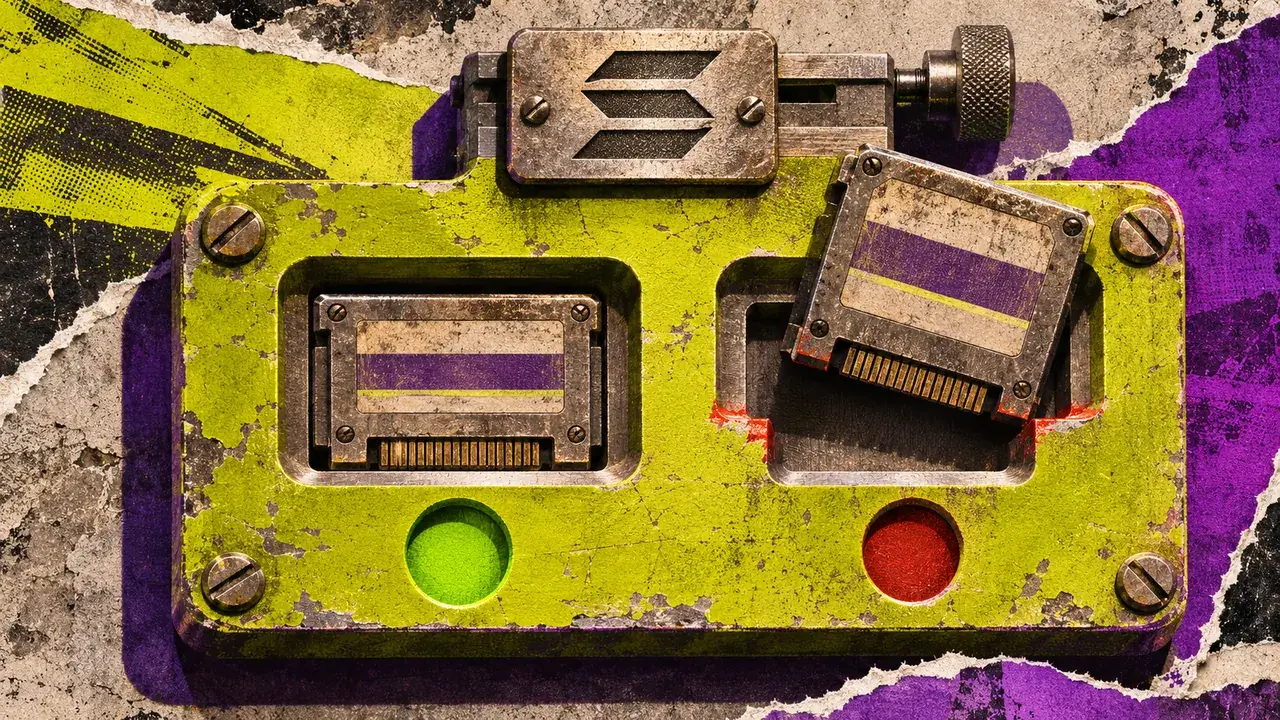
The Price of Efficiency
Solana has always been about speed, but that speed often comes with technical debt that eventually comes due. We are seeing that happen right now with a series of low-level updates to how the network handles memory. For builders, this isn't just a routine patch; it is a signal that the era of loose resource management is ending. If you are running an older application, specifically one built on earlier versions of the Anchor framework, your transactions might start failing soon.
The core of the issue lies in how Solana validates memory during transaction execution. In the quest to squeeze more performance out of the hardware, the engineers at Solana Labs and the broader developer community are tightening the screws on how data is handed off between accounts. Recent replays of network activity have identified specific edge cases where legacy handoffs—the way one program passes data to another—trigger failures under new memory check protocols.
The Anchor Account Handoff Problem
Most developers on Solana use Anchor. It’s the industry standard for a reason; it abstracts away the complex, manual security checks required to build on the Sealevel runtime. However, abstractions have a shelf life. A specific pattern involving account handoffs has surfaced as a potential breaking point. This happens when an application attempts to pass an account to a program in a way that the new, stricter memory validation rules don't recognize as safe.
In the past, the runtime was a bit more forgiving. If a transaction looked mostly right and didn't explicitly violate a hard safety rule, it went through. Now, the network is moving toward a model where memory bounds are strictly enforced at every step. This is great for the long-term stability of the network, but it’s a headache for founders who haven't touched their smart contract code in eighteen months. If your dApp relies on these older handoff patterns, the new memory checks will simply reject the transaction. To the end user, it looks like a generic error. To the founder, it looks like a sudden drop in volume and a surge in support tickets.
Removing the Safety Net
Beyond the memory checks, there is another major shift happening: the removal of validator data copies. Historically, validators would maintain redundant copies of certain data to ensure they could recover quickly or verify state. The new updates are stripping some of these redundancies away to reduce the memory footprint of the validator software itself.
From a founder's perspective, this is a double-edged sword. On one hand, reducing the hardware requirements for validators helps decentralize the network by making it cheaper to run a node. On the other hand, it means the network is operating closer to the metal. There is less margin for error. When you remove the "extra copies," you are essentially saying that the primary data stream must be perfect. For developers, this means your code can no longer afford to be lazy with state management.
The Infrastructure Reality Check
We often talk about Solana as a monolithic high-performance machine, but it’s actually a collection of moving parts that are constantly being swapped out while the engine is running. These memory updates are part of a larger trend toward "Agave," the validator client transition intended to diversify the ecosystem. As we move away from the original codebase, we should expect more of these friction points.
For those of us building in this space, this is the cost of doing business on a frontier chain. You don't get 50,000 transactions per second without some breaking changes. The reality is that if you aren't actively maintaining your codebase, you are accruing a type of technical debt that can bankrupt your user experience overnight. This isn't just about Solana; it's about any high-throughput environment where performance is prioritized over backward compatibility.
What Builders Should Do
If you are managing a project on Solana, your first step is a technical audit of your instruction processing. Specifically, look at how your program handles account initialization and data handoffs. If you are using an outdated version of Anchor, you are in the red zone. Upgrading to the latest version is the obvious fix, but it’s not always a drop-in replacement. You need to test your transactions against the latest testnet releases where these memory checks are already being phased in.
Don't wait for your users to tell you the app is broken. In the crypto world, a failing transaction is a reason for a user to never come back. They don't care about "memory handoffs" or "validator data copies." They care that their swap failed or their NFT didn't mint. The responsibility is on the founder to stay ahead of the core developers' roadmap.
The Bigger Picture
There is a lesson here for the broader AI and crypto intersection as well. As we start seeing more AI agents executing transactions on-chain, the reliability of those transactions becomes even more critical. An AI agent isn't going to "try again" the same way a human might; it might just stop working or enter an error loop that drains resources. Strict memory checks make the network more predictable for automated agents, even if they cause short-term pain for human developers.
Ultimately, these changes are a sign of maturity. Solana is moving away from the "move fast and break things" phase and into a phase where the architecture is being refined for institutional-grade reliability. It’s a painful transition, but it’s a necessary one if we want to build applications that can scale to millions of users without the whole thing collapsing under its own weight.
Takeaway
The latest Solana updates prioritize network-wide efficiency over legacy support. If your application uses older Anchor patterns for account handoffs, you are at risk of transaction failures. Audit your smart contracts, update your dependencies, and stop treating your on-chain code as "set it and forget it." Performance has a price, and right now, that price is constant vigilance.
Read the original at CryptoSlate →