Solana is in a strange spot right now. On one hand, the token price is flirting with its yearly highs, driven by a relentless memecoin cycle and a revived interest in high-speed, low-cost decentralized finance. On the other hand, the developers actually building the infrastructure are staring at the scars left by recent network congestion. They know that if the network buckles under pressure again, the narrative will flip from 'fastest chain' to 'broken tech' faster than a rug pull.
This is the backdrop for the rollout of Alpenglow. Anza, the spin-off development entity handling much of the heavy lifting for the Solana Labs ecosystem, has officially pushed Alpenglow into the testnet phase. While the market watches the green candles on the chart, builders need to be watching the feature trackers. This isn't just a routine patch; it is a fundamental shift toward the Agave validator client and a more resilient network architecture.
Understanding the Alpenglow Handoff
For those not following every commit on GitHub, Alpenglow represents a bridge. We are moving away from the monolithic legacy of the original Solana Labs client and toward a diversified client ecosystem. The goal here is simple: eliminate single points of failure. If one client has a bug, the network shouldn't stop. Agave is the first major step in that direction, and Alpenglow is the proving ground where the consensus handoff is currently being staged.
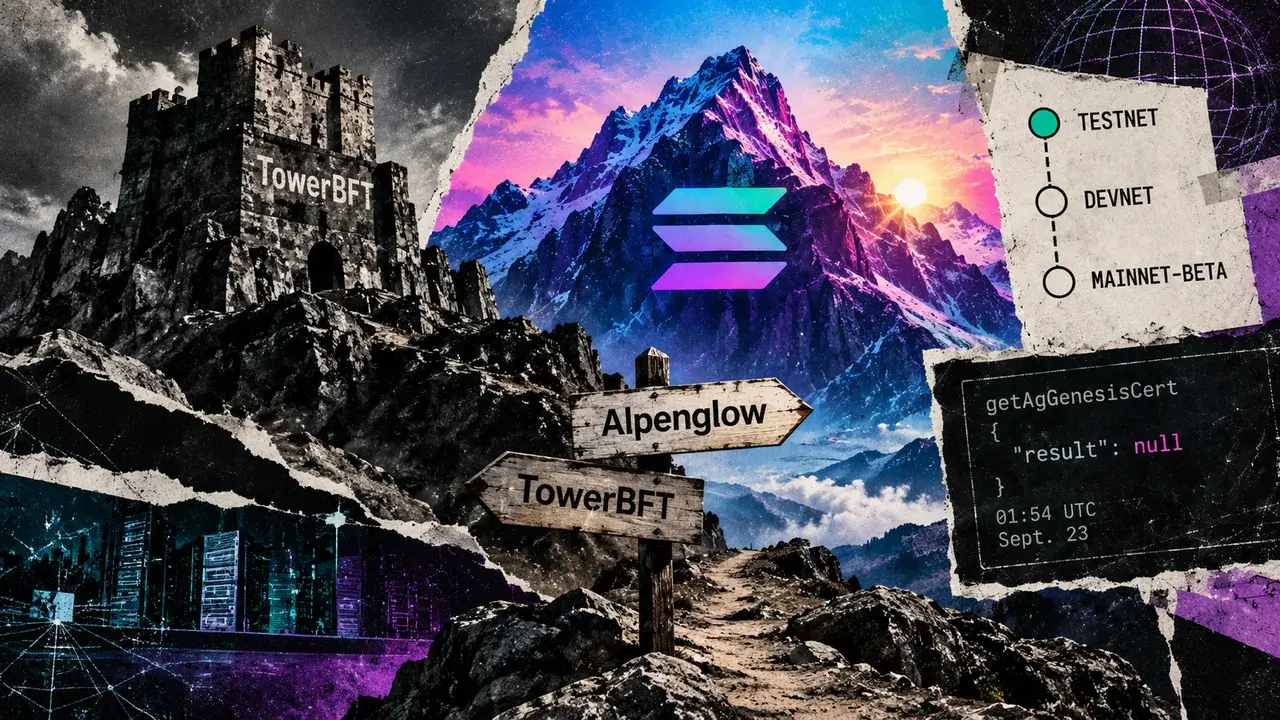
Early reports from the feature tracker and genesis-certificate checks show that while the rollout is active, the handoff hasn't fully crossed the finish line. This is intentional. In the world of high-throughput blockchains, you don't 'move fast and break things' when you are securing billions in TVL. You move methodically. The fact that the consensus handoff is being handled with this much caution should actually be a bullish signal for anyone planning to build long-term applications on this stack.
What This Means for Founders
If you are a founder, your primary concern is uptime and predictability. During the last few months, Solana has been a victim of its own success. The sheer volume of transactions—driven by bots, priority fees, and liquidations—revealed bottlenecks in the original scheduler. Alpenglow and the subsequent Agave transition are designed to address these architectural debt issues.
- Increased Reliability: The transition to the Agave client codebase focuses on optimizing how the network handles heavy load periods.
- Client Diversity: Reducing reliance on a single codebase makes the network more resistant to catastrophic bugs.
- Performance Stability: With the new scheduler and consensus improvements, we should see fewer dropped transactions during peak volatility.
For a long time, the skepticism around Solana was that it was a 'coordinated database' rather than a decentralized blockchain. By moving toward a multi-client future, the team is effectively dismantling that argument. As a builder, this gives you a more solid foundation to tell your investors that the network won't just disappear during a market panic.
The Real Cost of Scaling
We have to be honest about what it takes to scale a chain like this. It isn't just about hardware; it is about the maturity of the software. The move to testnet for Alpenglow shows that Anza is prioritizing the 'boring' work of consensus stability over the 'exciting' work of new features. In my view, this is exactly what the ecosystem needs right now. We don't need another exotic token standard; we need the chain to stay awake.
The consensus handoff is a high-stakes moment. It is the digital equivalent of changing the engines on a plane while it is flying at 30,000 feet. The trackers show that the genesis-certificate hasn't been passed yet, which means the old guard is still holding the keys while the new system is being verified. This level of transparency is great, but it also reminds us that we are still in the 'experimental' phase of the world's most used blockchain.
The market cares about the price hitting January highs, but the builders should care about the validator client hitting its milestones. Price is a lagging indicator of utility; network stability is the leading indicator.
The Skeptic's View
I’ve been around long enough to know that testnet success doesn't always translate to mainnet perfection. We saw this with previous upgrades that were supposed to fix congestion but only moved the bottleneck elsewhere. The real test for Alpenglow and Agave will come during the next massive liquid injection—when a new meme goes viral and millions of bots start fighting for block space. That is when we will know if this work actually solved the problem or just kicked the can down the road.
However, the shift to Anza as a separate entity has already shown benefits. It has allowed for a more focused approach to client development that wasn't always possible when everything was under the Solana Labs umbrella. This decentralization of development talent is just as important as the decentralization of nodes.
Takeaway for the Ecosystem
Solana is trying to grow up. The Alpenglow testnet phase is the teenage years of that transition—awkward, filled with technical hurdles, and scrutinized by everyone. But it is necessary. If you are building on Solana, you need to be testing your dApps against these new client behaviors now, not after the mainnet migration is forced upon you.
The headline might be about the token price nearing January highs, but the real story is in the genesis-certificate checks. It’s in the slow, methodical handoff of power from one generation of code to the next. If they pull this off, the 'Solana is down' memes might finally be retired for good. If they don't, no amount of price appreciation will save the reputation of the network.
My advice? Watch the Anza updates closer than you watch the charts. The charts tell you where we’ve been; the testnet tells you where we are going.
Read the original at CryptoSlate →