The Security Theater of Resolution Island
In the world of conservation, New Zealand has always been the ultimate testbed for what we call 'island restoration.' The logic is simple: find a piece of land separated by water, kill off everything that doesn't belong there, and reintroduce the native species that are being slaughtered on the mainland. It is the biological equivalent of an air-gapped server. If the bad actors can't get to the data, the data stays safe.
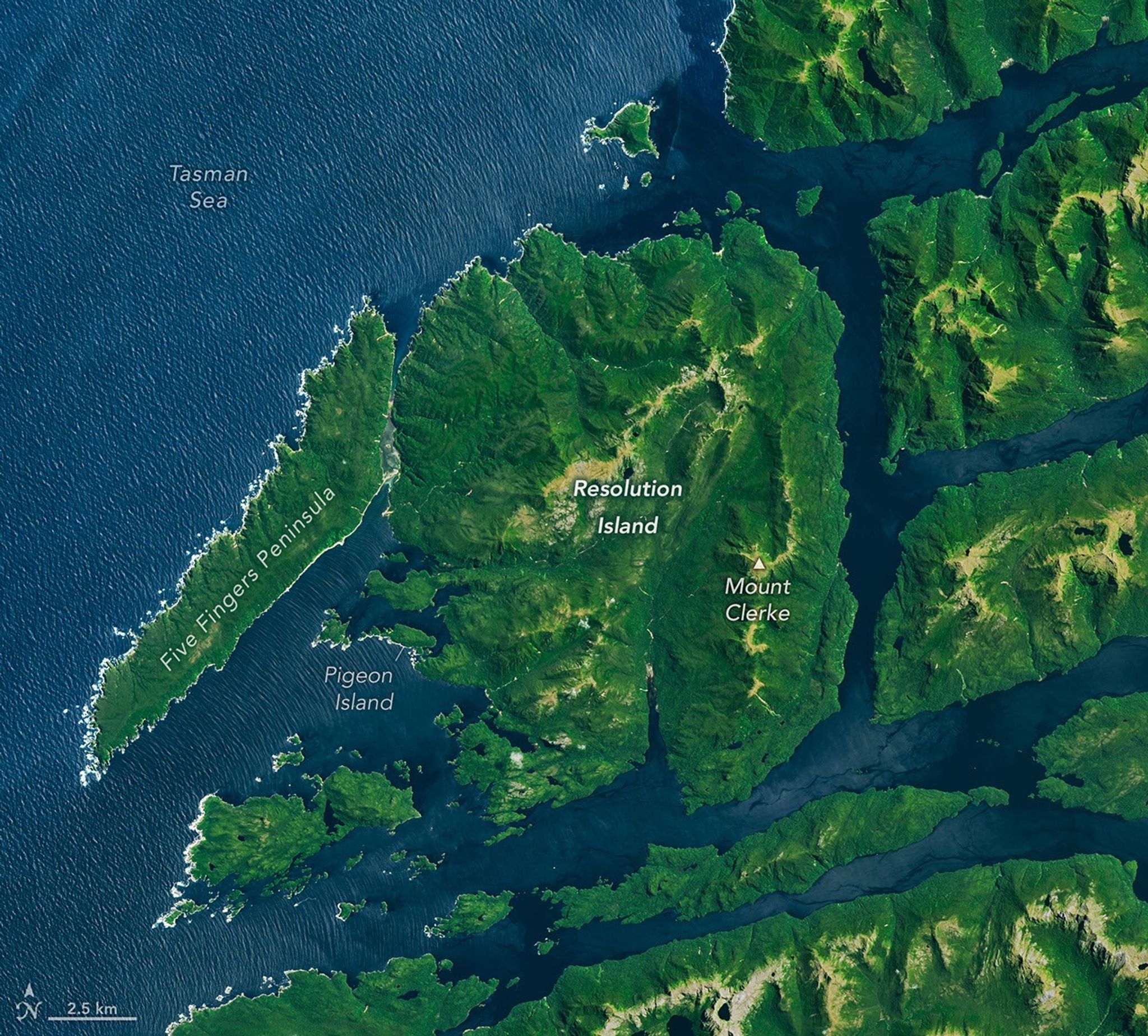
Resolution Island, a massive 20,000-hectare rugged rock in Fiordland, was meant to be the crown jewel of this strategy. For over a century, conservationists have looked at this place as the final fortress for birds like the kakapo and the kiwi. But as we are learning, air gaps are rarely as secure as we think they are. The recent history of Resolution Island is a masterclass in why builders need to stop trusting boundaries and start planning for the inevitable breach.
The Stoat Problem: A Persistent Threat
The primary antagonist in this story is the stoat. For those unfamiliar with New Zealand's ecological disaster, stoats were introduced in the late 1800s to control rabbits. It was a classic case of a 'fix' creating a much larger problem—something we see in software architecture all the time when a patch for a minor bug opens a massive security hole. Stoats didn't care about the rabbits; they cared about the defenseless, flightless birds that had evolved for millions of years without mammalian predators.
The plan for Resolution Island was to make it a predator-free zone. Between 2008 and 2010, the Department of Conservation (DOC) launched a massive campaign to wipe out the stoat population. They set thousands of traps. They monitored the perimeter. They succeeded, or so they thought. But the water surrounding the island, which acted as a natural moat, turned out to be less of a barrier and more of a challenge.
The Myth of the Air Gap
We often talk about decentralization and cold storage as the ultimate safety nets. In theory, if you take your assets off the grid, they can't be touched. But the stoat is the biological version of a sophisticated social engineering attack. It doesn't need a bridge. It can swim. Research showed that these small predators were capable of crossing over a kilometer of open, freezing water to reach the island.
This is where the 'builder' perspective becomes relevant. The DOC engineers built a system based on the assumption that the 'moat' was impenetrable. They spent millions of dollars and thousands of man-hours on the initial wipeout, only to realize that the threat vector wasn't a one-time event—it was a constant, ongoing stream. The stoats weren't just living there; they were migrating there.
Maintenance Over Momentum
The lesson here for anyone building a long-term project—whether it's a protocol, an AI model, or a wildlife sanctuary—is that the 'launch' is the easy part. The real work is the grinding, unsexy maintenance that follows. Once Resolution Island was declared 'clean,' the team couldn't just walk away. They had to install a permanent network of over 2,000 traps.
In crypto, we see this with audits. A team gets a green light from a security firm, they launch their token, and they assume they are safe forever. But the environment changes. New exploits are found. The 'swimming stoats' of the digital world are always looking for a way in. If you aren't monitoring your traps every single day, your sanctuary becomes a graveyard before you even realize a breach has occurred.
Why Zero-Trust is the Only Path
New Zealand's approach to Resolution Island has shifted from 'eradication' to 'sustained control.' This is a subtle but massive psychological shift. It's an admission that you can never truly be 'safe.' You can only be 'monitored.' This is the biological version of Zero-Trust architecture. You assume the predator is already on the island. You assume the code is already compromised.
By treating the island as a place that is perpetually under siege, the conservationists actually stand a chance. They are no longer surprised when a stoat shows up in a trap; they expect it. They have built a system that survives the presence of the predator rather than a system that fails the moment one appears.
The Cost of Resilience
Building for resilience is expensive. It is much cheaper to run a one-time marketing campaign about 'Saving the Birds' than it is to fund the decades-long logistical nightmare of checking traps in a remote, rainy fjord. But if you're a founder, you have to ask yourself: are you building a headline or are you building a legacy? Resolution Island is a legacy project, and it requires legacy-level commitment.
The data from the island shows that when the traps are maintained, the native bird populations actually stand a chance. The kiwi and the mohua are slowly rebounding. But this success is fragile. It is tethered to the physical labor of people who have to fly in by helicopter, hike through dense bush, and manually reset the system. There is no 'set and forget' in nature, just like there is no 'set and forget' in technology.
Takeaway for Builders
If you take one thing away from the saga of Resolution Island, let it be this: your boundaries are thinner than you think. Whether it’s a geographical moat, a firewall, or a smart contract audit, there is always a 'swimming stoat' capable of crossing the gap. The difference between a successful project and a failed one isn't the absence of threats—it's the persistence of the defense. Stop looking for a permanent solution and start building a better monitoring system.
The moat isn't the security; the trap is. If you stop checking the traps, the moat was never there to begin with.
Read the original at NASA Breaking News →